

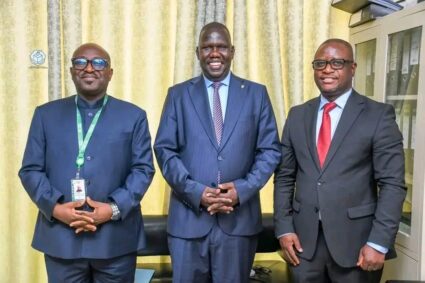
Seventeen years in service, two missioners hold South Sudan dear to their hearts

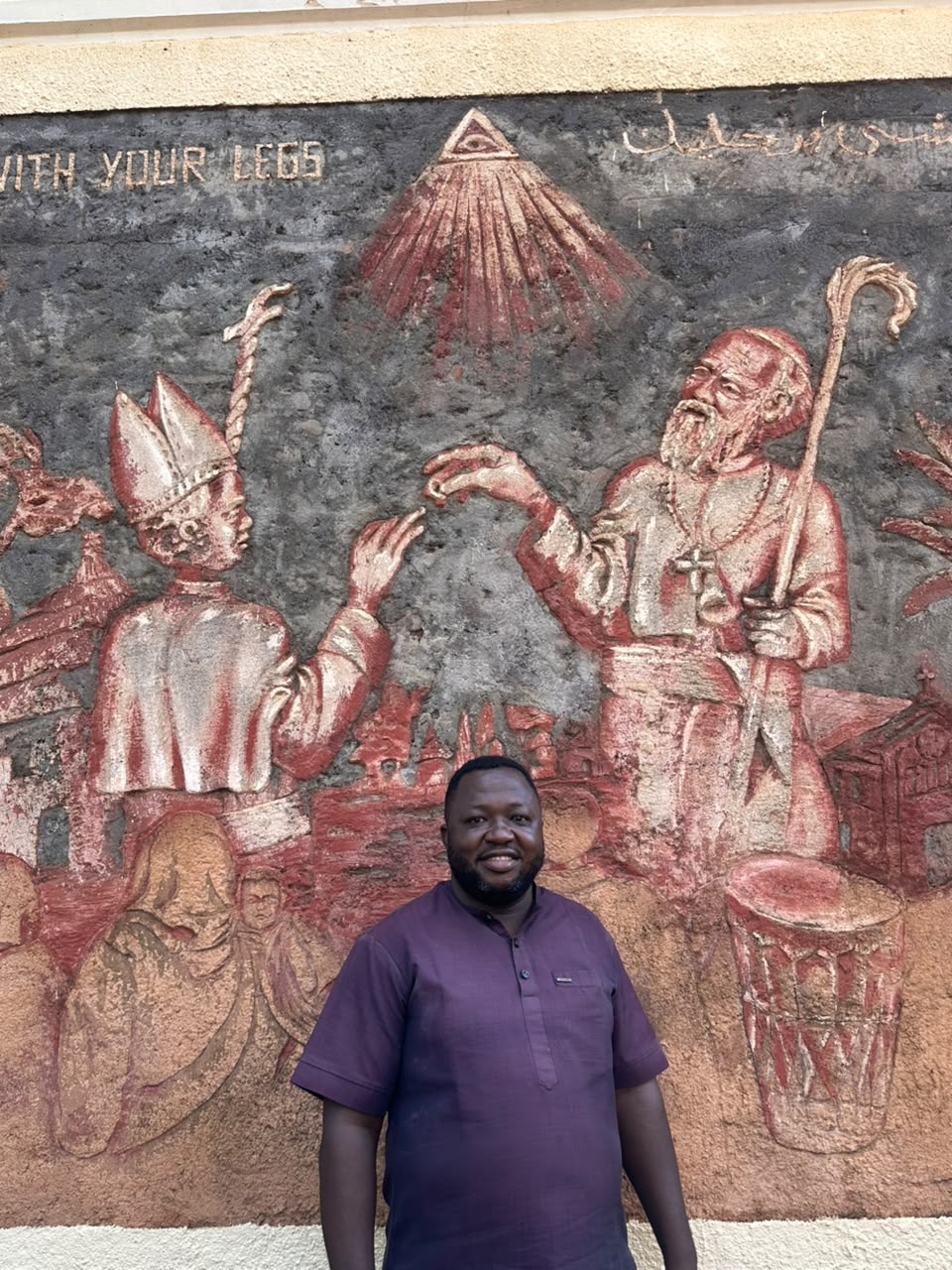
Father Gregory Schmidt and Father Pius Masuind of Comboni missionaries have spent years spreading the gospel and turning hearts to the Lord, experiences that have given them memorable life perspectives
By Binia Elizabeth
Father Pius Masuindo.
Beyond the buzz and activity in the streets of Juba, across the city’s administrative streets, the political rooms and recreational centres, is a team of dedicated servants of the Most High; men that have dedicated themselves to healing souls, spreading the spiritual word and cultivated a generation of morally upright men and women.
It is not a job for the faint-hearted. It requires dedicated, grit and hearts full of spirit. Few men dare to walk the spiritual paths for miles. However, some men have dared the tread, and made a name while doing it.
That’s the case of two clerics- Father Gregory Schmidt and Father Pius Masuindo. The Comboni missionaries have done their part in delivering their spiritual service in South Sudan, a legacy manicured for years, making it part of their lives.
The missioners came to South Sudan in different times. Father Gregory first visited the then Southern Sudan in 2006. At the time, he was inspired by a people full of hope and positive attitude towards nation building and spirituality.
This warm welcome inspired him to return to the region three years later, in 2009, just as the country was preparing for independence. South Sudan was counting down to a historic referendum. Across villages and towns, people spoke excitedly about self-determination and independence.
In Taali where he was first assigned among the Mundari community, he witnessed elections in which many voters used fingerprints instead of signatures because they could not read or write.
Two years later, he stood among South Sudanese celebrating the birth of a new nation.
“People expected freedom, peace and development. The hope was very strong,” he says
Meanwhile, Father Pius first came to the country as a theology student and unexpectedly found a second home among communities in Unity State. Together, they say they were met with a sense of hope and inspiration.
“There was a feeling that something new was being born,” Father Pius recalls.
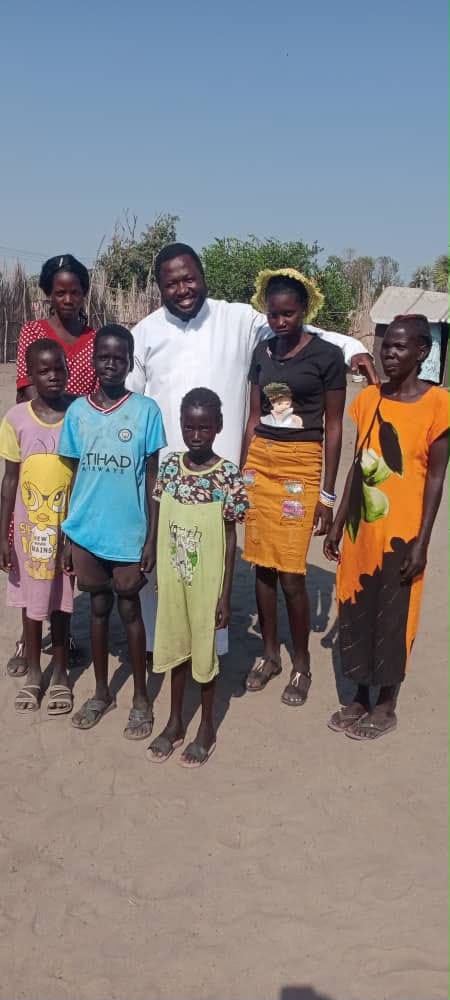
Seventeen years later, Father Gregory remains in the country, now serving as Provincial Superior of the Comboni Missionaries in South Sudan, where he oversees missionary activities across several communities.
His journey has taken him from Terekeka to Fangak and eventually to Juba, where he now coordinates the work of dozens of missionaries.
For someone born thousands of kilometres away in Germany, South Sudan has become remarkably familiar.
“I have spent all my missionary life here,” he says.
Yet, his understanding of the country extends far beyond its politics.
What fascinates him most is its people, he says. Over the years, he has learned to navigate cultures vastly different from his own. He has lived among communities where family networks remain the centre of social life and where relationships often matter more than institutions.
“In Europe, people depend on systems and institutions. Here, people depend on family.
“Family is your protection, your support and your security,” he said. The lesson, he says, changed how he views the world.
But if Father Gregory’s story began with independence, Father Pius’ story began with curiosity.
As a theology student in Kenya, he was sent to South Sudan for a short missionary experience in Nyali, the coastal parts of the country.
“There was no internet, no reliable network, no modern comforts,” he says. Yet something about the mission captured his heart.
“The people were generous. They shared whatever they had,” he tells The City Review. That brief experience stayed with him long after he returned to his studies.
When the opportunity came to return as a missionary priest, he did not hesitate nor think twice
His ministry would later take him to Tali, Leer and Nyal, some of the most challenging mission areas in the country.
Life there demanded patience and endurance.
Daring, yet fulfilling journeys
Traveling to visit Christian communities often meant walking for hours through swamps and floodwaters. Sometimes a journey that looked short on a map took an entire day
One memory remains especially vivid, he reckons.
After celebrating baptisms in a remote village, heavy rain flooded the path home. Water reached his waist and the muddy ground beneath made every step uncertain
A woman held one of his hands while a man held the other and together they guided him through the floodwaters.
“For almost one hour they walked with me,” he recalls. “I will never forget that.”
He laughs while telling the story, but behind the humour lies a deeper truth. Missionary life, he says, taught him humility.
“The people took care of us. Sometimes we think we are the ones helping them, but they also help us,” he says.
That mutual relationship appears repeatedly in both men’s stories.
For all the challenges they encountered, what remains strongest in their memories is not hardship but kindness.
Father Pius remembers families travelling long distances to attend catechism classes and request baptism. He remembers communities welcoming visitors with the little food they had.
He remembers women carrying enormous workloads yet still finding time to participate actively in church life. One particular woman remains unforgettable
She travelled from her village seeking baptism for herself and her children. The journey was difficult, and she feared she might not have another opportunity
When told she needed more time for preparation, she broke down in tears.
Moved by her determination and sincerity, Father Pius eventually baptised the family.
“It showed me how much faith meant to them,” he says.
For Father Gregor, the lessons came in different ways. Years spent in remote mission stations taught him that happiness is not necessarily tied to possessions. There were times when nearly everything he owned could fit into a single bag. Life was simple: breakfast was often sorghum and mil. Dinner was at times fish and kisra.
Travel meant carrying only what was essential.
“I learned that you can live with very little and still be happy,” he says.
The experience reshaped his understanding of what truly matters.
Both missionaries have also witnessed the difficulties that continue to challenge South Sudan
They speak about conflict, displacement, floods and economic hardship.
Father Gregor points to the complex task of building a nation from dozens of ethnic groups with different histories, languages and traditions.
Father Pius highlights the need for civic education, stronger institutions and greater opportunities for women and young people
Yet neither speaks with despair. Instead, both return repeatedly to the same theme “hope”
They believe the Church still has an important role to play in helping communities heal divisions and build trust.
In a country where politics often divides, churches remain among the few places where people from different backgrounds can gather around a common purpose.
“The Church can help people see one another as brothers and sisters,” Father Gregor says
Father Pius believes the Church must continue speaking truthfully about society’s challenges while encouraging forgiveness and reconciliation
“We must preach peace, We must help people accept one another.”he says
As the conversation draws to an end the two missionaries reflect on the years they have spent in South Sudan
Neither of them speaks about achievements or personal sacrifices. Instead, they talk about people; the families that welcomed them, the children they taught, the communities that prayed with them and the countless faces that have become part of their story.
Father Gregory once describes South Sudan using three words: beauty, diversity and heat.
The heat is impossible to miss. The diversity is everywhere. But it is the beauty not only of the landscape but of the people that seems to have kept both men here.
When asked what message he would leave for South Sudanese, Father Gregory pauses before answering, “Don’t lose hope.”
After years of walking through flooded villages, celebrating baptisms in remote communities and witnessing both heartbreak and resilience, it is a message they have come to believe deeply.
For them, South Sudan is not simply a place they served. It is a place that changed them.
And seventeen years later, it is still a place they proudly call home.