
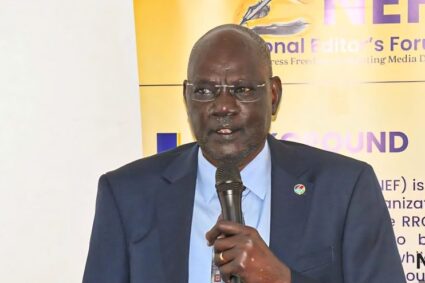


A lawmaker in the Reconstituted Transitional National Legislative Assembly (R-TNLA) has called on the governors to combat corruption in their respective states.
Salva Mathok Gengdit, who is a former deputy minister of the interior, has urged the governors to discuss the issues that often cause division among the citizens before the closing of the governors’ forum.
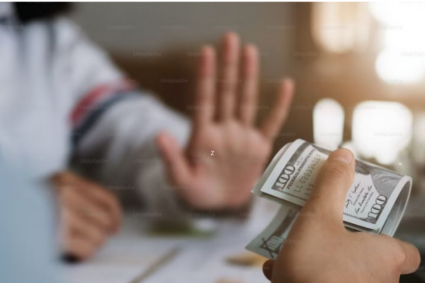
He said corruption has been a major setback to development in the country.
“Corruption is a major obstacle to development, and it has built tribalism and so many other factors that I will not mention now, which are contributing to our division among ourselves,” he said.
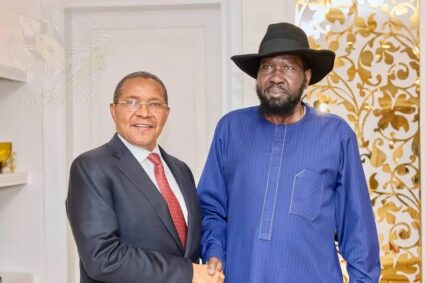
“For me, there is corruption in the country and H.E President Salva Kiir Mayardit always talks about it on several occasions. He does mention that corruption is zero tolerance. And that is a strong message, and I have to support my chairman in fighting corruption. “
Mathok said the land dispute is among the issues that need to be addressed in Central Equatoria and Upper Nile states, and that cattle grazing is a security concern that discourages farmers.
He also called for the shutting down of the IDP camps and UNMISS camps so that the most vulnerable citizens can be served at their homes by humanitarian organisations. He said there is no longer a security threat in most parts of the entire country.
“People, including IDPs, attend weddings, clubs, and other occasions at night all over the country, and they go back to their residences safely. The IDPs move out in the daytime for businesses, ” Mathok stressed.
He further called on the governors to prioritise the interests of the citizens rather than their welfare.
He faulted the national legislature and state assemblies for increasing the number of specialised committees to 35, as well as the number of members of parliament in the states’ assemblies.
Bloated houses faulted
“This is a huge organisation, very expensive, that is intended to solve the problems of parties’ interests rather than citizens’ interests.”
“I didn’t get a chance to speak during the debate because I know that tomorrow, SPLM will be blamed and not all parties. My reason was simple, all committees will have brand 70 V-8 cars, as an example, [but the] money for 10 V-8 cars can build 5 nice hospitals, leave alone furniture for the offices of those specialised committees with fuel, ” he said.
Efforts to halt corruption
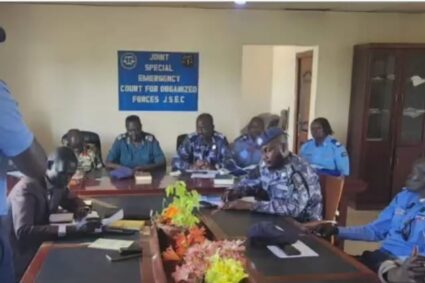
Last month, the Revitalised Transitional National Legislative Assembly (R-TNLA) asked the government to authorise the anti-corruption commission to prosecute corrupt government officials and recover stolen property.
The committee made a report on the speech President Salva Kiir made on August 30, recommending that corrupt officials be named and shamed so that others could desist from embezzling public funds.
The committee asked for auditing of all the financial records of all public institutions, and that the failure of any institution to cooperate should be reported to the auditor general and anti-corruption for punishment.
It further recommended the establishment of a public procurement and asset disposal authority. Mary Besencio Wani, who is also a member of the R-TNLA, said there was a need to involve civil society and the media to expose malpractices in public institutions.
“I recommend that the names of the individuals and government officials that are corrupt be published in the media to shame them,” she said.
Nathaniel Oyet Patrick, who is the deputy speaker of the R-TNLA, said that corruption in South Sudan was being encouraged by leaders.
“In other countries, corruption attracts a capital offence, but in South Sudan; you will be rewarded with more appointments. This is our situation here, but it has left a very bad stain on our national prestige, ” Oyet said.
“We are being looked at as people who are wasteful, people who are stealing from the citizens and repatriating the proceeds outside the country.”
The deputy speaker of the council of states, Mary Ayen Majok, said the national audit chamber had reported over 20 reports of government institutions that parliament should follow up.
“The role of the auditor general is only to report, and it is up to us to make sure that those reports are made into functional documents, not just reports that are there like magazines and newspapers. I think it is our role to find those reports and what should be done about them,” Mary stressed.