






Marginal stride as Western Equatoria state records over 16,000 HIV cases

Officials cite improved awareness and testing coverage as they announce marginal progress in disease prevalence
By Emmanuel Mandella
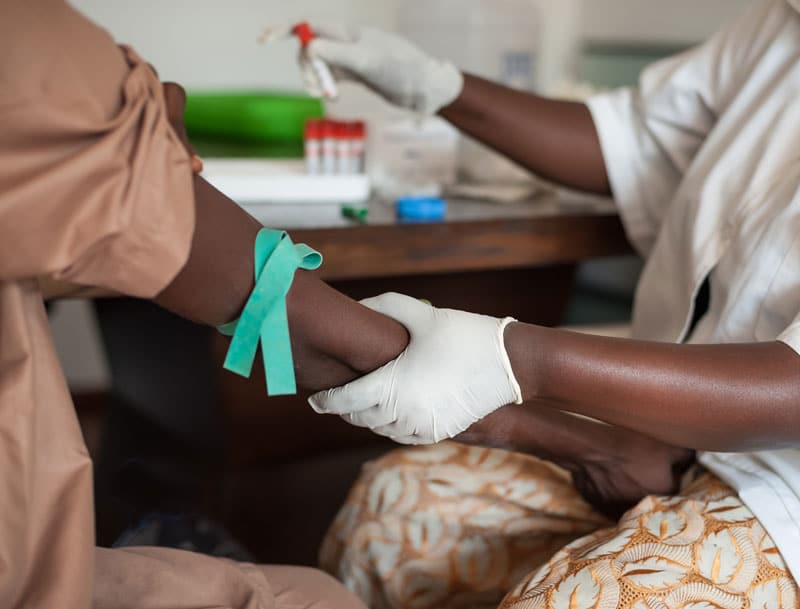
Authorities say 15,295 people in Western Equatoria State now know their HIV status, representing about 95 percent awareness among identified cases. [Photo: Courtesy]
Western Equatoria State has recorded 16,297 number of people living with HIV/AIDS in 2025, health authorities have confirmed, highlighting improved awareness and testing coverage but raising concern over persistent treatment and adherence challenges.
The latest figures, released by the Western Equatoria State HIV/AIDS Commission, show a marginal change from the 2024 estimate of about 16,200 cases, indicating a relatively stable prevalence rate in the state.
Speaking to the media in Yambio, the commission’s Focal Person for Information and Public Relations, Elizabeth Dominic Dabi, said the data was compiled across all ten counties in June 2025 and reflects both progress and remaining gaps in the HIV response.
According to Dabi, 15,295 people now know their HIV status, representing about 95 percent awareness among identified cases, while 14,073 are currently enrolled on antiretroviral treatment.
“We have made significant progress in testing and awareness compared to previous years. More people are coming forward to know their status, and treatment coverage has improved,” Dabi said.
Despite the gains, she warned that adherence to medication, follow-up, and viral load monitoring remain major challenges, particularly in remote counties where mobility and logistics are limited.
Health officials say the slight increase in total cases reflects both continued transmission and improved detection, rather than a sharp rise in infections.
Acting Chairperson of the State HIV/AIDS Commission, Paul Awari Avoro, noted that the state has recorded a nearly one percent reduction in new infections, attributing the decline to expanded testing campaigns, community awareness, and promotion of safe practices.
“Compared to 2024, we are seeing a small reduction in new infections. This shows that prevention messages and free testing drives are working, but we still have a long way to go,” Avoro said.
He added that the most affected age group remains young people between 15 and 35 years, with girls facing higher vulnerability due to social and economic factors.
While treatment coverage has expanded, officials say inconsistent drug use, weak follow-up systems, and limited viral load testing continue to undermine long-term outcomes.
Operational challenges — including funding shortages, delayed staff salaries, poor office infrastructure, and lack of transport to reach rural communities — have slowed program monitoring and patient support.
Dabi said these constraints make it difficult for health workers to track patients who default on treatment, especially in remote areas.
“Adherence is our biggest concern now. When patients miss their medication or cannot be followed up, it increases the risk of drug resistance and further transmission,” she explained.
The HIV response in Western Equatoria is supported by several implementing partners, in collabortion with the State Ministry of Health.
Programs include free testing campaigns, radio talk shows, community outreach, and distribution of agro-tools and seeds to support the livelihoods of people living with HIV — an initiative officials say helps improve treatment adherence by addressing food insecurity.
Health authorities are calling for increased funding, improved mobility, and strengthened health infrastructure to close treatment gaps and sustain prevention gains.
Avoro emphasized that reducing new infections alone is not enough without ensuring that those already living with HIV remain on treatment and achieve viral suppression.
“Knowing your status is the first step, but staying on treatment is what saves lives and protects communities. We need stronger systems to support patients from diagnosis to long-term care,” he said.
The commission plans to intensify awareness campaigns through radio programs, workshops, and community engagements, while urging stakeholders and donors to scale up support for HIV services across the state.
Public health experts warn that without addressing adherence and health system challenges, the state risks stalling progress despite high testing coverage, underscoring the need for sustained investment in both prevention and treatment.
Utilities
“Adherence is our biggest concern now. When patients miss their medication or cannot be followed up, it increases the risk of drug resistance and further transmission,” Acting Chairperson of the State HIV/AIDS Commission, Paul Awari Avoro, said.