

NEC, UJOSS conclude two-day training for journalists on ethical election reporting

Journalists urged to remain committed to unbiased, professional and ethical reporting throughout the electoral process
By Samuel Yuang
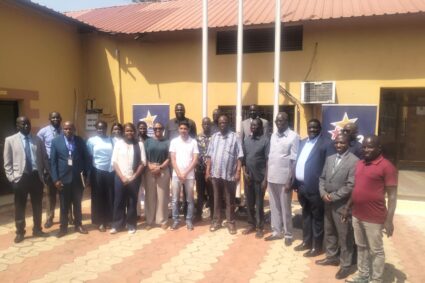
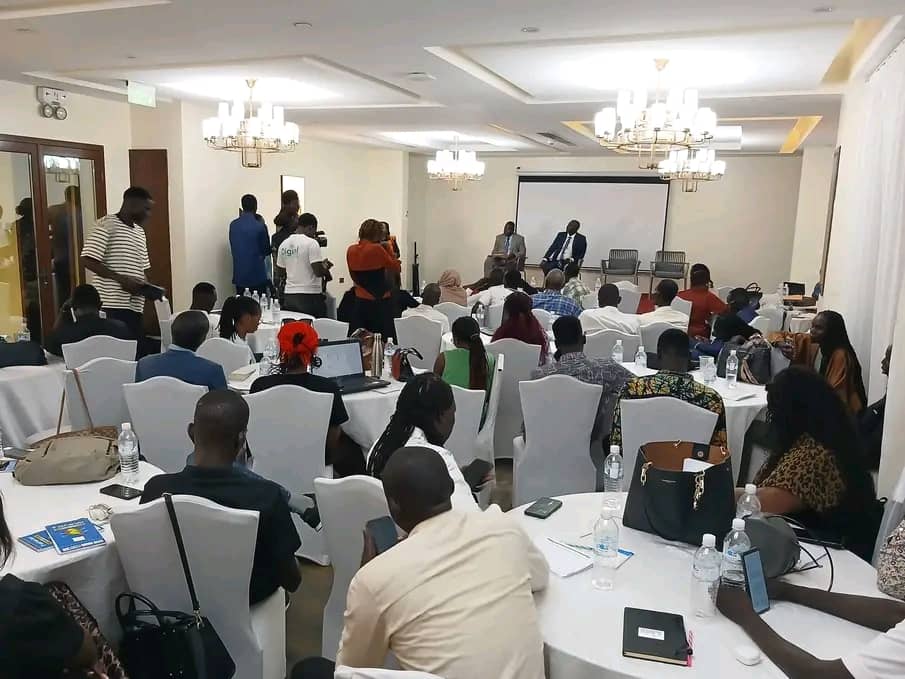
Journalists from various media houses presentations from election commission officials and representatives from the Union of Journalists. [Photo: Samuel Yuang; The City Review]
The National Elections Commission (NEC), in collaboration with the Union of Journalists of South Sudan (UJOSS), concluded a two-day training workshop for South Sudanese journalists aimed at strengthening ethical, professional and responsible reporting ahead of the country’s December 22, 2026 general elections.
The training focused on election reporting ethics, combating hate speech, preventing incitement to violence and addressing the growing threats of misinformation, disinformation and malinformation during the electoral period.
Speaking at the conclusion of the workshop, UJOSS President Patrick Oyet said the training provided journalists with important knowledge and commitments to ensure fair, balanced and professional coverage of the electoral process.
Oyet revealed that the Media Authority had already developed guidelines for election reporting, which are expected to be shared with journalists for further review and improvement.
He said journalists had also discussed the importance of providing equal media access to political parties, stressing that no party should be given preferential treatment while others are denied coverage.
“We should give equal airtime or space in our newspapers to the different political parties when they actually want airtime or space. We should not give some and deny some,” Oyet said.
He emphasized that elections should not be viewed as activities limited to voting day, noting that the electoral process includes pre-election activities, voting and the post-election period.
According to Oyet, election-related activities are already underway, including political party primaries, the distribution of voter registration materials and preparations for voter registration, nominations and campaigns.
He called on journalists to remain committed to unbiased, professional and ethical reporting throughout the electoral process.
Meanwhile, Emmanuella Joyce Nicholas, a media representative, called for more training opportunities to prepare journalists for the challenges and ethical dilemmas that may emerge during the elections.
She urged NEC and other electoral stakeholders to expand such programmes to reach journalists across all parts of South Sudan, with particular attention to increasing the participation of female journalists.
Nicholas also recommended that information and materials shared during the training be published on NEC’s website to enable journalists who could not attend to access the knowledge.
She further raised concerns about the safety and security of journalists during election coverage, calling on electoral stakeholders and UJOSS to establish measures to protect media practitioners working in different parts of the country.
She urged political parties to respect the independence of journalists and allow them to cover political activities without restrictions or discrimination.
Nicholas said journalists should not be forced to register with one political party at the expense of covering activities organized by other parties, emphasizing that their responsibility is to inform the public.
“Without information and without journalists participating in this election, it means that there has not been a fair and credible election,” she said.
For his part, NEC Chairperson Hon. Gabriel Bol Deng Majok urged journalists to report accurately, fairly and independently as the country prepares for the general elections scheduled for December 22, 2026.
He called on media practitioners to verify election-related information and results before publication, correct errors promptly and ensure their reporting does not promote hate speech, discrimination or violence.
Majok also emphasized the importance of using simple and understandable language when communicating election information, particularly on voter registration and voting procedures.
He said clear communication would enable citizens to understand their rights and participate peacefully in the electoral process.
The NEC Chairperson further encouraged journalists to give adequate attention to women and young people in election coverage, noting their importance in the country’s electoral process.
“As I said yesterday, 80 percent of our voters will be young people, and we know in our country women are the majority,” Majok said.
He stressed that ensuring women and young people receive and understand accurate electoral information would encourage their meaningful participation and contribute to peaceful, free and fair elections.
Majok reaffirmed the National Elections Commission’s commitment to providing timely and accurate information while respecting the independence of the media.
The two-day training comes as South Sudan intensifies preparations for its forthcoming general elections, with journalists expected to play a critical role in informing voters, promoting accountability and supporting a peaceful and credible electoral process.
Utilities
“Without information and without journalists participating in this election, it means that there has not been a fair and credible election,” said Emmanuella Joyce Nicholas, a media representative.