





Western Equatoria State offers alternative livelihoods for hunters to protect wildlife


Region steers focus to improving protection of wildlife parks and conservation corridors while addressing the socio-economic challenges that often push local communities into illegal hunting
By Emmanuel Mandella
Authorities in Western Equatoria State have announced plans to strengthen wildlife conservation across key protected areas by introducing alternative livelihood opportunities for hunters.
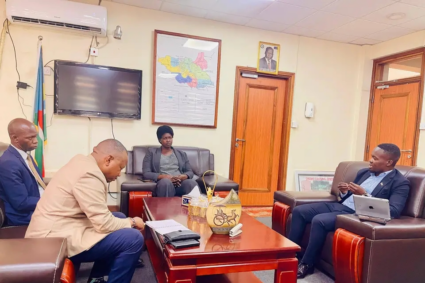
The initiative was disclosed in a discussion between Governor Badagbu Daniel Rimbasa and representatives of Fauna and Flora led by Landscape Manager and Acting Country Manager Lauren Macneil, and the State Director of Wildlife Services, Joseph Duop Deng.
The talks focused on improving the protection of wildlife parks and conservation corridors while addressing the socio-economic challenges that often push local communities into hunting and illegal wildlife activities.
During the meeting, leaders highlighted the importance of protecting several critical wildlife areas in the state, including Southern National Park, Birekpatuo Game Reserve, Bangangai Game Reserve, the Andari Community Conserved Area, the Naandi-Nyesi Community Conserved Area, Moruko Area, and the Manikakara Elephant Corridor in Ibba County.
These protected areas serve as important habitats and migration routes for wildlife, including elephants and other species that form part of the region’s rich biodiversity.
Governor Rimbasa emphasized that protecting these natural resources is essential not only for environmental conservation but also for long-term development in the state.
“Wildlife is one of our most valuable natural assets,” Rimbasa said. “If we protect our parks and wildlife corridors while supporting communities with alternative livelihoods, we can preserve our environment and at the same time improve people’s lives.”
As part of the strategy to reduce pressure on wildlife, the state government announced plans to register hunters across the state and provide them with vocational training in different skills that can generate income outside of hunting.
According to the governor, the initiative will include training programs in masonry, carpentry, construction work, salon services, and other practical trades that can help former hunters transition into sustainable professions.
“This program will give our youth and hunters an opportunity to learn new skills and earn a living without depending on wildlife,” Rimbasa said.
“We want to transform hunters into skilled workers who contribute positively to the development of Western Equatoria.”
Officials believe the program will help reduce illegal hunting activities that have threatened wildlife populations in some protected areas.
Meanwhile, State Director of Wildlife Services Maj. Gen. Joseph Duop Deng said wildlife authorities will continue strengthening conservation efforts while working closely with communities living near parks and reserves.
“Our responsibility is to ensure that wildlife in Western Equatoria is properly protected,” Deng said. “But conservation cannot succeed without the support of the communities that live around these protected areas.”
He noted that community awareness and cooperation will play a crucial role in ensuring that conservation initiatives are respected and sustained over time.
Representatives from Fauna and Flora also reaffirmed their commitment to supporting conservation efforts in the state through technical assistance, community programs, and collaboration with local authorities.
Lauren Macneil said partnerships between government institutions, conservation organizations, and communities are key to protecting wildlife while ensuring that development opportunities reach residents.
“Protecting wildlife and supporting communities must go hand in hand,” Macneil said.
“When people have sustainable livelihoods, they become partners in conservation rather than threats to wildlife.”
The meeting also addressed challenges related to human-wildlife interactions, particularly in areas where animals migrate through farming communities.
Authorities noted that elephants frequently pass through the Manikakara corridor in Ibba County, and local farmers were encouraged to avoid cultivating along the route to prevent conflicts between wildlife and people.
Participants agreed that coordinated planning and community awareness campaigns will be necessary to ensure both wildlife protection and the safety of residents living near conservation areas.
The discussions concluded with a commitment from the state government, wildlife authorities, and Fauna & Flora to strengthen cooperation in protecting wildlife resources while creating economic opportunities for local communities.
The officials said the combined approach protecting key wildlife habitats while supporting alternative livelihoods could help Western Equatoria become a model for community-based conservation and sustainable development in South Sudan.
Utilities
“When people have sustainable livelihoods, they become partners in conservation rather than threats to wildlife,” Fauna and Flora Landscape Manager and Acting Country Manager, Lauren Macneil, said.