

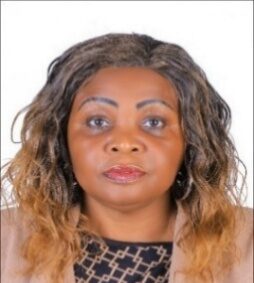

By Rev. Santino Odong Othol
Generally in South Sudan, there are dangers of transport whether by road, air or river. However, I would like to limit this article to the dangers of air and river transport because it is with these two means of transport by which, I had bitter experiences.
It has been reported that since independence of South Sudan in 2011, there has been multiple plane crashes, car accidents and boat incidents costing huge losses of lives. Most of these incidents were due to negligence and lack of care for the sanctity of human life as this aricle stipulates. First, I will start with my experience with air transport and second, come to my experience with river transport.
In 2018, I travelled from Juba to Renk with some colleagues for religious dialogue between Christians and Muslims, a program organized by South Sudan Council of Churches (SSCC) in collaboration with CRS . When we arrived at the airport on the scheduled date and time. First, I was shocked by the kind of airplane we flew in. On my way to the airport, I had a picture of a plane in my mind that was different from the one which I saw on ground.
First unusual thing that I noticed about this aircraft was that passengers boarded from the rear. Even though these kinds of planes were usually used and are still being used for passengers, I was shocked because this was my first experience using them.
The second thing that shook me was that in the plane, in the same place where we sat, there were different kinds of goods, including motorcycles. This picture discouraged me to the extent that I almost postponed the trip because of the potential dangers. Nonethless, due to the importance of the program that we were traveling for, I entrusted myself to God’s care and proceeded with the trip.
The third shock for me after boarding the plane, was that the plane’s rear was closed manually, and with difficulty. And after a few minutes from takeoff, the rear of the plane opened and I feared that something might have gone wrong with the plane. However, my fear was shortly dispelled after a regular passenger with these kinds of planes said that this action was done in order to get air into the plane because there was no oxygen in the plane. It would have been better if the pilot informed us about this before take off. But he might have assumed that all passengers were aware about this.
After flying for a short distance, it started raining, and inside the plane turned very cold. With the bad weather, efforts by the plane to land were futile, even after trying twice. This worried most passengers who stopped conversing as the plane remain very quite, passngers hearts pumping worriedly. Thank God we finally managed to land.
Due to this painful experience, all of our team members refused to come back to Juba with the same flight.The harrowing experience compelled the organization responsible for our program to book us with the UN flight, which, gladly and comfortably, flew us back to Juba through Malakal and Rubkona.
My second bitter experience was with river transport in June 2023. Again, we travelled to Upper Nile State with a number of colleagues for a church program. We commend the Governor of Upper Nile State, General James Oyay Odhok for helping us with a speed boat from Malakal to Kodok. The first boat, which was scheduled to take us to our destination, developed an engine problem before we left Malakal and eventually, it was replaced by another.
This other boat sailed well until when we were close to our destination, then it also developed a technical hitch in one of its plugs; essential engine’s parts for electicity. This plug got burnt and the boat’s skipper (driver) who was alone without an assistant, did not have a reserve spare part. To make the matters worse, the weather also turned bad.
It started to rain heavily and the rain was accompanied by strong winds. Given the situation, on our advice, the boat had to be dragged and stopped in the grass in the river until rain and winds subsided, about three hours later.
After this, when we were to resume our journey, the boat’s engine completely refused to start for about two hours. Thank God for availability of technology which enabled us to make contacts by phones with authorities in both Kodok and Malakal asking their assistance. After receiving our message, authorities in Kodok were about to send us a boat to rescue us and suddently our boat’s engine started and in about 15 minutes , we reached Kodok port because where stopped was very close to Kodok.
Due to the cold weather that we endured in the river for several hours, when we arrived to Kodok we were shiviring from cold. However, we were rescued by some restaurant owners near Kodok port, where we sat near a fireplace to warm ourselves. Afterwards we had dinner, and got some energy.
The boat’s driver was alone with neither a co-driver, nor assistant. He did not have safety measures in the boat. The boat was open without covering to protect passengers from the sun or rains. When it rained, it rained on us. We tried to cover ourselves with some few coverings which we had, such as one umbrella and a rain coat, but they were not enough. The boat’s driver did not carry any thing to protect himself by from rains, winds, or sun. When he shivered and was not able to start the boat’s engine, or manage the boat properly, he was assisted by a young man who was in our company.
On our way back to Malakal, we made sure to buy two plugs as sparew parts and an oar that would help in case we encountered problems with the boat’s engine. However, this time round, we safely arrived at Malakal without problems with the boat.
This said, all those issues I narrated in this article, are indicative of negligence and a lack of respect of sanctity for human life, as I stated earlier. Additionaly, these behaviours and practices, demonstrate carelessness and ambition for acquiring much wealth irregardless of means by which it is acquired even if it involves loss of human lives. Hence, it is very imperative to urge authorities to put measures in place to put an end to these dangers, otherwise many citizens will continue to loose their lives because of negligence and selfish ambitions.
Therefore, I commend parliament for passing the Civil Aviation Act several months ago. I hope this will lead to improving the air transport and minimize airoplane crashes. Moreover, South Sudanese citizens, expect the government to deliver more in this regard including improvement in river transport so that the dangers of these means of transport are minimized and people are able to travel freely without fear.
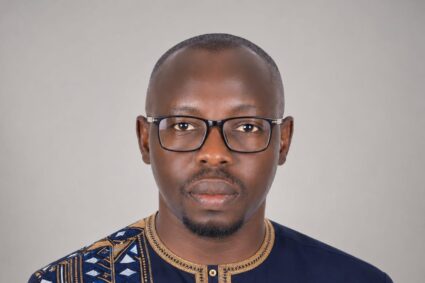
Rev. Santino Odong Othol is a pastor of the Presbyterian Church of South Sudan. A long time theological College lecturer at Nile Theological College and various theological Colleges in the Sudan and South Sudan, Othol previously served as Principal of Nile Theological College. Currently, he does pastoral work and biblical translation. The insights shared in the commentary are his own. He can be reached at: +211912661560. Or santinoodong@gmail.com.