



Expand farmlands for prisoners, not multiple prisons, WES citizens advise

By Emmanuel Mandella
There is need to keep prisoners active on productive activities such as agriculture.
This was rallying call by most citizens across Western Equatoria State during a call-in session at Anisa FM 92.0 FM.
According to some of the listeners, the state government should establish prison farms and decentralize correctional centers instead of spending limited resources on renovating the aging Yambio Central Prison.
Speaking on Anisa FM 92.0 in Yambio during a live phone-in program on Wednesday morning, multiple community members argued that opening prison farms across counties would not only ease overcrowding but also contribute to food security in the state.
“Instead of investing heavily in renovation, let the government open farmland for inmates. This will keep prisoners productive and reduce hunger in both prisons and communities,” said one caller from Nzara County.
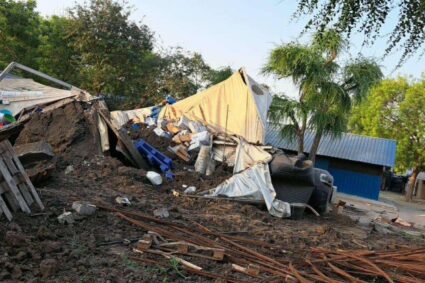
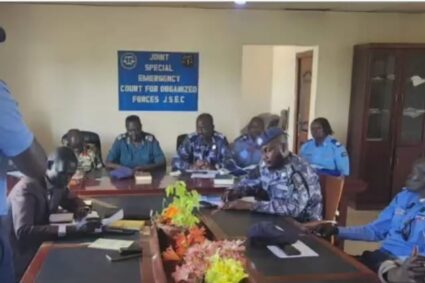
The public comments follow recent reports that highlighted the dire conditions in Yambio Central Prison, a colonial-era facility built in the 1940s. During a recent inspection on July 14, Col. Thomas Tong Agoth of the National Prison Service led a delegation from Juba to assess the prison’s deteriorating condition.
According to Ajak Gurech Anyang, the Director of Prisons Service in Western Equatoria State, the prison suffers from “crumbling infrastructure, overcrowded cells, and food shortages.” He described many of the buildings as structurally unsound, with cracked walls and leaking roofs.
“Inmates are also suffering from hunger because food contractors are not paid on time. We need farming tools like tractors to help prisoners grow their own food,” Ajak noted.
While supporting the idea, Col. Thomas appealed to the Ministry of Agriculture to provide farming equipment to promote self-reliance among inmates. “We are here to assess the conditions of the facility. We want to check the infrastructure, food supply, healthcare, and population,” he said.
In response, Acting Governor Daniel Badagbu acknowledged the gravity of the situation.
“The infrastructure is collapsing. There is no consistent food supply, and medical care is minimal,” he admitted.
While confirming the delivery of basic items such as mattresses and food to the prison, Rimbasa revealed the state’s broader vision.
“We are planning a full renovation and support for prison farming as a sustainable solution. An agricultural cooperative center is in the pipeline to reduce dependency on state resources.”
Across South Sudan, some prison facilities have faced the challenge of poor sanitation, overcrowding, inadequate healthcare, and inconsistent food supplies.
According to the South Sudan Human Rights Commission and various civil society organizations, many inmates are held for extended periods without trial, further straining the already inadequate prison infrastructure.
“We’ve seen prisoners sleeping on the floor, some surviving on one meal a day,” said Edmund Yakani, Executive Director of CEPO. “This calls for long-term reform, not just ad hoc donations or promises.”
The Transitional Constitution of South Sudan and the Prison Service Act outline standards for correctional facilities, but implementation remains weak due to budgetary constraints, weak governance, and conflict-related displacement.
In addition to prison farms, callers on the radio program urged the state to establish smaller correctional centers in counties like Ibba, Maridi, and Tombura to decongest Yambio Central Prison and allow for more efficient rehabilitation programs.
“Our counties are vast and underserved, let prisoners be reformed closer to home, where local communities can also be part of the rehabilitation process,” said another caller from Yambio town.