


Badagbu calls for armed groups to surrender, join peacebuilding process

By Emmanuel Mandella
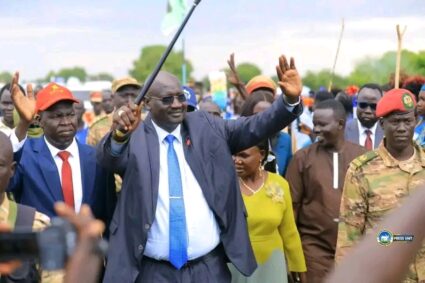
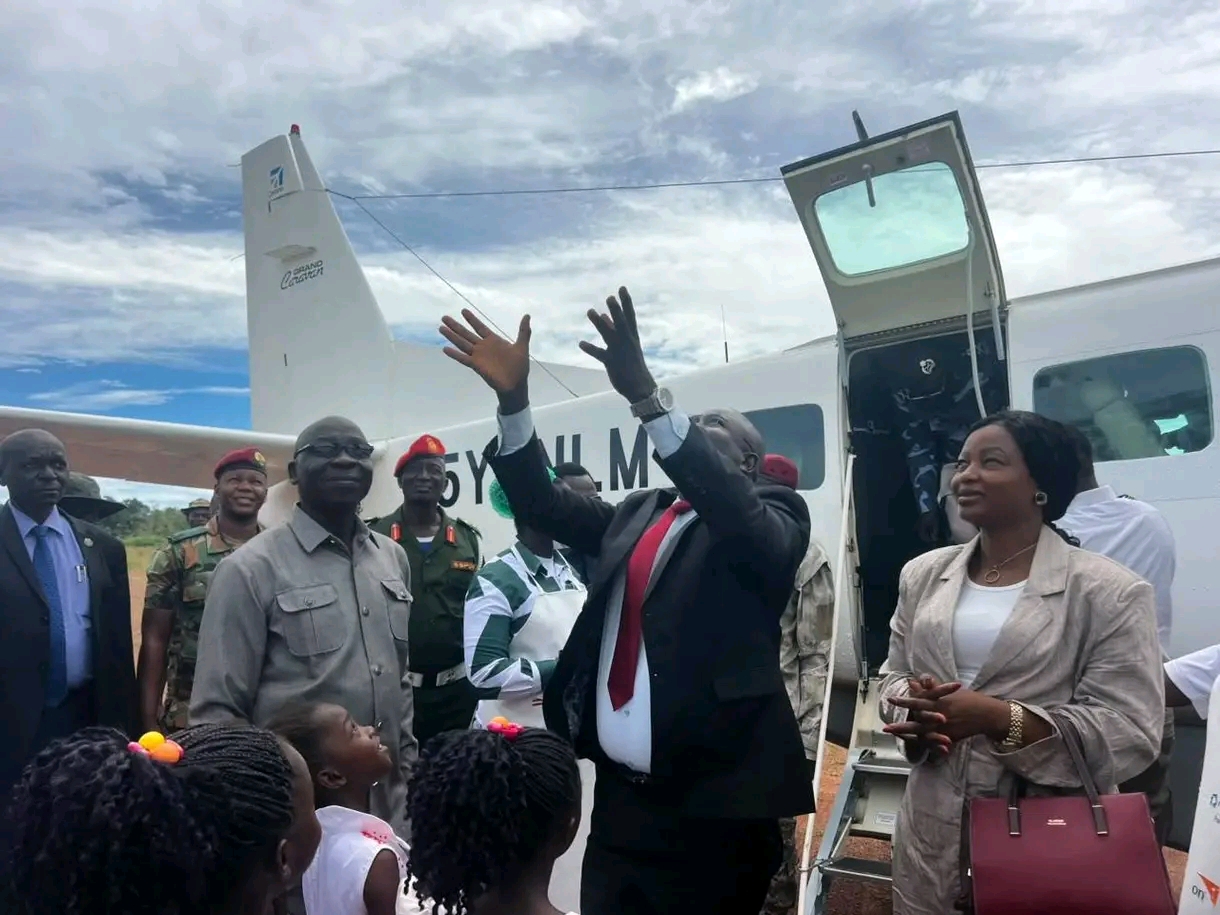
Western Equatoria State Caretaker Governor Badagbu Daniel Rimbasa (raising hands) is received at Yambio airport by state officials. [Photo: Courtesy]
Western Equatoria State Caretaker Governor Badagbu Daniel Rimbasa has called on armed groups and individuals operating outside the formal political process to surrender and embrace peaceful participation, saying the state must overcome insecurity and divisions to prepare for the December elections.
Speaking on Monday during a public rally at Yambio Freedom Square to mark his official assumption of office, Badagbu said his administration’s immediate priority is to establish peace, restore confidence among communities and create conditions for free movement of people and participation in elections.
The governor acknowledged that he had returned to lead the state at a difficult moment, describing his appointment by President Salva Kiir Mayardit as a responsibility to serve the population during a critical period in the country’s political transition.
He said the assignment requires cooperation between the state government, traditional authorities, religious institutions, political leaders and ordinary citizens.
“I have come to work with you,” he said, appealing to communities to stop hostility and embrace reconciliation as the state prepares for the scheduled December 22 elections.
Badagbu directly appealed to individuals and armed groups still outside the formal political process to surrender and engage with the authorities.
He assured those willing to come forward that they would be welcomed, and urged them to reconsider continued armed activity and participate in determining the state’s political future through peaceful means.
The governor questioned the value of continued fighting at a time when South Sudanese citizens are expected to choose their leaders through elections.
He argued that political disagreements should not continue to cost lives when there is an opportunity for citizens to participate in the electoral process and seek leadership through established political channels.
Badagbu also appealed to community representatives and religious leaders to help communicate the message to young people who are still involved in armed activities.
He urged them to engage those still in the bush, encourage dialogue and help persuade them to return to peaceful community life.
The governor’s appeal did not identify particular armed groups or announce a new surrender programme. Instead, he presented reconciliation and engagement as approaches through which the state could encourage those involved in violence to reconsider their position.
The caretaker governor urged citizens to work towards reconciliation, saying the state had experienced enough suffering and should now concentrate on rebuilding trust and restoring peaceful coexistence.
Badagbu emphasized that lasting stability could not be achieved by government action alone. He called for a collective effort involving political leaders, elders, religious institutions, women, young people and civil society organizations.
He encouraged traditional leaders to use their influence to resolve disputes and discourage actions that could escalate tensions, and for religious leaders to play an active role in peacebuilding by reaching out to young people who could fall prey to recruitment to armed groups.
The governor’s approach placed community engagement alongside formal security measures, suggesting that restoring stability would require both responsible public leadership and sustained dialogue at grassroots level.
As the December election date approaches, the state faces the challenge of preparing citizens to vote while addressing the security concerns that could restrict participation.
Badagbu concluded by urging residents to work collectively to protect the state’s future and preserve the legacy of earlier generations.