


Weak funding, limited independence: The agonizing experience of S. Sudan anti-graft body


South Sudan Anti-Corruption Commission highlights its mandate, a heavy lifting that requires institutional support, but which has faced mounting challengesBy Emmanuel Mandella
“Our ability to investigate corruption, protect public resources and hold offenders accountable is being undermined by inadequate funding, limited operational capacity and weaknesses in the implementation of its legal mandate.”
This was the statement laid bare by officials from South Sudan Anti-Corruption Commission during an exclusive interview with The City Review newspaper.
According to the Commission’s Executive Director, Jeremiah Ater Kucjok and Director of Corruption Prevention and Education Commission, William Sunday D. Tor, the institution has a strong legal mandate on paper but continues to face serious practical constraints in carrying out its responsibilities.
The Commission’s responsibilities, the stated, include preventing and investigating corruption, conducting public awareness and integrity campaigns, promoting ethical conduct in public institutions, monitoring assets and, where legally applicable, pursuing the recovery of public assets lost through corruption.
Intriguingly, though expansive and critical as the mandate is, the Commission has not been able to perform its duties effectively, as they are financially crippled and suffer immense human and logistical challenges.
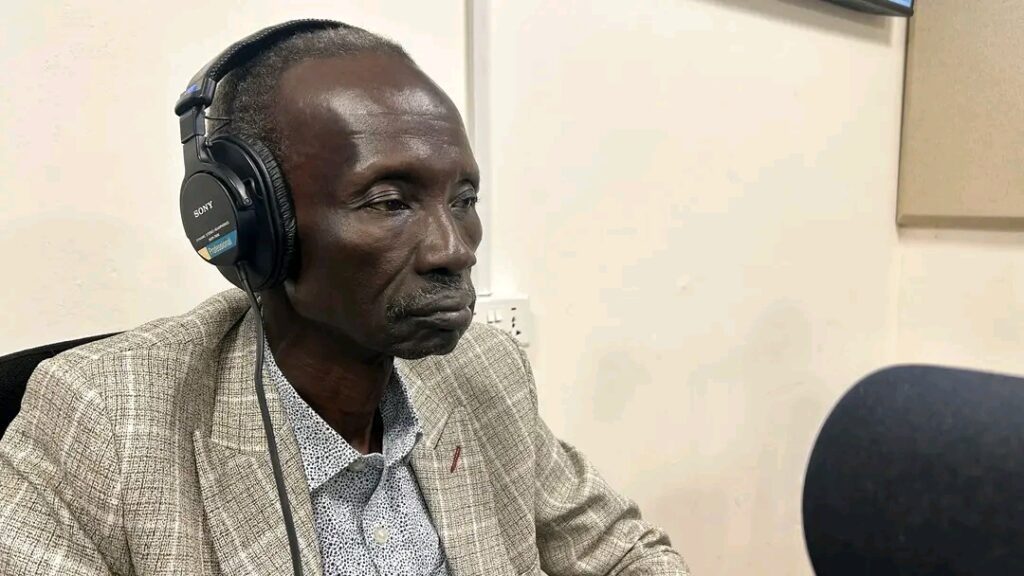
Mr. Jeremiah Ater Kucjok, the Executive Director, South Sudan Anti-Corruption Commission.
“The major challenge is resources. We don’t have adequate resources that can enable us to do our work,” Kucjok said.
The commission’s concerns come as South Sudan continues to face widespread allegations of corruption, weak public financial management and limited accountability, albeit tucked in a critical historic moment.
Kucjok said South Sudan has strengthened the legal framework governing the Anti-Corruption Commission, giving it responsibilities that go beyond public awareness to include investigation and the pursuit of corruption cases through the appropriate legal institutions.
He said the commission is also expected to protect public property and prevent corruption through education, awareness campaigns, ethical standards, asset declaration and other preventive measures.
However, he argued that legal mandate alone cannot produce results if institutions are not given the resources required to implement it.
“The Commission urgently needs qualified investigators, adequate equipment, vehicles, operational funding and functional offices to investigate allegations, collect evidence and follow cases across the country,” said the Executive Director.
According to Tor, the financial difficulties have affected the institution’s ability to implement planned activities and meet basic operational requirements.
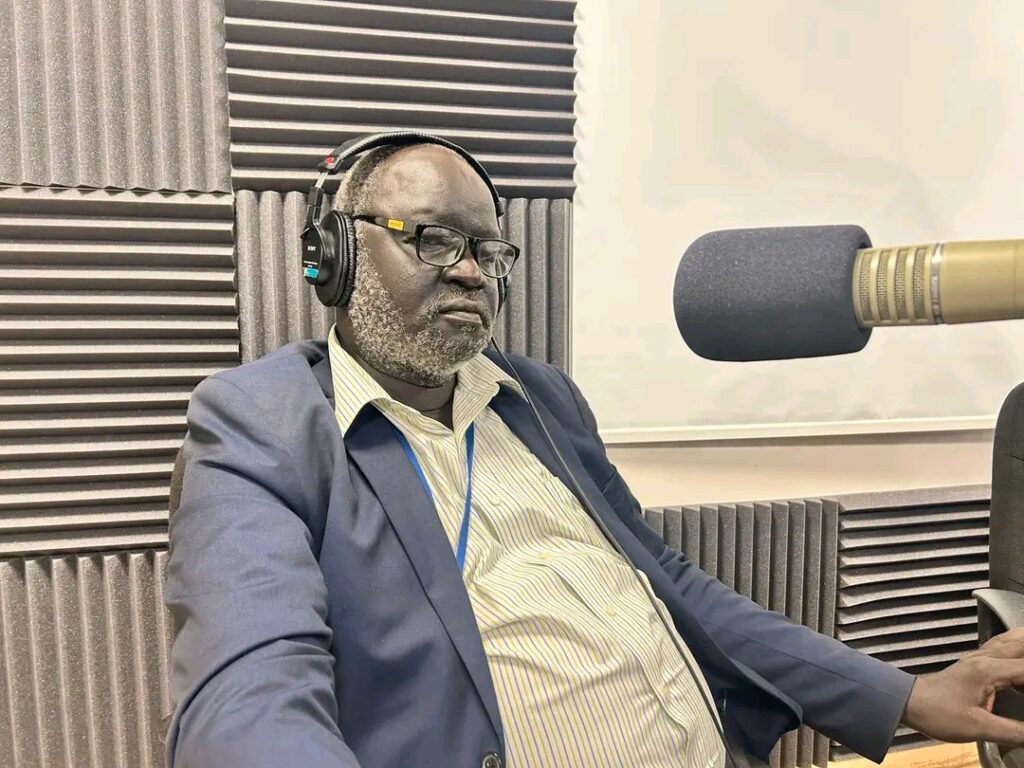
Mr. William Sunday D. Tor, Director of Corruption Prevention and Education at South Sudan Anti-Corruption Commission.
The challenges range from unmet operating costs, mobility and the lack of vehicles needed by commission officials and departments to carry out investigations and field activities.
“The problem extends beyond the national commission to other accountability institutions that are expected to work alongside it. Parliament, the judiciary, the financial intelligence system, the Bank of South Sudan and other institutions must also have adequate capacity if the country’s broader accountability system is to function,” explained the officials.
Although the commission considers itself legally independent, its officials said financial dependence remains a major obstacle to genuine operational independence.
While it is authorized to prepare its own budget and present it through the appropriate government and parliamentary processes, failure to approve funding for its operations has meant its functions are not effectively achieved.
“Legally, we are independent, but in terms of resources, we are not that independent,” Kucjok explained of an institution whose role is instrumental, but which has become a shadow of its larger self, due to far-reaching hurdles.
An anti-corruption body may have the authority to investigate a powerful official, they argued, but still require government-controlled resources to pay rent, maintain offices, travel to conduct investigations and obtain the equipment necessary to collect evidence.
Tor said the commission’s budget should be treated as an essential component of the country’s accountability architecture rather than as an ordinary administrative expense.
“The commission is an independent institution. Its budget needs to be passed by Parliament with other budgets of the country,” Tor said.
Accommodation challenges
The commission also disclosed that it has struggled with office accommodation.
Kucjok said the commission had previously occupied rented premises but faced difficulties meeting rental obligations because of insufficient funding.
He also referred to a government building along Yei Road that was intended to accommodate the commission but remains incomplete.
The lack of adequate premises, transportation and operational equipment, officials said, affects not only investigators but also departments responsible for prevention, public education and institutional coordination.
For a national body expected to investigate corruption across South Sudan, the absence of reliable transport is particularly significant because evidence and complaints often originate far beyond Juba.
Talking about state-level anti-corruption offices, the officials said the difficulties are even more pronounced at the subnational level.
They argued that corruption is not confined to national institutions and that effective prevention must reach states and administrative areas.
However, they raised concerns over the way some state-level anti-corruption structures have been established and staffed, saying arrangements created under the peace process have sometimes produced structures that are not adequately resourced or properly integrated into the national commission’s operational system.
“State anti-corruption offices should be properly constituted, staffed and equipped under the relevant legal framework and should have the professional capacity to operate without political interference,” Kuacjok said, adding that state-level commissioners and staff cannot be expected to investigate corruption effectively when they lack operational resources and institutional support.
The commission’s concerns come against the backdrop of increasingly severe international scrutiny of corruption and public resource management in South Sudan.
In September 2025, the United Nations Commission on Human Rights in South Sudan said its investigations had identified what it described as “systemic government corruption” and the diversion of oil and non-oil revenues through opaque arrangements and politically connected contracts.
The UN commission said corruption was contributing to the country’s humanitarian and human rights crisis, arguing that resources that should support public services were being lost while millions of South Sudanese continued to face severe humanitarian needs.
The findings have intensified calls for stronger financial transparency, independent oversight and accountability for those accused of misusing public resources.
The allegations have sometimes led to sanctions and movement limitations, including by the United States government among other players.
For the Anti-Corruption Commission, the issue is not simply about stolen money or financial irregularities.
Kucjok warned that corruption can gradually become normalized when citizens see public officials accused of wrongdoing without effective accountability.
“If corruption is allowed not to be fought, the nation or society in South Sudan is going to adopt corruption as a normal norm,” he said.
He argued that unchecked corruption threatens economic growth, public services, national unity and public confidence in government institutions.
The consequences are particularly visible when public resources fail to translate into functioning hospitals, schools, roads, salaries and other essential services.
In a country heavily dependent on oil revenues, the officials said stronger oversight of public finances is essential to ensuring that national resources benefit citizens rather than being diverted through corrupt practices.
Threats of unchecked corruption
With South Sudan preparing for the December 22, 2026 elections, the commission says its role will become even more important.
Kucjok said the institution needs sufficient resources to monitor corruption risks associated with the electoral process, including the misuse of public assets, unequal access to state resources and undisclosed financial interests.
He called for political parties and candidates to comply with applicable asset-declaration and transparency requirements.
He also warned against using public vehicles, funds, personnel and other state resources for partisan political activities.
“We wanted to be fully funded so that we can monitor, detect and prevent all forms of corruption,” Kucjok said.
The commission also wants political actors to disclose their assets and sources of campaign financing in accordance with the law and to ensure that foreign interests do not improperly influence the electoral process.
The concerns are particularly significant because South Sudan’s elections are being prepared amid an ongoing political transition, economic pressures and continuing security challenges.
The officials stressed that stronger anti-corruption laws alone will not be enough.
They called for political commitment from the presidency, Parliament, Ministry of Finance, judiciary, law-enforcement agencies, election institutions, civil society and the media.
Kucjok said the commission requires genuine political support to investigate corruption without fear or favour.
“We need political will genuine political will and all the support that we need to do that work,” he said.
He also called on the media to investigate and expose corruption rather than celebrate individuals accused of abusing public resources.
Media, civil society advocacy
The commission sees journalists and civil society organizations as important partners in monitoring public spending, exposing wrongdoing and educating citizens about their rights.
The officials emphasized that fighting corruption cannot be left to the Anti-Corruption Commission alone.
They said Parliament must exercise effective oversight, auditors must scrutinize public expenditure, financial institutions must identify suspicious transactions, investigators must gather evidence, prosecutors must pursue viable cases and courts must adjudicate them independently.
Tor said the judiciary and Ministry of Justice are particularly important because corruption investigations ultimately require effective legal processes.
He urged political leaders to strengthen institutions across the accountability chain rather than expecting one institution to solve the problem alone.
The commission’s warning presents a broader question for South Sudan: whether the country can build credible institutions capable of protecting public resources as it moves toward elections and the completion of its political transition.
International findings have already placed South Sudan’s management of public resources under intense scrutiny. The UN’s 2025 human rights report linked systemic corruption to failures in basic services and the wider human rights crisis, while U.S. sanctions over several years have targeted individuals and businesses accused of corruption or destabilizing activities.
But the Anti-Corruption Commission argues that international pressure alone cannot solve the problem.
The ultimate responsibility, it says, rests with South Sudanese institutions to establish effective systems for preventing corruption, investigating allegations, recovering stolen public assets and ensuring that those found responsible face due legal process.
As the country approaches the December 2026 elections, the commission is calling for its institutional capacity to be strengthened before the campaign period intensifies.
Its message is straightforward: South Sudan cannot expect an effective fight against corruption without adequately financing and protecting the institution legally mandated to lead that fight.