
NEC says 98 per cent of voter registration materials ready as preparations gains momentum

By Emmanuel Mandella
The National Elections Commission (NEC) says it has completed the production of 98 per cent of materials required for voter registration, as preparations continue for the planned December 22, 2026, general elections.
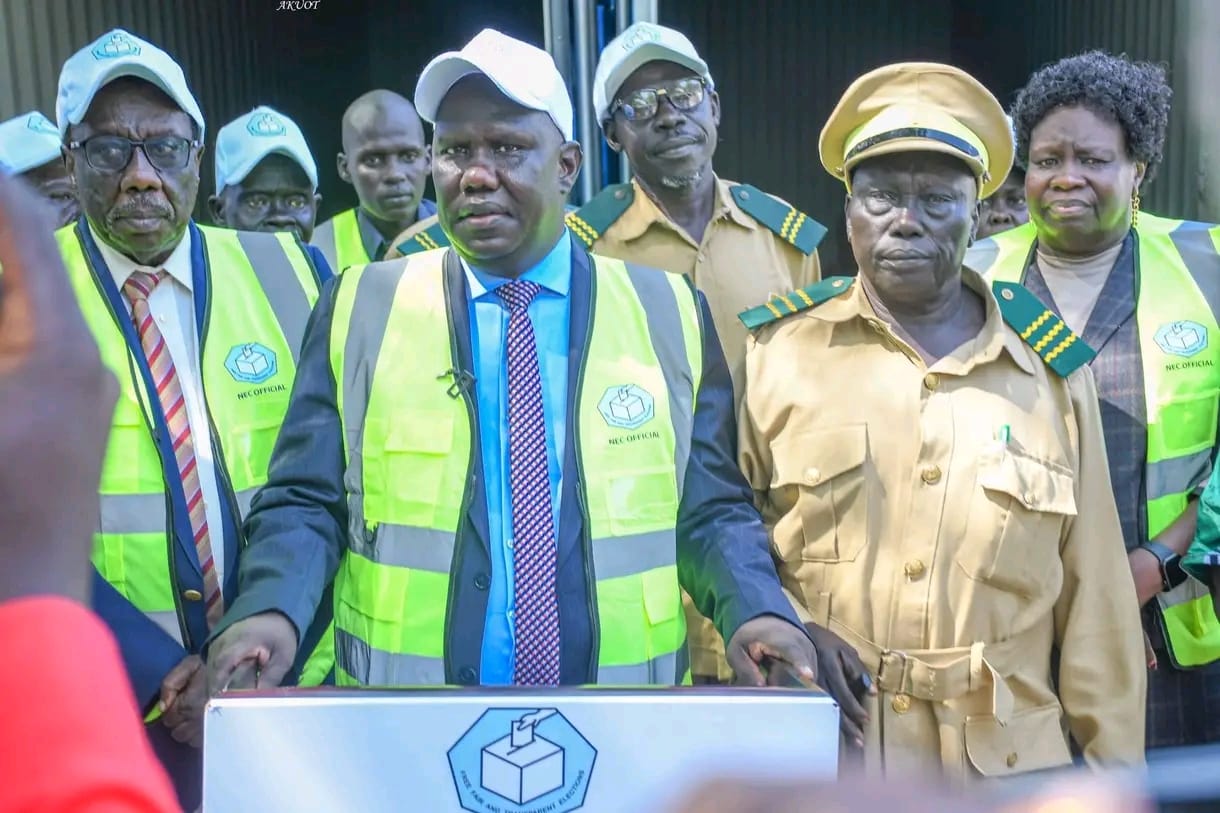
The Commission’s Chairperson Gabriel Bol Deng made the disclosure during a media interview, saying the electoral body has established operational offices across the country and is now concentrating on the final preparations for the nationwide voter registration exercise.
The briefing, attended by the NEC leadership, was aimed at updating eligible voters and the public on the commission’s progress, logistical arrangements and remaining activities ahead of the elections.
The chairperson emphasized that elections are a process requiring institutional preparation, trained personnel, infrastructure and adequate logistical arrangements rather than a single-day activity.
He said the commission had prioritized establishing its headquarters and operational offices across the country to ensure its presence in the ten states and facilitate the implementation of electoral activities.
“As you know, an election is a process; it is not a one-day affair. Throughout this process, we have to lay the groundwork for elections, beginning with training staff and establishing election infrastructure,” the chairperson said.
He explained that the commission had moved into the material-preparation stage, with 98 per cent of the electoral materials already produced. These include materials needed for voter registration and the subsequent electoral activities.
According to the NEC leadership, the remaining preparations involve technical equipment and other requirements needed to make registration centres operational.
Providing details on the distribution of electoral materials, the commission’s Chief Electoral Officer, Hon. Mary Ajith, disclosed that five states had so far received the materials, while distribution to the remaining states was still pending.
She said arrangements were underway to transport the outstanding materials, with the commission working towards completing the distribution exercise as part of preparations for the registration process.
The commission also explained that its preparations involve not only the delivery of registration materials but also civic education to familiarize citizens with the electoral process and inform them about the requirements for voter registration.
One of the major challenges highlighted during the briefing was the preparation of adequate human resources and logistical support for the planned nationwide voter registration.
The NEC chairperson disclosed that the commission had identified 3,161 voter registration centres across the country, with each centre expected to have seven workers to facilitate the exercise.
He said this would require a substantial workforce, alongside security personnel and other support services to ensure that registration centres operate effectively.
The chairperson stressed that the commission was also considering the welfare and safety of citizens who will visit registration centres, including women, children and vulnerable people.
He said each centre should have access to essential facilities, including water, security arrangements and emergency medical assistance.
“We do not want people coming to register and finding that there is no water, no security or no emergency medical assistance. We have to make sure that the basic needs are in place before the exercise begins,” he explained.
The commission also intends to work with relevant security agencies and health facilities to ensure that registration centres are safe and adequately supported.
Based on the commission’s stated requirement of seven workers at each of the 3,161 centres, the total workforce would amount to 22,127 personnel, although the chairperson cited 22,161 during the briefing.
Meanwhile, NEC spokesperson Hon. Josphine Achiro Fortelo said the commission would strengthen its communication strategy through regular media engagements to address misinformation and ensure that the public receives accurate and timely information about electoral preparations.
Achiro acknowledged concerns about the circulation of misleading information surrounding the electoral process, saying the commission intended to establish weekly media briefings to provide updates on its activities.
She said the briefings would bring together journalists, civil society organizations and other stakeholders to explain the commission’s progress, respond to public concerns and clarify issues surrounding voter registration and the elections.
According to her, the commission also plans to engage different stakeholders and conduct public awareness activities to familiarize citizens with the electoral process.
She emphasized that effective communication would be essential in building public confidence and preventing misinformation from undermining the electoral preparations.