



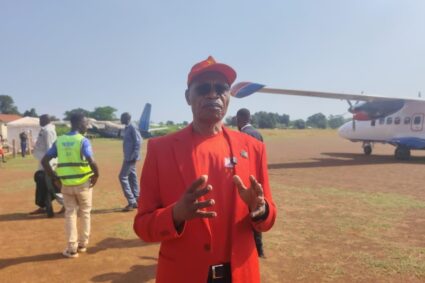


Philip Aguer’s governorship bid: My plans for a stable, economically empowered Jonglei

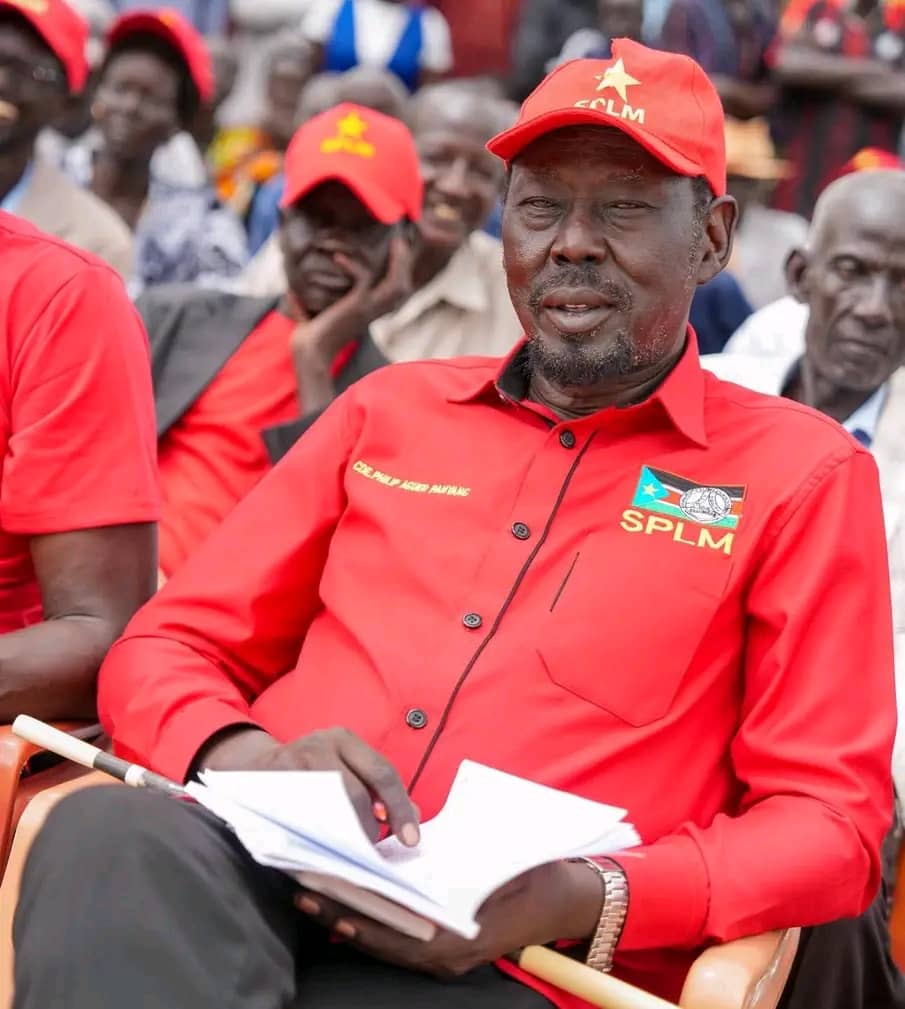
The aspirant, who has served as governor of Jonglei State in the past, says his leadership vision is built around creating a united, peaceful and prosperous State
By Samuel Yuang
Former Governor of Jonglei State, Hon. Philip Aguer Panyang, has pledged to prioritise security, good governance, economic development and community reconciliation as he seeks another opportunity to lead the state.
Panyang said his leadership vision is built around creating a united, peaceful and prosperous Jonglei State, noting that his previous experience as governor had given him an understanding of the challenges facing the region.
He recalled that during his previous tenure, Jonglei was structured differently, with the former Bor District comprising Bor, Twic East and Duk counties before the administrative expansion that resulted in the current nine-county state.
He said his development agenda, which began taking shape between 2015 and 2016, focused on strengthening security, improving governance and creating conditions that would support agriculture, trade and private-sector growth.
On security, Panyang said his administration had worked to stabilise areas bordering neighbouring administrative regions and states, including Bieth, Fangak and the Greater Pibor Administrative Area, to create a secure environment for economic activities.
He emphasised that peace and security are essential for agricultural production, business growth and the movement of people and goods.
Panyang said he intends to promote regional trade by establishing common markets and strengthening commercial connections with neighbouring areas, including Ethiopia through Akobo, Kenya through Boma and communities in Eastern Equatoria.
According to him, the private sector has a significant role to play in economic development, and his administration would encourage business activities and investment to improve livelihoods across Jonglei State.
Addressing persistent insecurity and communal violence, Panyang proposed a participatory, community-based approach to peacebuilding, arguing that local communities have traditional mechanisms for dialogue, mediation and reconciliation that should be strengthened with professional expertise.
He said sustainable peace must produce tangible benefits for communities, particularly through trade, shared markets and economic cooperation.
“Security is not about the government; it is about the people. It is about human security,” Panyang said.
He added that promoting unity and communication among different communities would help reduce suspicion, isolation and tensions that often contribute to conflict.
The former governor also identified poor road infrastructure and geographical isolation as major challenges affecting stability and development in Jonglei.
He proposed reopening historical roads that operated during the British colonial period and subsequent administrations to reconnect isolated communities, particularly in areas such as Pigi, Khorfulus and Fangak, which are frequently affected by flooding and poor road access.
Panyang said improved road connectivity would facilitate movement, strengthen social interaction and create opportunities for trade and service delivery.
Reflecting on the challenges of his previous administration, he identified limited financial resources as one of the major obstacles to implementing development programmes.
However, he argued that communities themselves represent an important resource that can support development if properly mobilised.
He proposed encouraging small-scale businesses, agriculture, vocational training and irrigation farming, including the use of stagnant water and available water sources to grow vegetables and other short-term crops along rivers and in swamp areas.
According to Panyang, creativity, community participation and hard work could help address some of the economic challenges facing the state despite limited government resources.
He also highlighted trust-building among communities as one of the major achievements of his previous leadership.
Panyang said his administration worked to strengthen relations between the Dinka and Murle, as well as between the Nuer and Dinka communities, creating opportunities for peaceful coexistence and cooperation.
As an example, he cited the establishment of the Anyidi market, which he said provided a common trading space for communities from Gumrol and Gok areas, including Kolnyang and Anyidi.
He explained that the market demonstrated the importance of trust and cooperation, adding that his administration also worked to apprehend criminals involved in exchanging stolen cattle along the borders of Duk and Uror, as well as neighbouring areas.
However, he acknowledged that the efforts were not fully successful because of the absence of adequate prisons and functioning courts to deal with criminals.
Panyang expressed confidence that a government operating under a longer-term political mandate would have a better opportunity to implement development programmes and address longstanding challenges.
He argued that a five-year administration could provide greater continuity in planning and implementation compared with short-term caretaker arrangements, which often limit the ability to complete development projects.
In his closing message, Panyang called on the people of Jonglei to remain confident in their ability to build a peaceful and united society, drawing inspiration from the vision of a New Sudan.
He said the vision of a New Sudan could begin at the village level and extend across all nine counties of Jonglei State.
“We are capable of building a New Sudan where people will live in harmony with one another and move freely by roads or rivers,” he said.
Panyang maintained that a united, peaceful and prosperous Jonglei was achievable through collective responsibility, improved security, economic cooperation and inclusive leadership.
Utilities
“I would propose a participatory, community-based approach to peacebuilding ant in addressing persistent insecurity and communal violence. Security is not about the government; it is about the people,” Phillip Aguer, former Jonglei Governor and aspirant for the gubernatorial seat.