





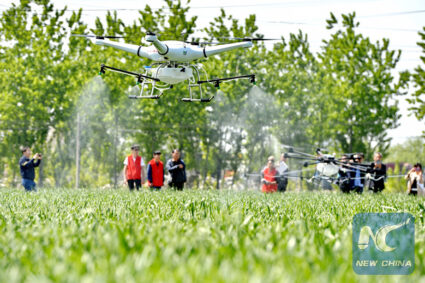
China’s agricultural footprint: From farm technology to food security

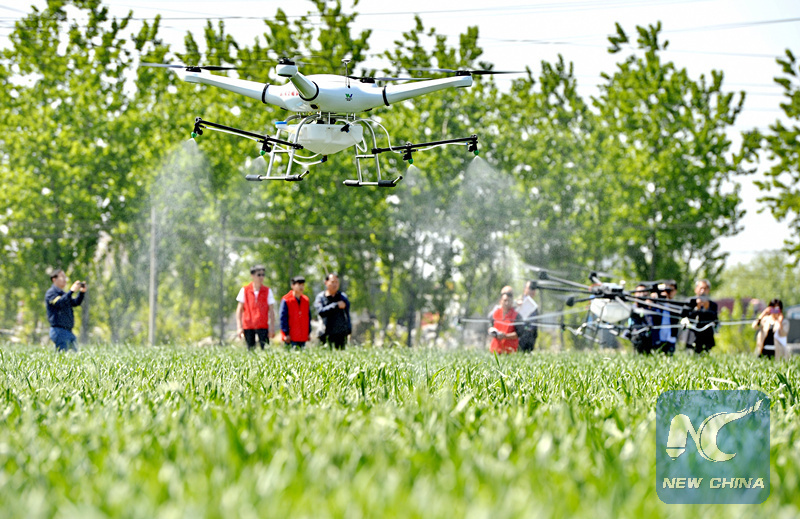
China is committed to addressing Africa’s food insecurity and hunger challenge through targeted interventions focusing on technology transfer, irrigation projects, farmer training, agricultural investment and market access.
By The City Review
China has used technology to reshape agricultural,improve yield and ensure food security to the billions of its people. [Photo: Courtesy]
Maslow’s hierarchy of needs classifies food as a physiological need alongside air, water, sleep, and shelter. These are fundamental requirements without which survival is impossible. The Food and Agriculture Organisation of the United Nations (FAO) notes that food is the third most basic need after air and water, placing it at the very centre of existence.
For the last 45 years, every 16th October has been observed as World Food Day to create public awareness about global hunger, advocate for food as a basic human right and commemorate the founding of FAO. This year’s theme, “Innovate today. Nourish tomorrow,” highlights the role of technology and innovation in creating secure and sustainable food systems and enhancing access to safe, affordable and nutritious food for everyone.
But what, exactly, does it mean to be food insecure? To put it into perspective, many African households live from hand to mouth. As the sun rises every morning, breadwinners set out to face the day, doing tedious jobs to put food on the table. At the end of the day, they earn peanuts, which they use to buy food.
Many times, they are not concerned about the safety and nutritional value of the food. They buy what they can afford and what is available to keep them alive. They are sometimes forced to skip a meal or go for days without one. They live by the mercy of God, unsure what tomorrow brings. This is the situation that an estimated 893 million people, being victims of moderate or severe food insecurity according to the UN, find themselves in every day of their lives across the continent.
China is committed to addressing Africa’s food insecurity and hunger challenge through targeted interventions focusing on technology transfer, irrigation projects, farmer training, agricultural investment and market access.
As reported by Chinese state sources, the State Council Information Office and Xinhua News Agency, China established 24 agricultural technology demonstration centres and introduced more than 300 advanced agricultural technologies across the continent by the end of 2023. The reports further show that China dispatched more than 500 agricultural experts and trained an estimated 9,000 African agricultural professionals within the first three-year action plan of the China-Africa Cooperation Vision 2035.
Chinese-supported Madagascar hybrid rice project is a notable success story of China’s technology transfer to Africa. The hybrid rice technology has transformed Madagascar’s rice capacity from an average of 2.5 tonnes per hectare to between 7.5 and 11 tonnes per hectare, expanded land under rice cultivation to 90,000 hectares and made the country the leading hybrid rice producer on the continent.
In East Africa, Tanzania and Rwanda provide good examples. The “Small Technology, Big Harvest” project in Morogoro introduced intensive maize-growing techniques, doubling yields and benefiting more than 1000 households. Rwanda’s Juncao technology project has inspired more than 4,000 households to move into mushroom farming, resulting in more than 30,000 jobs.
The demonstration centres built, new advanced technologies introduced, agricultural professionals trained, crop yields realised and jobs created are a testament to the real impact of Chinese initiatives. They may only benefit an individual, a family, a household or a village, but they save someone from skipping a meal or eating unhealthy food. But that is not all; they can also be replicated across the continent and the world to benefit millions of people and reduce food insecurity and hunger.
Abebe Haile-Gabriel, FAO Assistant Director-General and Regional Representative for Africa, believes China-Africa collaboration on agriculture has “produced tangible reports.” As reported by China Daily, Haile-Gabriel said, in his address to the 2025 General Assembly of the China-Africa Agricultural Science and Technology Innovation Alliance, that the cooperation has resulted to higher rice yields, increased uptake of digital farming technologies and improved smallholder farmers’ livelihoods. Evidence supports Haile-Gabriel’s statements.
China’s zero-tariff policy for the 53 African nations it has diplomatic ties with, together with the FOCAC Beijing Action Plan 2025-2025, also shows that China is not only focusing on boosting Africa’s food production capacity but also on strengthening regional value chains and improving market access.
While China is currently making inroads in South Sudan’s agricultural sector, along the success stories created in neighbouring Kenya and other countries such as Madagascar and Tanzania, the donation of agricultural machinery to the Azande Kingdom by Zhaotai Group early this year, the introduction of Juncao technology, and the drilling of 47 boreholes across Central Equatoria and Lakes states have increased crop yields and improved water supply. These could be viewed as critical steps to bigger projects in future.
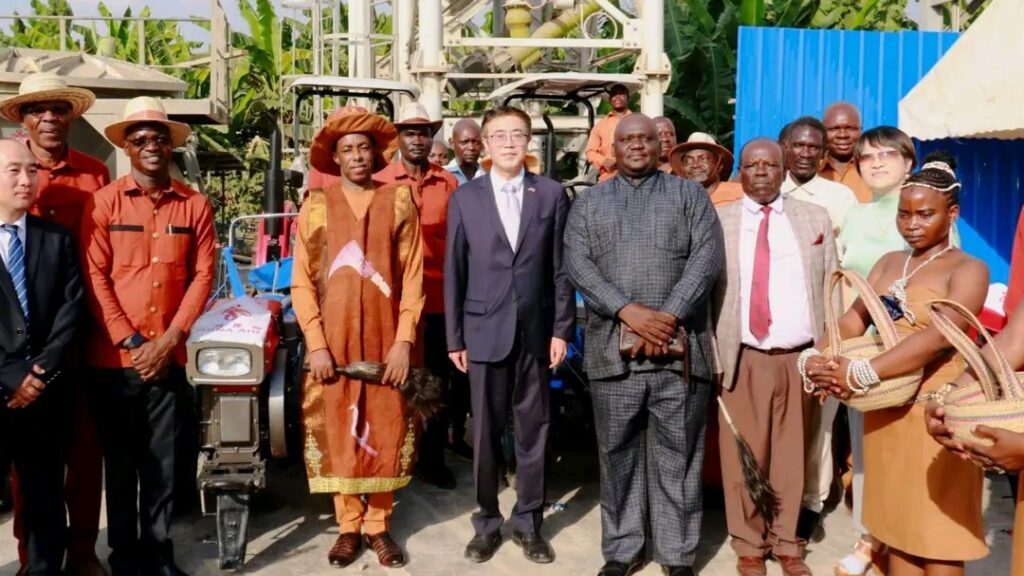
Chinese ambassador to South Sudan H.E Ma Qiang (in black suit) takes a group photo with the Azande king His Majesty Atoroba Peni Rikito Gbudue after the embassy donation of farm equipment,including six tractors and other machinery to the Kingdom. [Photo: Courtesy]
Despite persistence food insecurity challenges, it is important to take stock of and appreciate the successes that have been realised, particularly in the African context where it entails more than food shortage.
Understanding how Chinese-supported technology transfer, demonstration centres, hybrid crops, framer training and agricultural infrastructure fit into the larger regional value chain narrative and economic growth is critical for governments, policymakers, farmers and everyone. China-Africa cooperation efforts have to continue to align with region’s unique challenges, needs and policies, as well as with key regional frameworks such as the SDGs, Agenda 2063 and AfCFTA.
Utilities
China’s zero-tariff policy for the 53 African nations it has diplomatic ties with, together with the FOCAC Beijing Action Plan 2025-2025, also shows that China is not only focusing on boosting Africa’s food production capacity but also on strengthening regional value chains and improving market access.