
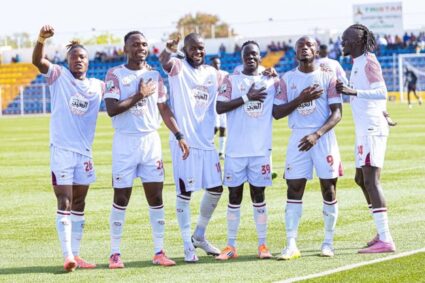


Nearly a decade since attaining independence, South Sudan has made a transition from a set of societal norms and values imposed by the Arabs prior to the 2011 referendum.
The secession from the North culminated to the emergence of a need to explore, invest in, and grow many sectors of development. The sports and recreation industry was undoubtedly part of this initiative.
However, while men’s sporting disciplines like football continue to receive notably enormous support, women’s participation in the same is being derailed by negative cultural stereotype and misogynistic stance.
The South Sudan Women’s League organised by the country’s football governing body is playing the hard part of shielding female participants from a societal notion that a woman that plays football is not morally upright.
Female footballers have also come up to tell off members of the society spewing negative cultural rhetoric to derail potential success of emerging athletes.
Women speak
Joyce Musa, a female footballer currently taking part in the Women’s National League tournament told City Review that society just do not get it when it comes women taking part in soccer.
“There are lots of benefits in football; it prevents early pregnancy and allows ladies to complete their studies but they don’t want us to play. They say culture does not allow females to play football and this takes us backward,” Joyce said.
Musa, 17, who plays for Bentiu Female Football Team pointed out that some of her colleagues have left the career because of mounted pressure from relatives and the community holding grip on cultural baggage.
“They say girls who play football don’t conceive and that most of them become prostitutes when they become footballers,” she said.
Riba Peter, 25, a female footballer said majority in the country discourage women from playing football, making it difficult for ladies to perform well in the field.
“They always tell me why are you wasting your time with football, it is for men not for women. But I tell them that it is my business, I like it and I will not stop playing football.
“So, we are not being encouraged to enable us perform well. This will continue to hold us back and we will not be able to compete with others around the world,” Riba said.
Meddina Gabriel 18, wonders why some parents in South Sudan discourage female football despite its benefits to both girls and society.
“We have lots of challenges and we want leaders to support us because football allows us even to continue with our studies. I don’t know why some parents banned their daughters from playing, which is bad. They should stop that,” she said.
All these are seen as a continuous challenge to the recent established women national league, aimed at developing females’ skills to meet international standard.
“Women’s football has many challenges; from parents, boys, from husbands of those who are married. Some men are trying by all means to let girls not play football, they follow them up to where they stay, deceive and impregnate them just to let them avoid football,” said Hellen Terso, Women’s Football Development Officer and Project Manager at SSFA.
“Some are doing this out of ignorance and because some traditions do not allow girls to play football. So, we need to address this,” she added.
“I encourage girls to be open-minded toward football. Being a footballer, you will gain a lot, you will see many places and get lots of money. Let them not allow men to deceive them with little money. The money that you get from playing football will be more.” She added in reference to some government officials taking part in preventing women from playing football.
Peter Mayen Majongdit, a Minister of Humanitarian Affairs and Disaster Management recently accused of preventing his wife from participating in the women’s national league game in Aweil said men should marry women with decent careers.
“Of course, I support women football. Not only just women football, I support women generally. I do believe women have the ability, the capacity to do whatever man does. Mr. Mayen said.
“And if I did not support women football, why did I marry a footballer? For a national minister, we will have to marry someone with a decent career. To marry a doctor, to marry a lawyer, a business lady, but I went and married a footballer. So, I am in a support of women football,” Mayen added.