


Warrap governor aspirant Ariech pledges to restore region’s economy, peace


Candidate says his overall objective would be to unite communities, end communal violence and establish an administration capable of delivering essential services
By Aguok Chok
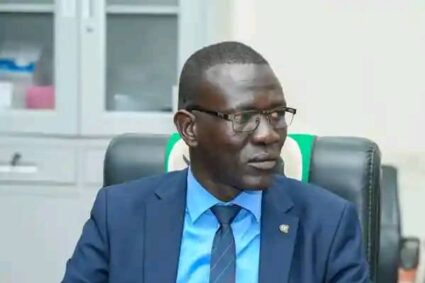
Ariech Mayar Ariech, Warrap State gubernatorial aspirant. [Photo: Courtesy]
Ariech Mayar Ariech, a candidate for the gubernatorial seat in Warrap State has pledged to restore peace, strengthen security, improve roads and revive the state’s economy if elected, saying his political and public service experience qualifies him to lead the state.
In an exclusive interview with The City Review, Ariech said his candidacy followed a nomination by the people, who are ‘seeking experienced leadership to address the state’s longstanding challenges.’
“I’m not the one who decided, but I was nominated by the people of Warrap State to be the governor,” he said, backing his candidacy with ‘experience in youth leadership, party leadership, public service and parliamentary representation, which, he said, has prepared him for the responsibility.
Ariech identified peace as his first priority, arguing that disarmament and community reconciliation alone would not end communal violence without strong laws and effective security measures.
“Disarmament alone is not a solution to our communal crisis,” he said, emphasizing the need for a comprehensive strategy to address insecurity and illegal arms possession.
He said his administration would enforce existing laws while ensuring that peace initiatives are organised and supported by effective security arrangements.
“I don’t think the people are above the law,” Ariech said when asked how he would handle influential individuals or communities refusing to support government peace agreements.
He also pledged to strengthen traditional leadership by ensuring chiefs receive salaries and have the authority and resources needed to address local disputes.
“Like now, you can be a chief and you don’t get salary. How come the government gives you that title and you are not on the government payroll?” he asked.
On youth empowerment, Ariech promised to promote employment, small-scale businesses, agriculture and vocational training. He said his administration would also encourage nongovernmental organisations operating in the state to recruit locally where appropriate.
He further pledged to improve road connectivity between counties and major towns, arguing that better roads would facilitate service delivery, trade and security operations.
“Everybody needs roads so that services go to the people. That is going to be my priority,” he said.
Ariech said he would consult communities and the state’s Department of Roads and Bridges to identify urgent infrastructure projects rather than impose priorities without public consultation.
He also promised to strengthen revenue collection to reduce the state’s dependence on transfers from the national government.
“I’m an economist. An economist must know how to make money,” he said, adding that improved revenue generation could help the state pay salaries and finance essential services.
Asked what voters should expect if elected, Ariech said stability and a productive economy would be central to his administration.
“The best promise is stability,” he said.
He added that his government would focus on regular salaries, employment, food security, infrastructure and improved access to health and education services.
Ariech also called on the national government and the Sudan People’s Liberation Movement (SPLM) to provide greater support to state governments, particularly for major infrastructure projects such as highways and bridges.
He said he would seek investment and development partnerships to support projects that can improve the lives of Warrap residents.
The candidate said his overall objective would be to unite communities, end communal violence and establish an administration capable of delivering essential services.
However, his proposed commitments would require effective implementation, adequate resources and cooperation among state institutions, traditional leaders and communities to achieve lasting results.