
Deportations offer risks and diplomatic leverage, says political analyst

The academic believes that South Sudan’s acceptance of the deportees, including third-country nationals, could carry diplomatic significance.
By Aguok Chok
A South Sudanese political analyst said the recent deportation of the criminals to South Sudan from the United States is a mixture of challenge and opportunity.
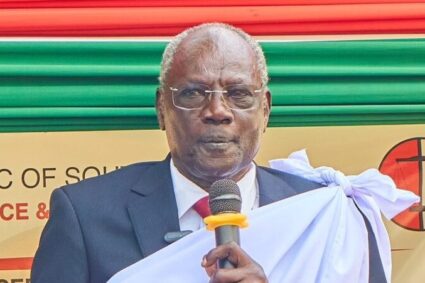
In an exclusive interview with The City Review on Thursday, Dr. Abraham Kuol Nyuon said, “As the statement from the Minister of Foreign Affairs, the individuals were deported following the standard deportation procedures.”
Dr. Kuol said he believes that South Sudan’s acceptance of the deportees, including third-country nationals, could carry diplomatic significance.
“I can say that the United States has the power and always different interests when they deal with different states,” he explained.
“So, for a foreign nation to be deported to South Sudan, that is an indication that the United States of America wants to have some relationship with South Sudan.”
According to Dr. Kuol, this situation could be turned into a diplomatic advantage.
“These could be leveraged by the government to demand something from the US as a condition of accepting those citizens of other countries,” he said.
“Including even the sanctions that has been slapped on the government, this (deportation move) could be all opportunities. The embargo, the sanction, could be all (providence) to the government of South Sudan to negotiate before accepting those citizens.”
He emphasized that while accepting the deportees may be necessary, South Sudan should use the gesture to reinforce ties with the US.
“The government needs to accept it, but say that we are going to accept it because America has been a good friend to the people of South Sudan and the government,” he added.
“But this is a condition that America has also to accept, that they will continue to work with the government.”
Dr. Kuol acknowledged the congratulatory statement from US Secretary of State, Marco Rubio, who reaffirmed the enduring friendship between America and South Sudan during the country’s Independence Day.
However, Dr. Kuol also warned of potential risks.
“Well, definitely, it will bring some challenges if some of these people have some criminal background and some cases related to not being good citizens in the US,” he said.
“They may have to be monitored seriously for potential security risks to the already fragile state. They can also come on board with some strange behavior that may influence some South Sudanese and create more problems within the country,” he added.
On how this could affect public perception, Dr. Kuol cautioned, “It could show that the citizens believe that maybe South Sudan has become a dumping ground by everybody.
“And it also makes the citizens believe that maybe the government might have not been serious enough, accepting them, which means accepting also threat and fragility within this country.”
Despite these concerns, Dr. Kuol believes that with strategic planning, South Sudan could manage the deportees effectively while strengthening its diplomatic standing with the United States.
Sharp criticism from activists
Early this week, the Trump administration deported a group of eight men convicted of serious crimes in the United States to South Sudan, following a legal saga that had kept the deportees stuck in a military base in Djibouti for weeks.
Assistant Department of Homeland Security Secretary Tricia McLaughlin said the deportation flight carrying the deportees landed in South Sudan just before midnight on Friday. A photo provided by the department showed the deportees, with their hands and feet shackled, sitting inside an aircraft, guarded by U.S. service members.
However, the decision sparked sharp criticism from civil society groups, legal experts, and peace advocates.