


Discussions focused on cooperation in voter education, peaceful political participation and strengthening public confidence in the electoral process
By Emmanuel Mandella
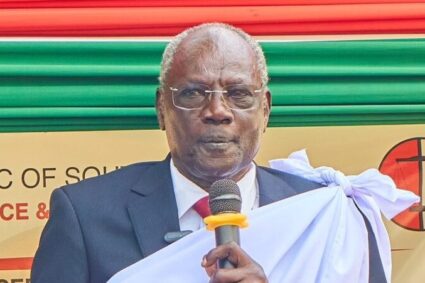
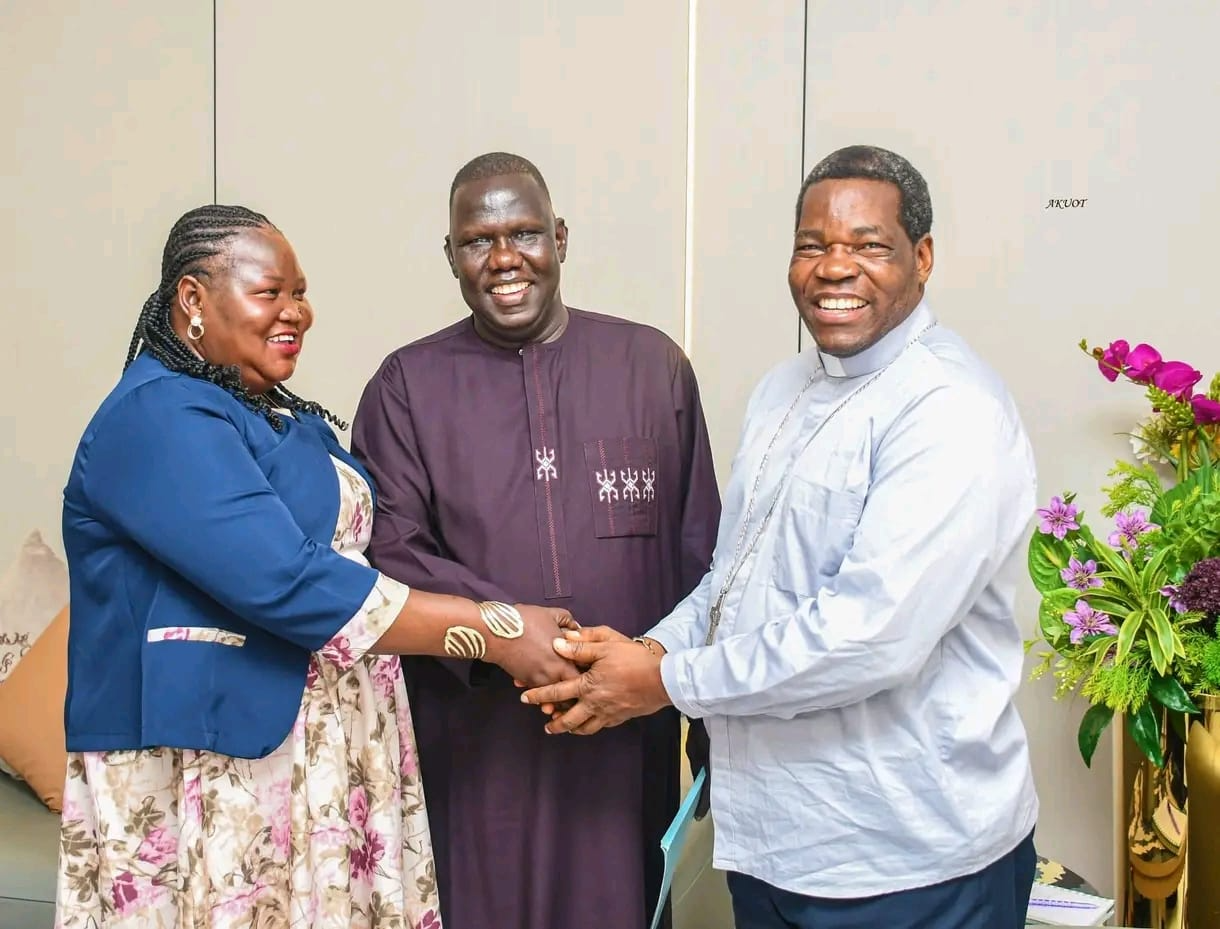
NEC Chairperson Gabriel Bol Deng and Bishop Eduardo Hiiboro Kussala of the Catholic Diocese of Tombura-Yambio and NEC Commissioner Josephine Achiro.[Photo: Courtesy]
The National Elections Commission (NEC) is seeking cooperation with the Catholic Church to expand civic and voter education ahead of elections, with church structures and the Catholic Radio Network identified as potential channels for delivering electoral information to the public.
The initiative was discussed during a meeting between NEC Chairperson Gabriel Bol Deng and Bishop Eduardo Hiiboro Kussala of the Catholic Diocese of Tombura-Yambio at Dembesh Hotel in Juba on Saturday. NEC Commissioner Josephine Achiro also attended the meeting.
According to the meeting’s account, discussions focused on cooperation in voter education, peaceful political participation and strengthening public confidence in the electoral process.
Bishop Hiiboro expressed the Church’s willingness to support voter education, peacebuilding and the dissemination of accurate electoral information through its community structures and the Catholic Radio Network.
The proposed collaboration could provide the electoral commission with additional channels for reaching communities and explaining electoral processes, although details of specific activities, implementation timelines and arrangements for the partnership were not provided.
NEC Chairperson Bol Deng emphasized that peaceful, inclusive and credible elections require collective efforts, including the guidance and support of religious leaders. His remarks highlighted the potential role of faith-based institutions in helping citizens understand the electoral process and encouraging peaceful participation.
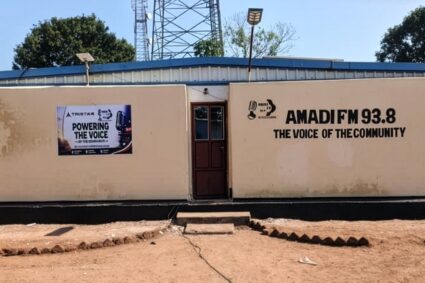
The proposed use of the Catholic Radio Network offers a potential avenue for communicating voter education messages to communities that rely on radio for news and public information.
The extent to which the network will participate in the initiative remains unclear. The meeting’s account did not specify whether dedicated voter education programmes would be introduced, which radio stations would participate or how the accuracy of information would be coordinated with the NEC.
The effectiveness of such an initiative would depend on the availability of clear, timely and accessible information from the commission, as well as the ability of participating media outlets to communicate it accurately and impartially.
For the proposed cooperation to produce tangible results, the NEC and the Church would need to clarify their respective responsibilities, establish communication channels and identify the information voters most urgently need.
Meanwhile, Commissioner Josephine Achiro encouraged unity and peaceful coexistence, stressing that citizens should be free to choose their leaders without coercion or discrimination based on ethnicity or religion.
Her remarks placed voters’ freedom of choice at the centre of the discussions, alongside the need to promote peaceful political participation.
Civic and voter education can help citizens understand their rights, electoral procedures and the importance of participating peacefully. It can also provide opportunities to address misinformation, provided the information shared is verified and consistent with official electoral guidance.
Religious institutions and media organizations could contribute to these efforts by making electoral information accessible to diverse communities. Their participation, however, should support informed public choice rather than promote particular candidates or political parties.