



Double Standards Undermine Peace: In Defense of Context Behind Gen. Olony’s Statement

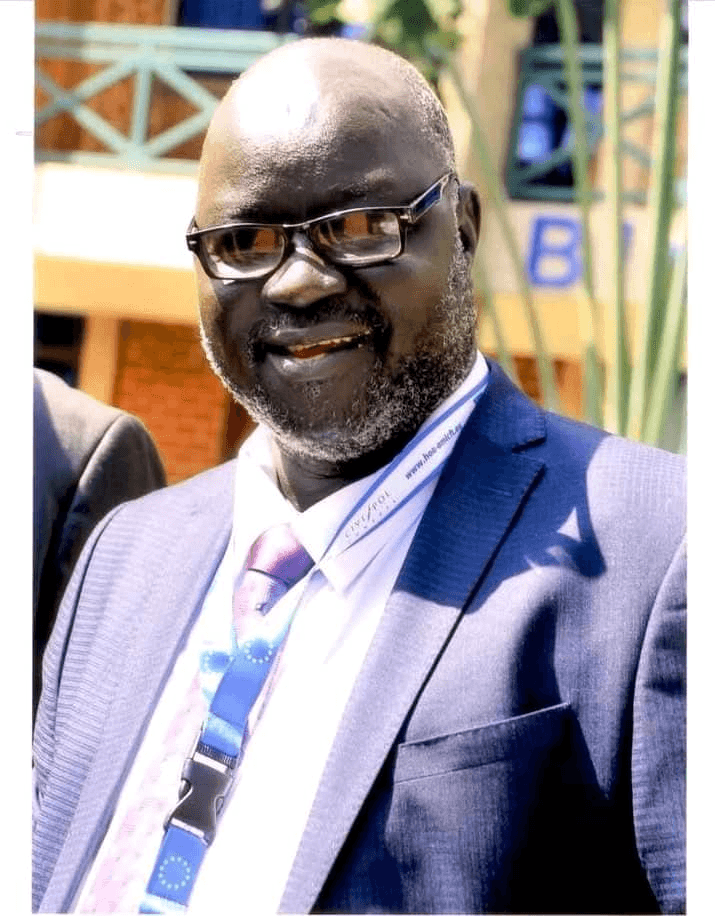
By William Sunday D. Tor
The recent public outrage over Gen. Johnson Olony’s remarks from the frontline in Greater Akobo has been selectively amplified and dangerously misrepresented by what many now call the enemies of peace—both inside and outside the government.
While his language in the heat of conflict can be critiqued, calling it “genocidal” without context exposes the deep double standards that continue to endanger South Sudan’s fragile peace.
Gen. Olony’s statement came after the South Sudan People’s Defense Forces (SSPDF) peacefully withdrew from Greater Akobo in line with the security arrangements outlined in the Revitalized Agreement on the Resolution of the Conflict in South Sudan (R‑ARCSS). The withdrawal was meant to prevent escalation, protect civilians, and uphold peace commitments. In the vacuum that followed, armed anti‑peace elements re‑entered the area, terrorizing communities, spreading fear, and undermining the peace process.

Gen. Johnson Olony. [Photo: Courtesy]
As the commander responsible for enforcing disarmament, Gen. Olony’s warning was directed toward these armed spoilers. His orders—to deal with those carrying illegal firearms who refused to surrender them—were operational, not meant as a call to target civilians. Unfortunately, sections of the media and some political figures have twisted these words to serve political narratives that seek to weaken discipline within the army and tarnish his image as a peace enforcement commander.
At the same time, those very actors who now call his remarks “incitement to genocide” remain silent when armed groups utter far worse tribal threats against innocent civilians. They have ignored the steady stream of hate speech, attacks, and displacement that continue to destabilize regions like Jonglei and Upper Nile. Why is Olony’s battlefield language—addressed to armed men—treated as a global scandal, while the deliberately genocidal rhetoric of tribal extremists is normalized or explained away as “local grievances”?
The silence of regional and international actors over similar or worse incidents is equally troubling. Across our borders and within South Sudan, videos of prisoners of war being slaughtered or humiliated circulate widely online. Yet, these horrific crimes draw few statements, little investigation, and almost no sanctions. The same diplomatic missions that quickly condemn Olony’s words are often the first to look away when anti‑peace forces commit atrocities in broad daylight.
This selective morality weakens the credibility of peace guarantors and gives space for spoilers to distort the peace agenda. The R‑ARCSS obliges all parties—government and opposition alike—to stop hostilities, respect security arrangements, disarm illegal actors, and protect civilians without ethnic bias. Selective application of these principles jeopardizes national unity and insults the spirit of the agreement.
While no commander should use language that can be misinterpreted as targeting civilians, fairness demands that all sides be judged by the same standard. Peace cannot thrive if only one group is held to account while others are excused on political grounds. Justice must not wear tribal colors.
South Sudan’s problem is not one man’s tone on the frontline. The problem lies in our collective failure to confront the propaganda, hate speech, and impunity that keep communities divided. If international and national actors truly care about peace, they must demand accountability for all violators—those who speak carelessly in uniform and those who kill, incite, or terrorize civilians under rebel and tribal banners.
As South Sudan approaches another crucial stage in its peace journey, let us stand for truth and fairness. Let every statement, from whatever side, be measured by the same scale of justice and the same love for civilian life. Only by rejecting double standards can we revive the true spirit of the R‑ARCSS and honor the sacrifices made by our people for a peaceful and united South Sudan.
May God Almighty bless our beloved country
William Sunday D. Tor can be reached via: williamtor2011@gmail.com