
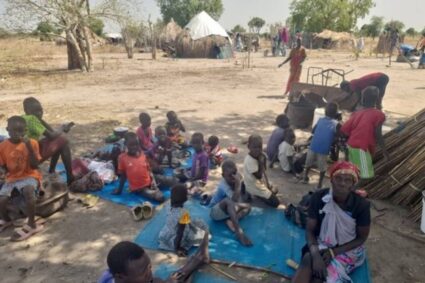

EU commissioner warns of worst food crisis in South Sudan

The European Union Commissioner for Crisis management Janez Lenarcic has warned of worst food crisis in South Sudan if no proper remedial action will be taken by the government and donors.
Mr Lenarcic told the media Thursday at a briefing in Juba that the situation is dire and has been compounded by lack of donors- a situation which creates constant shortage of funds required to mitigate the crisis.
“Parts of this youngest African country are facing famine-like conditions and the country as a whole is bracing itself for the worst food crisis ever,” he said, adding,
“There seems to be little international interest in this acute situation in the country [and] only five donors, including the European Commission, account for almost 77% of the total aid to South Sudan.
“This lack of interest risks turning this already disastrous situation into a forgotten crisis a scale-up of the humanitarian response is urgently needed from all donors to ensure the adequate capacities are in place.’’
He urged for swift response arguing that after facing cyclic bouts of violence, which aggravated the humanitarian needs; failing to get things right would be disastrous for the country.
He pledged support from the European Union but only if the government meets its side of bargain.
“The European Union is ready to support and complement the South Sudan authorities to advance the country’s development but national political ownership must follow. The peace agreement implementation needs to accelerate significantly,’’ he said in a tweet.
Touring South Sudan
The diplomat revealed the European Union provided a new funding of 43.5 million euros for life saving humanitarian aid to the country currently facing worst food crisis.
On Thursday, the EU it would provide funding to help address ‘acute humanitarian needs such as protection to communities affected by violence, and to strengthen preparedness to deal with new epidemics and natural disasters.’
With millions of children remaining out of school in South Sudan, part of the funding will also be allocated to education in emergencies.
The EU Commissioner arrived in Juba South Sudan on the April 20, and visited Pibor and Likwangole to assess the humanitarian work by the European Union’s partners in the country in distributing food to most vulnerable.
He visited the Plan International South Sudan nutrition sites, warehouses and food distribution that the organization is implementing in Pibor-one of the areas hardest- hit by floods and conflict affecting mostly woman and girls.