
Machar distances self from White Army command, says group lacks organised structures

Testifying in his defense, former First Vice President said the armed youth group operates through community mobilization and traditional leadership arrangements rather than the formal command structures associated with a standing military force.
By Emmanuel Mandella
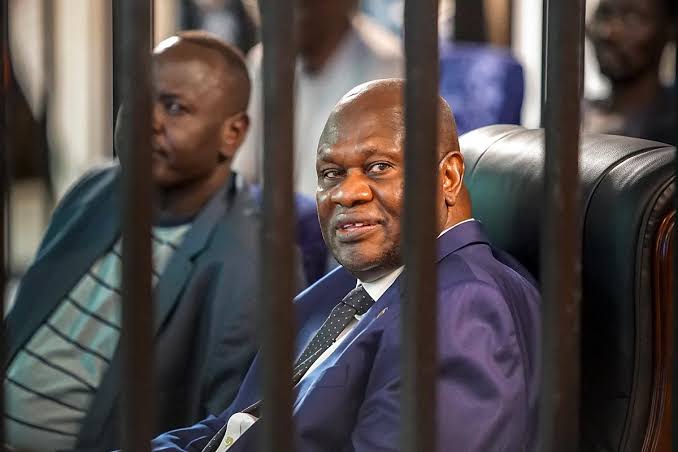
Dr. Riek Machar in court. [Photo: Courtesy]
Former First Vice President Dr. Riek Machar has challenged allegations linking him to the White Army’s activities, arguing before a court in Juba that the community-based armed youth group lacks the formal military hierarchy through which he could exercise direct command over its members.
Testifying in his defense during Session 124 of the ongoing Nasir trial on Monday, Machar maintained that the White Army operates through community mobilization and traditional leadership arrangements rather than the formal command structures associated with a standing military force.
“The White Army is not a standing army, and I cannot command it because it does not have the structures necessary for me to exercise command over it,” Machar told the court.
Machar is the fifth accused in the proceedings and is standing trial alongside seven co-accused over the attack, which the prosecution alleges resulted in the deaths of South Sudan People’s Defense Forces (SSPDF) personnel, including Major General David Majur Dak.
A central argument in Machar’s testimony is that the White Army should not be treated as a conventional military formation operating under a clearly defined chain of command.
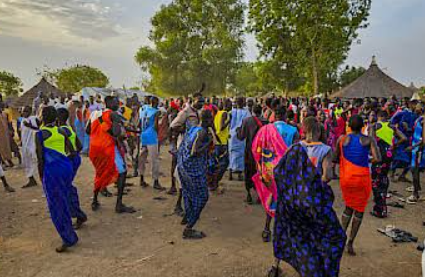
He described its members as predominantly young civilians who mobilize from their homes and communities, often through clan networks and traditional authorities, when they believe there is a need to defend themselves.
According to Machar, the group has no barracks, its members are not formally registered in SPLA-IO records, and its organization does not follow the military arrangements that would allow him to issue orders through an established hierarchy.
Machar described the group’s members as volunteer warriors who select their own leaders and can remove them when they wish.
He told the court that leadership arrangements can change annually or whenever members decide to replace those in charge.
The defense argument seeks to distinguish political leadership from direct operational control over armed individuals. However, the testimony presented in court represents Machar’s account of the group’s structure; the prosecution’s allegations remain matters for the court to consider against the evidence in the case.
Machar also rejected claims that the White Army receives military assistance, food supplies or sponsorship from the SPLM/A-IO.
His testimony sought to separate the group from the opposition movement’s formal structures, disputing the suggestion that it functions as an armed unit supported or controlled by the organization.
He said the White Army is rooted in community mobilization and traditional authority rather than formal military administration.
Machar further explained that the group is known by different names in different geographical areas, including White Army and Nyaborjok.
He distinguished it from other armed formations, including Dutkobeny and Mathiang Anyoor, while drawing comparisons with community-based groups and youth formations found among other South Sudanese communities.
Those comparisons included Gelweng, Titweng, Monyemiji and Lokoya youth, as well as age-set groups among the Murle.
By presenting these examples, Machar sought to place the White Army within a broader pattern of community-based mobilization rather than describe it as a single, centrally organized military institution.
The prosecution’s position, however, concerns the defendants’ alleged involvement in the Nasir attack. The question of whether the evidence establishes any relevant links, responsibility or participation remains for the court to determine.
Machar also denied allegations that he established the White Army, addressing claims that have linked him to the group since the political and military split within the Sudan People’s Liberation Movement/Army in 1991.
He acknowledged leading the Nasir Declaration of August 28, 1991, but said the split was driven by disagreements over the objectives of the liberation struggle.
According to his account, the faction led by the late Dr. John Garang advocated for a united Sudan, while the Nasir Declaration emphasised self-determination and independence for Southern Sudan.
Machar’s reference to the historical split formed part of his response to claims connecting his political history with the emergence or organisation of the White Army.
His denial of founding the group is distinct from the prosecution’s allegations concerning the March 2025 attack. The historical background raised during the testimony does not, by itself, determine whether the accused bear responsibility for the specific incident under examination.
The proceedings stem from the March 2025 attack on an SSPDF garrison in Nasir, Upper Nile State, in which government soldiers were killed, including Major General David Majur Dak.
Machar and seven co-accused face charges that include treason, murder, terrorism, conspiracy and crimes against humanity. They have disputed the allegations.
The case places the alleged attack, the conduct of the accused and questions of responsibility at the centre of the judicial proceedings.
Machar’s testimony has focused, in part, on whether the White Army had a formal military structure, whether it received support from the SPLM/A-IO, and whether he could exercise command over its members.
The session was presided over by Judge Dr. James Alala Deng, who adjourned the proceedings until October 28, 2026, when Machar is expected to continue giving his defense testimony.