





Data from the WHO shows that the Bundibugyo virus, which causes Ebola disease, has claimed 4761 lives since the outbreak in May 2026. Nine cases and two deaths have been confirmed in Kenya, placing the country and the region on high alert and putting East Africa’s collective cross-border health system to its ultimate test.
By Clive Olero
Fears of an Ebola outbreak have intensified across the East African Region after Kenyan authorities recently declared nine cases of the deadly Bundibugyo virus, including two deaths. Kenya reported the first Ebola case after the arrival of an infected Kenyan who had travelled from the Democratic Republic of Congo (DRC) through Uganda.
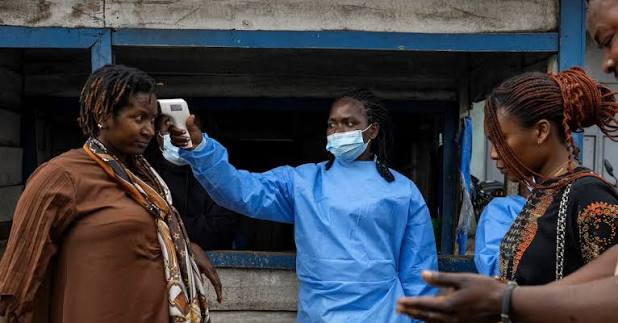
Since confirming the first case, Kenyan health authorities have implemented a series of interventions, including contact tracing and isolation of suspected patients, enhanced border and point-of-entry screening, activation of emergency structures, laboratory testing, and public sensitisation campaigns.
The interventions appear to be yielding positive results, with Kenyan authorities reporting that all contacts have been traced and the spread of the disease successfully contained.
“Kenya has recorded 9 confirmed cases, with eight patients currently receiving treatment. All 135 contacts linked to the initial case have been traced, and there is no evidence of community transmission,” Kenya’s Ministry of Health has said in a recent statement.
Before Kenya’s outbreak, on 17th May 2026, the World Health Organisation Director-General declared the disease in DRC and Uganda a public health emergency of international concern (PHEIC).
As defined by the International Health Regulations (2005), the outbreak is “an extraordinary event which is determined to constitute a public health risk to other States through the international spread of disease and to potentially require a coordinated international response.”
Yet, unlike the DRC and Uganda, which have a long history of outbreaks and a presumably better capacity for control, preparedness and awareness, Kenya lacks prior Ebola management experience, despite its healthcare system ranking second best on the continent after South Africa.
The viral haemorrhagic fever is spread through direct contact with the blood or body fluids of an infected person or animal or through contaminated objects and has an extremely high mortality rate. It is one of the most severe and deadliest diseases, with varying rates of fatality depending on the species of the virus, which WHO estimates to average 50%, with case fatality rates of between 25% and 90%.
With Jomo Kenyatta International Airport (JKIA) serving as a major gateway into East and Central Africa, Kenya is a key transit hub for the region. An estimated 70,000 people cross the country’s borders daily, raising concerns that the outbreak could become unmanageable. The confirmation of cases in the country has therefore put regional health authorities on alert.
Against this backdrop, the 26th Ordinary Meeting of the EAC Sectoral Council of Ministers of Health held at the regional headquarters on 6th October 2026 put a sharp focus on strategies to boost regional preparedness and response to Ebola and other cross-border health threats.
A statement from the EAC Secretariat reports that the EAC has established 10 mobile laboratories at borders and points of entry, with more in the pipeline to establish at least 34 by 2027. The meeting also discussed the implementation of EAC Regional Centres of Excellence for Medical and Health Sciences, including the proposed establishment of an EAC Regional Centre of Excellence for Climate Change and Health in South Sudan. These interventions will strengthen regional health cooperation.
South Sudan occupies a unique position in the Ebola debate, not only because it shares a border with DRC, Uganda and Kenya and is therefore a high-risk country, but also because one of the most well-known Ebola-disease-causing viruses, the Sudan Virus (SUDV), was first discovered in the present-day South Sudan’s area of Nzara, about 50 years ago. Fortunately, the country has no confirmed cases.
Like Kenya before these recent cases, South Sudan has no prior experience managing Ebola outbreaks. But prior management experience does not guarantee effective preparedness or response. Factors such as the emergence of new and deadlier virus species, symptom overlap, weak health systems, porous borders and high risk to healthcare providers also determine spread, severity and containment.
As of 25th October, the disease has spread beyond the region, with cases confirmed in Nigeria and France. The Government of South Sudan needs to remain on high alert while enhancing collaboration with global partners to strengthen preparedness and response.
Organisations such as WHO, Africa CDC and UNICEF have urged heightened vigilance and affirmed support for strengthening health workers’ capacity, preparedness and response in high-risk countries, including South Sudan.
“WHO is also supporting capacity building in South Sudan and other neighbouring countries at risk of importing the virus. This support includes assessing existing capacities, strengthening disease surveillance, training in contact tracing and investigations, enhancing laboratory detection and confirmation capacities, preparing treatment facilities, and training health professionals involved in all these activities,” reads a statement by WHO Regional Office for Africa.
Perhaps the most puzzling thing about Ebola is that the virus can stay in the body for long and varied periods, making it possible for survivors to spread the virus long after symptoms disappear. It has also been established that, while not classified as a sexually transmitted infection or sexually transmitted disease, Ebola can remain in and be transmitted through semen, even after recovery.
With statistics from the WHO showing that 4761 people have died out of 9847 confirmed infections since May 2026, 4757 from the DRC alone, the lack of an officially approved vaccine for the Bundibugyo virus further compounds the challenge.
However, containment is still possible. Strengthening border screening, enhancing contact tracing and isolation, building community trust and public engagement and equipping health workers will strengthen healthcare systems and capacities, and stop the spread.
EAC partner states must work together in tackling the epidemic and preventing possible future deaths because, as it is often said, one life lost is one too many.
Clive Olero is The City Review regional correspondent based in Nairobi, Kenya. You can reach him through: cloolero@gmail.com.
Utilities
Organisations such as WHO, Africa CDC and UNICEF have urged heightened vigilance and affirmed support for strengthening health workers’ capacity, preparedness and response in high-risk countries, including South Sudan.