
NEC defends 102 constituencies identification framework, justifies legality

The City Review
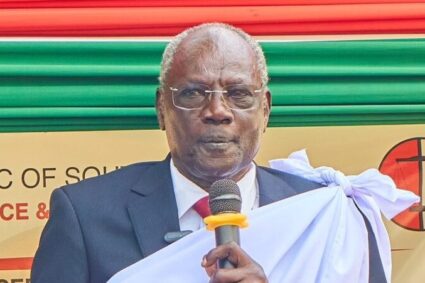
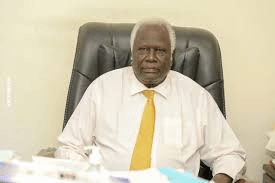
The Chairman of the National Elections Commission (NEC), Professor Abednego Akok has confirmed that the 102 geographical constituencies announced by the Commission for the upcoming general elections in South Sudan were determined according to the legal framework stipulated in the National Elections Act. This confirmation came following concerns by some communities regarding the potential exclusion of their areas from the electoral division.
The National Elections Commission recently announced the establishment of 102 geographical constituencies distributed across the country’s ten states and three administrative areas. This move sparked discussions within some communities, who expressed concern about the boundaries of electoral representation.
In an interview with Eye Radio, Professor Akok explained that the representation system in the National Legislative Assembly is based on three main components: geographical constituencies, political party lists, and a women’s representation list. He noted that the seat allocation system adopted in the 2010 elections remains in place, with 60 percent of seats allocated to geographical constituencies, 25 percent to a women’s list, and 15 percent to political party lists.
He added that the demarcation of electoral areas is based on the foundations laid in Sudan before independence, with subsequent modifications and additions to some divisions to align with administrative and political changes.
Regarding concerns expressed by some communities, the head of the commission stressed the importance of public participation in the electoral process, emphasizing that elections are a fundamental mechanism for selecting leaders who will serve citizens and meet their needs.
He also explained that the commission is working to establish polling centers within local communities across the country to ensure voter access and to prevent any citizen from being excluded from participating in the democratic process.
South Sudan is preparing to hold its first general elections since independence, a milestone seen as a significant step in the country’s democratic transition and the strengthening of its governing institutions.
Earlier, Prof. Akok revealed that has so far received only 4% of the total funding required to organize the general elections, warning that the lack of resources could pose a major challenge to the electoral process.
Akok stated that the limited funding represents a significant obstacle to the ongoing preparations for the elections, which are expected to conclude the current transitional period stipulated in the 2018 peace agreement.
He explained that the Commission has received only about 4% of the required budget so far, noting that only 2% has been utilized due to delays in disbursement.
He added that the timely availability of resources is crucial to ensuring that election preparations proceed according to schedule, pointing out that some government entities have exceeded their allocated budgets while the Commission has only been able to utilize a limited portion of the funding available to it thus far.