
RJMEC Urges Diplomatic measures to address Machar’s Continued Detention

In a statement issued on Thursday, the peace monitor appealed for an immediate ceasefire, unconditional release of detainees, the restoration of trust among parties, and the resumption of inclusive dialogue to salvage the agreement
By James Chatim
The Reconstituted Joint Monitoring and Evaluation Commission (RJMEC) has expressed deep concern over the continued house arrest of Dr. Riek Machar, First Vice President and Chair of the SPLM/A-In Opposition (SPLM/A-IO), as well as the detention of other high-ranking SPLM/A-IO officials.
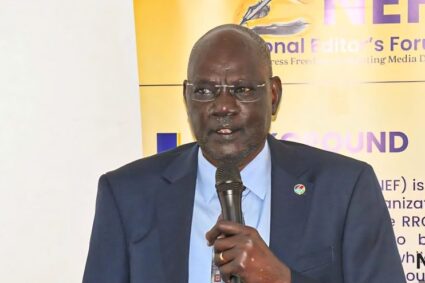
In a statement issued on Thursday, RJMEC Interim Chairperson, Maj. Gen. (Rtd) George Aggrey Owinow, said these actions undermine the spirit and letter of the 2018 Revitalized Agreement on the Resolution of the Conflict in South Sudan (R-ARCSS). He warned that such violations have significantly eroded public confidence and trust among the agreement’s signatory parties.
“This continued restriction of movement and detention of senior SPLM/A-IO figures only serves to deepen mistrust among key peace partners and diminish the confidence of South Sudanese citizens, regional allies, and the international community,” said Owinow.
His remarks come in the wake of President Salva Kiir’s address to open the Transitional National Legislature, a move that has drawn mixed reactions amid growing concern over delayed implementation of critical provisions of the peace agreement.
Owinow further criticized what he described as unilateral appointments and dismissals by the incumbent Transitional Government of National Unity (ITGoNU), which were carried out without proper consultation with peace partners, in contravention of the power-sharing arrangements stipulated in the R-ARCSS.
“Unilateral executive decisions undermine the collaborative framework envisioned by the agreement and disrupt the delicate balance necessary for sustained peace,” he added.
The latest quarterly report by RJMEC, covering the period from April 1 to June 30, 2025, paints a grim picture of the country’s political and security climate. The report notes that the Permanent Ceasefire has been repeatedly violated by clashes between the South Sudan People’s Defence Forces (SSPDF) and the SPLA-IO and their respective allied forces, particularly in areas previously considered calm.
In response, RJMEC has ramped up diplomatic engagement both within South Sudan and across the region, calling on the Intergovernmental Authority on Development (IGAD) and other regional guarantors to step in decisively.
“The window for a peaceful resolution is narrowing,” Owinow warned. “It is imperative that regional actors exert their influence to end the political deadlock and ensure adherence to the terms of the R-ARCSS.”
He appealed for an immediate ceasefire, the unconditional release of detainees, the restoration of trust among parties, and the resumption of inclusive dialogue to salvage the agreement and avert a relapse into widespread conflict.
Civil society groups have echoed RJMEC’s concerns, urging all parties to prioritize national stability over political brinkmanship. “South Sudan’s peace gains must not be reversed by elite interests. We call for calm, dialogue, and recommitment to the peace roadmap,” said a joint statement by civil society organizations on Friday.
A Nation at the Crossroads
Signed in 2018, the R-ARCSS was hailed as a historic breakthrough in ending years of civil war that claimed hundreds of thousands of lives and displaced millions. While it ushered in relative calm and established a power-sharing government, the agreement’s implementation has been marred by delays, mistrust, and recurring violence.
With the nation’s first democratic elections scheduled for late 2025, stakeholders warn that time is running out to meet key benchmarks—including security arrangements, constitutional reforms, and civic space protections—necessary for a credible and peaceful poll.
Yet despite the setbacks, RJMEC’s call to action represents a glimmer of hope for renewed dialogue and political will. The path ahead may be uncertain, but with steadfast commitment to inclusive governance and accountability, South Sudan can still chart a course toward lasting peace and national renewal.