




With Yaba Odongo Odoyo
I believe that peace, love and unity are the key cornerstones of any meaningful development and stability in a country.
This is according to my own grandeur of thought, which is simply achieved through the use of powerful language, vivid imagery, and profound ideas that elevate and transcend the ordinary and which is the ability of a writer or speaker to convey a sense of profound significance and depth in their work, sparking a sense of awe and admiration in the audience and which has brought me on my toes to revisit the honor of patriotism.
Just a minute, what is the real meaning of patriotism? It is mostly described as, the feeling of love, devotion, and a sense of attachment to a country or state. This attachment can be a combination of different feelings for things such as the language of one’s homeland, and its ethnic, cultural, political, or historical aspects.
To explain further, there are four main types of patriotism, distinguished as, extreme patriotism that allegedly trumps moral considerations that conflict with it, extreme patriotism understood as the central moral virtue, moderate patriotism and patriotism as a morally indifferent preference apart from a distinctively ethical version of patriotism outlined in a working journal of 2019. Going by the recent conflict in the country, this fits well with President Salva Kiir Mayardit’s recent statement to the nation when he vowed:-“Despite what happened in Nasir, our country will not return to war again.”
The President called for calm amidst escalating tension in Nasir between the SSPDF and the White Army militia as he confirmed the death of SSPDF commander Gen. Majur Dak, who was killed in gunfire during an evacuation mission from Nasir to Malakal. At the same time, he reiterated his unwavering commitment to ensuring that the country did not return to war due to provocative tensions, urging all parties involved not to take the law into their own hands, as the government takes responsibility to address the matter.
This begs the question as to when will the “guns go silent” to pave ways for peace and development? Pundits and critics may not agree with my thoughts and some would want to justify the cause of their thinking differently. However, l stand to be corrected bearing in mind that this country has bled far too long and all efforts should be put to restore peace for citizens to enjoy the fruits of the decades of their struggles to this end, more so, peace settlement and dialogues among all different voices.
This may be among the many prioritized ways to solve-out the problem now for the present and the future generations. The country belongs to all and whatever is done now will remain in the archives of history. It is this important and should not be neglected or brushed away. The recurring of conflicts in different parts have had serious effects on the population, leave alone the continued influx of refugees from the neighboring Sudan bearing economic tolls on the government and the people. Analysts say escalating tensions could lead to full-blown conflict.
It is time to nurture the already placed peace processes to defuse any conflict and atrocities that may be meted out, with or without political leanings or interests put aside. If only the political divides were speaking the same language with peace given prominence, then there would be hope within hope of a permanent and lasting solution, and avoiding being misled and misdirected by external arms whose vested interests are personal.
The UN indicated that the incident, which could deal a blow to an already fragile peace process, was “utterly abhorrent” and a possible war crime. A power-sharing agreement has been threatened in recent weeks by clashes between forces in the north-eastern Upper Nile state.
The UN crew tried to airlift soldiers after heavy clashes in Nasir between national forces and the White Army, a militia group.
In a national address announcing the deaths of Gen Majur Dak and other soldiers, President Kiir said Dr. Riek Machar, first Vice President, had assured him and the UN representative that the general would be safe and that the rescue mission should fly to Nasir to evacuate him and his men. Kiir urged citizens to remain calm, stating: “I have said it time and again that our country will not go back to war. Let no one take law into their hands.
“The government which I lead will handle this crisis. We will remain steadfast in the path of peace,” while government sources put as “approximately 27” troops killed and a UN crew member among them.
Some government allies have pointed finger to the opposition forces for fomenting unrest in Nasir County, in league with the White Army, a loose band of armed youths in the region.
The main opposition declined to comment on the attack and had previously denied involvement in the recent fighting in Nasir. The head of the UN mission in South Sudan (UNMISS), Nicholas Haysom, said the attack was “utterly abhorrent” and might constitute a war crime under the international law.
“We also regret the killing of those that we were attempting to extract, particularly when assurances of safe passage had been received. UN urges an investigation to determine those responsible and hold them accountable,”
Opposition had earlier claimed that security forces had arrested some of their top notch in the government, but the government did not comment immediately on the issue at the time. Analysts have warned that the escalating tensions could lead to a full-blown conflict. “South Sudan is slipping rapidly toward full-blown war,” said the International Crisis Group’s Horn of Africa director, Alan Boswell. He urged the UN to prepare peacekeepers to save civilian lives, adding: “We fear large-scale ethnic massacres if the situation is not soon contained.”
Similarly, a statement by the UN urged “all actors to refrain from further violence and for the country’s leaders to urgently intervene to resolve tensions through dialogue and ensure that the security situation in Nasir, and more broadly, does not deteriorate”.
The UN mission was established soon after the country won independence from Sudan in 2011. Almost 20,000 peacekeepers from 73 countries serve in it.
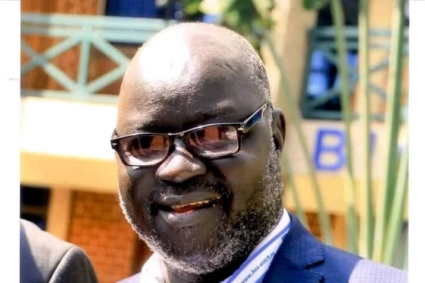
Yaba (Jaduong) Odongo Odoyo is a leading commentator, writer and established Editor with long standing career in journalism and media industry internationally. The comments and insight shared are his own. You can contact him at +211921351878, +254795226883or e-mail: odoyo2002@gmail.com