




The United Nations International Development Organization (UNIDO) in collaboration with the South Sudan National Bureau of Standards (SSNBS) has jointly established a first-ever agro-processing training center, equipped with professionals to meet the growing needs of diversifying the country’s economy.
South Sudan, a country where agriculture is a major source of livelihoods will now be able to build the capacity of the citizens to develop, modify and process standardized local produces, able to compete in regional and international markets.
The facility was constructed by the UNIDO with funding from the government of Japan, the main donor country to South Sudan.
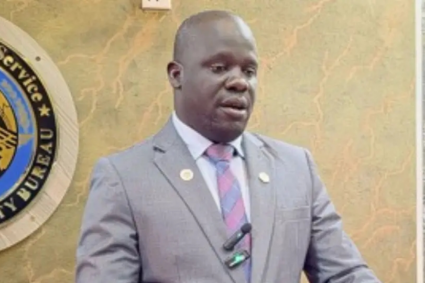
Speaking during the inaugural ceremony last Thursday in capital Juba, the Acting Executive Director of SSNBS, Majak Deng kuol commended the government of Japan and the UNIDO and pointed out that the facility will enable the government’s effort in developing the country economy.
“We are very happy to have the center in place and people who have the knowledge to train more South Sudanese in developing our local products. We will work closely with other institutions to ensure food safety for the good health of our people.”
“And people will now be able to develop local products and exported and earn hard currency to balance the country’s trade,” Dend said.
UNIDO also trained 18 nationals in food safety and quality assurance skills and is in the process of training more south Sudanese to sustain the capacity of the SSNBS in collection, monitoring and certification of imported goods to prevent the supply of harmful products into country.
UNIDO Managing Director, Calzadilla Sarmiento said the project aimed at sustaining capacity of the South Sudan National Bureau of Standards in ensuring food safety and quality assurance of both national and imported products in the country.
“I believed the project will realize the great potential of agriculture in South Sudan in diversifying its economy to mold out products that promote development, create jobs, reduce poverty, ensure economic self-sufficiency and sustainability to supporting capacity development of South Sudan Bureau of Standards in quality assurance especially for agricultural products,” said Sarmiento.
Meki Okusa, First Secretary of Japanese Embassy for economic Affairs, Culture and Public Relations said her government would want to build the capacity of the SSNBS to ensure imported items to South Sudan are free from harmful; chemicals.
“We should meet the high safety standard without containing any harmful substance and this why the government of Japan through UNIDO has supported the National Bureau of Standard to reactivate HACCP system,” Okusa said.