




UN-backed Mobile Court restores hope to Greater Mundri detainees


The initiative, backed by the United Nations Mission in South Sudan (UNMISS), aims to address a severe justice vacuum that has left dozens of suspects in prolonged detention and victims without legal closure.
By Emmanuel Mandella
After years of delayed trials and congestion in prisons, a United Nations-supported mobile court is expected to begin operations in Greater Mundri next month, offering renewed hope to detainees who have spent years behind bars without appearing before a judge.
The initiative, backed by the United Nations Mission in South Sudan (UNMISS), aims to address a severe justice vacuum that has left dozens of suspects in prolonged detention and victims without legal closure.
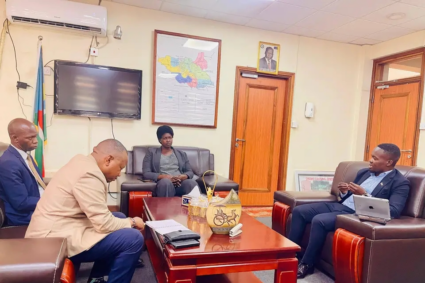
An assessment team, escorted by UN peacekeepers, recently traveled more than 200 kilometers from Yambio along rough, dusty roads to prepare for the court’s deployment, underscoring the logistical barriers that have long prevented access to justice in the region.
Local authorities documented at least 35 pending criminal cases, including nine murder cases and 15 related to sexual and gender-based violence, many of which have remained unresolved due to the absence of a functioning court system.
The lack of judicial services has contributed to severe overcrowding in detention facilities, where suspects often wait years without trial.
“I have spent two and a half years in prison without trial,” one detainee said during the assessment.
“I am hopeful now that the mobile court will come and justice will finally prevail.”
Officials from the judiciary said the situation reflects broader systemic challenges across rural South Sudan, where courts are scarce, legal personnel are limited, and transportation constraints hinder the delivery of judicial services.
According to UNMISS Justice Advisor Jean-Marie Ouedraogo, the mobile court will help restore confidence in the rule of law by processing long-pending cases and ensuring due process.
“This deployment will support the judiciary and bring justice closer to the people of Mundri,” Ouedraogo said.
“Many detainees have never been tried. The mobile court will help process cases, some may be released, while others will face proper legal procedures.”
The intervention forms part of UNMISS efforts to strengthen the justice chain in conflict-affected and underserved areas, where limited infrastructure has allowed impunity and unlawful detention to persist.
Legal experts note that prolonged detention without trial violates fundamental human rights and fuels mistrust between communities and state institutions.
While detainees await hearings, victims and their families have also endured years without legal resolution.
“My eight-year-old child was raped, and I don’t know what to do,” said Grace Hadia, a mother of a survivor.
“I have not been able to sleep since this incident. I hope justice will prevail with the deployment of the mobile court.”
Local leaders said the absence of courts has forced many communities to rely on informal mechanisms that are often ill-equipped to handle serious crimes such as murder and sexual violence.
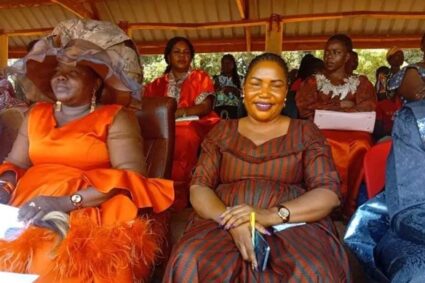
Mundri West County Commissioner Zilpha Dawa noted that the justice gap has allowed Gender-Based Violence to escalate while cases remain poorly documented.
“These cases are often treated like ordinary crimes because we lack a GBV desk at the police station,” she said.
“We urgently need trained personnel and proper records so perpetrators can be held accountable.”
Authorities believe the mobile court will not only reduce prison overcrowding but also rebuild public trust in formal justice systems.
For many residents, the initiative represents the first real opportunity to see cases heard lawfully and transparently.
Many believe that timely trials could also ease tensions by ensuring that suspects are either lawfully convicted or released, preventing arbitrary detention and potential retaliatory violence.
Despite the optimism, challenges remain, including limited infrastructure, shortage of legal professionals, and the need for sustained funding to ensure regular court sessions beyond the initial deployment.
Human rights advocates argue that while mobile courts provide an immediate solution, long-term investment in permanent judicial structures is essential to prevent future backlogs.
Still, for detainees, survivors, and communities across Greater Mundri, the upcoming court sessions symbolize a turning point.
Utilities
“Many detainees have never been tried. The mobile court will help process cases, some may be released, while others will face proper legal procedures,” said UNMISS Justice Advisor Jean-Marie Ouedraogo.