

UNMISS Chief exits with bold parting shot for South Sudan

South Sudan Special Representative and the head of United Nations Mission in South Sudan (UNMISS) David Shearer exited after completing his four-year stint restoring peace in the country.
In his last address to the media at UNMISS headquarters on April 6, Mr Shearer (pictured) made a bold and befitting last assessment of the country’s security situation.
Having arrived in South Sudan in January 2017, after being appointed by former UN Secretary-General Ban Ki-Moon; Shearer had a lot on his plate. He remembered jetting into the country at the time of violence, death and massive human rights subjugation. When he reflected back, he saw a glimmering hope but a lot needs to be done.
He reminisced about the midwifery of the peace deal saying: ‘‘if you had asked me 18 months ago whether I would have seen Dr Riek Machar coming into Juba and taking up the role of First Vice President, I would have said that’s probably unlikely. But South Sudan is a place that is full of surprises, and sometimes those surprises are very pleasant ones, and today we have a situation where the country is more stable than it was before.’’
Downsizing
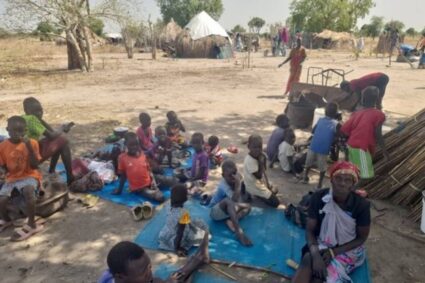
Shearer revealed that the mission was contemplating a seven per cent downsizing of its forces since normalcy had returned in certain civilian protection sites. For instance, some of the sites have transformed into IDP camps now manned by the government. He gave an example of Wau POC site that had 28,000 but now has 10,000 people and Bor that has 1,000 people.
He touched on the recent incident where 58 women and children were flown to Pieri from Pibor and another hostage group flown to Pibor in return. And with signing of the peace agreement pending full implementation, Shearer exuded confidence that the youngest nation needs few grey areas to hit the right path.
Albeit becoming successful, Shearer said a lot needs to be done to prepare the displaced persons to embrace resettlement plans.
‘‘For more people to decide to go home there needs to be education and health services in their villages. If that happens, I think you will see an outpouring of people. Many people are staying put in the IDP camps for services, not because of protection issues.’’
However, the exiting UN boss said there is need to address the root causes of gun violence-where many are related to social issues like lack of education and jobs.
‘‘It’s the fact that young men and women don’t have jobs. They don’t have something to look forward to. They don’t have education. And so much of the problems we’re seeing fall back on the underlying issues – the lack of education, the lack of jobs, the lack of prosperity,’’ he said.
Getting justice
Having come across complaints of gang violence in the waves of communal fights, Shearer told the media that South Sudan may rely on the hybrid court recently cleared for establishment by the cabinet to try criminals.
He said this could serve justice and shield vulnerable groups from marauding perpetrators of human rights violations.
Asked whether the country could plunge into another civil war, Shearer replied, ‘‘I don’t believe there’s an appetite to go back to political conflict. I believe the peace agreement is secure. But the agreement needs to progress. It can’t sit and stagnate. And to move it forward needs courage.’’
He added that there is pressing need to address chapter two 2018 peace agreement to graduate and unify the forces.
‘‘The biggest and most courageous decisions need to be around the unification of the forces. You have to bring the forces together into one South Sudan military…make them feel like they are functioning under one unified command, under one general, one president.’’
For Shearer, he had enjoyed his stay in South Sudan working and making friends but his only regret was that his friends need a better place for home.
‘‘I’ve had great friendships with some fantastic South Sudanese. And if I have a regret, it’s that those people still haven’t gotten the country that they really deserve,’’ he remarked.
The 63 year-old New Zealand national came to Juba after serving at the UN for over two decades and as a member of parliament in New Zealand.