





WES pioneers seed bank in South Sudan to empower farmers

The initiative aims to address the long-standing challenges faced by local farmers in accessing quality seeds
By Emmanuel Mandella
In a groundbreaking initiative to boost agricultural productivity and empower farmers, Resilience Through Agriculture in South Sudan (RASS) with support from USAID, has inaugurated the first-ever seed bank in Yambio, Western Equatoria State.
The initiative aims to address the long-standing challenges faced by local farmers in accessing quality seeds and reviving traditional crop varieties that have dwindled over the years.
Speaking during the inauguration in Yambio, Mr. Nelson Mandela Ezadin, a seed production specialist at RASS, emphasized the significance of establishing the seed bank in Western Equatoria State.
“South Sudan has never had a seed bank before, and Western Equatoria is the first to have one, thanks to its fertile land. This initiative will help farmers revive crop varieties that are disappearing and provide easy access to seeds for farmers across the state,” he said.
Ezadin noted that the seed bank will operate through collaboration with four farmers’ cooperative groups: Nabandi, Kumbobangi, Eden, and Banguati Farmers’ Cooperative Group.
These groups will supply the bank with seeds to ensure consistent availability for farmers.
“Farmers can acquire seeds through small payments or on loan,” he explained. “For example, we might provide one cup of seed, which the farmer will later repay with four gallons of produce.”
He urged the government and development partners to support the initiative to transform Western Equatoria into South Sudan’s food basket.
On her part, Penina Philip, an information officer with Eden Cooperative Group, praised the seed bank as a lifeline for local farmers in the state and across the country.
“This seed bank is a blessing for us. It will save farmers the trouble of traveling long distances and spending a lot of money to buy seeds from unreliable sources,” she said.
Penina highlighted that easy access to seeds would enable farmers to increase productivity and contribute to food security in the region.
Despite the new initiative, local farmers still experience challenges. Francis Damana, a farmer in Yambio, underscored the difficulties farmers face in accessing seeds.
“We have struggled for years to find seeds in the market. Sometimes, we end up buying seeds of poor quality, which results in low yields,” he said.
Damana also raised concerns about the health risks posed by imported foods from outside the Country.
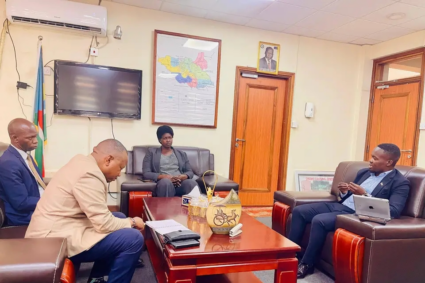
Western Equatoria State Minister of Agriculture, Forestry, and Environment, Alison Barnaba, hailed the seed bank as a transformative step toward improving the lives of farmers.
“This initiative aligns with our vision of promoting agriculture as a key driver of our economy. The seed bank will empower our farmers and help us achieve food security,” he said. The minister also pledged to collaborate with RASS and other partners to expand the initiative across the state.
As South Sudan continues to grapple with food insecurity, the establishment of the seed bank in Yambio represents some hope for farmers and communities in Western Equatoria.
“We have struggled for years to find seeds in the market. Sometimes, we end up buying seeds of poor quality, which results in low yields,” Francis Damana, a farmer in Yambio.