

It is where the treasures of the country’s history live. But for South Sudan, fewer people set foot at the National Archive thanks to lack of proper awareness and investment on its maintenance.
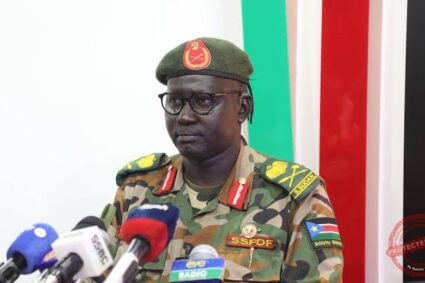
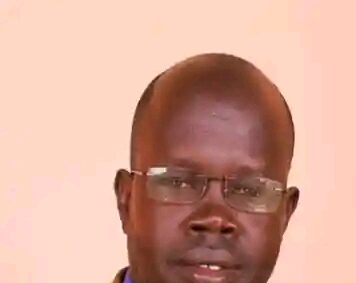
The Acting Director-General of the National Archives Youssef Fulgensio Onyalla (pictured above)—the brainchild behind the existing treasures—explained to the City Review how he struggled to collect the historical documents for the entire country. Mr Onyalla started collecting the documents two years after his CPA and the rest is history. But here is the full interview.
CR. Who is Youssef Fulgensio Onyalla
Onyalla: Youssef Fulgensio Onyalla is the acting director general of South Sudan National Archives. I am the one who established the archives for the South Sudan.
CR. How and when did you start organizing the archive?
Onyalla: We started collecting these documents from the places where they were put during the war between former Khartoum regime and Southern Sudan in 2007.
CR. Which year did you begin to establish the site?
Onyalla: We started sorting out and cataloguing the records in 2010 and stored them (documents) in a tent at the State Ministry of Culture and Information Central Equatoria State.
CR. Did you have any backup on how to set up organized system?
Onyalla: We had support from British Institute and they sent an expert to train our staff on physical archive. The team was headed by Dr. Douglas Johnson and partners from the Rift Valley Institute who trained our staff on digitisation. The aim was to transform all these documents from hardcopy to electronic copy. It was not easy for the public to access any historical documents in the country.

Images of staff at South Sudan National Achieves (Photo: Elia Joseph Loful)
CR. How accessible is the archives now?
Onyalla: The archive was not accessible to the people but now everyone can come and visit the archive and get any information they need but the archive is still halfway to be completed.
CR. What was your experience when you started this work?
Onyalla: About my background I am an Archaeologist. I studied archaeology in Lebanon. When I began working with the ministry of culture and information in 2006, our minister that time assigned me to handle this project because in archaeology you need to preserve the past.
CR. What was your plan after the assignment?
Onyalla: I formed a team to work with me and most of them were from central Equatoria because they know where the documents were located. We got the documents in Muduria and some were found at Juba Girls Secondary school.
CR. Were there challenges you faced that time?
Onyalla: Yes, of course, the rooms where the documents were kept have been locked up for almost 20 years. So, we have to break up the doors and leave open for one week.
CR. Why?
Onyalla: We faced a lot of problems. Some of our staff members were admitted in hospital because of the bad air smell from the old rooms where these documents were kept. It was terrible, we suffered.
CR. How old are the documents?
Onyalla: The documents we have here are from 1900-1986. They are only the one for colonial period.
CR. From 1990s-upto-date, do we any documents collected?
Onyalla: No. During the war, in 1990s-2005 there was a gap, no more communication between the former Sudan government and the SPLM/SPLA. Secondly, we cannot collect the recent historical records because our policy bill is not yet out to give us mandate to so. I wrote a letter to SPLM secretariat to give us some documents. So, update we don’t have any close relationship with SPLM/SPLA Archives.
CR. Which ministry does your department falls?
Director Onyalla: We are under the ministry of culture and heritage under cluster of Vice President Rebecca Nyandeng. One day she came and visited us and she was astonished. She said, “I didn’t know that we had such an archive in South Sudan.” She promised that if we are going to have a permanent building, she will bring some documents of the late Dr. John Garang.
CR. When do we expect to have a systematic National Archive for South Sudan?
Director Onyalla: We are just waiting to have enough design building. Archives needs enough space which can allow people to carry out activities. And once the bill is approved in the parliament, we have legality to gather all the documents for the missing years.
CR. How often do you receive people at the centre?
Director Onyalla: We do have some MPS coming here and sometimes also students from abroad like U.S. and Europe purposely they want to find out about the history of the country. In a year we can receive about 5 to 6 scholars.