
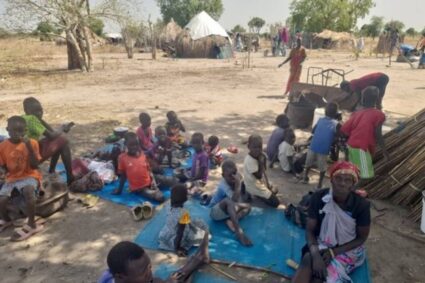

Kapoeta County hard-hit by severe hunger

Kapoeta County of Eastern Equatoria State is hard-hit by severe hunger with local residents braving wild animals as they penetrate forests in search for wild fruits to tame their hunger.
Peter Lokale, former Kapoeta East County Executive Director said on Monday the situation would result in fatality if no immediate intervention was made to save the lives of women and children.
“The situation is alarming now. People are searching for wild fruits for survival which are hard now to find in the forests. Women and children are suffering. There is no food even drinking water or medicines,” Lokale said.
Last week, area governor Louis Lobong Lojore appealed to the national government and humanitarian partners to provide food to the affected population in the area. Populations in nine states of South Sudan were expected to face severe food insecurity this year, according to the latest assessment by the International Committee of the Red Cross (ICRC) in South Sudan.
The agency noted that food production in 2020 had declined by 50 per cent less than the production in 2019, due to the accumulative impact of conflict, armed violence, and natural disasters. In his visit to the country last week, Robert Mardini, ICRC Director General said the environment made it default for the South Sudan’s population to become self-reliant.
“People are tired of depending on aid. They want to live in dignity and provide for themselves and their families. Our assessment shows that climate chock, combined with continuing conflict and armed violence, make the transition for communities from receiving food assistance to independent food production extremely difficult,” said Mardini.
Despite having fertile land with abundant annual rainfalls, only four per cent of South Sudan’s land has been utilised for agricultural purpose, according to the National Ministry of Agriculture and Forestry.
The 2020 food security phase classification report indicated that at least 4.7 million South Sudanese had continued to experience food insecurity with nearly a million at catastrophic level. The impact of COVID-19 pandemic and desert locust infestation in parts of the country have added layers to the growing hunger situation in South Sudan, placing millions at risk of starvation this year.