


EAC set to ratify labour mobility policy in partner states

The East African Community (EAC) and the East African Trade Union Confederation (EATUC) have agreed to resolve the mobility and employment matters in the region.
The two bodies deliberated on how to strengthen labour, employment and migration in the region in a meeting held on Friday in Arusha, Tanzania.
The policy will involve the implementation of a joint programme for the exchange of young labourers in partner states to resolve the challenges of labour mobility.
The EAC Secretary-General, Dr Peter Mathuki, urged EATUC to swiftly finalise and implement the draft EAC Labour Migration Policy.
“Once finalised, the policy will guide laws, policies, and regulations on labour migration within and outside the region,” Dr Mathuki said.
He said the directors in charge of labour would hold a meeting in February 2022 to examine the draft policy so that it could be adopted by the EAC Council of Ministers.
“We urge EATUC to also contribute to fast-tracking the finalisation and operationalisation of the Mutual Recognition Agreements (MRA) for professionals to move freely within the region,” he added.
The EATUC Chairperson, Peter Werikhe, said there was a need for the formation of the Council of Ministers on Labour and Migration, with the possibility of encouraging frequent meetings to tackle labour, employment and migration issues.
“We also call on EAC to involve all relevant stakeholders in its EAC recovery plans and strategies post-COVID-19 to ensure that the decent work agenda is enshrined,” he said.
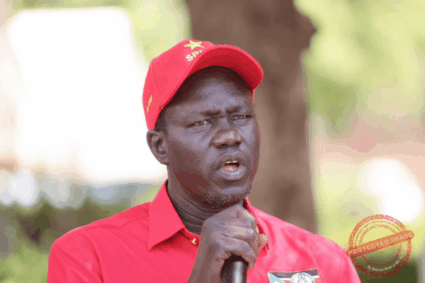
Dr Francis Atwoli, the Secretary-General of the Central Organization of Trade Unions in Kenya (COTU-K), asked EAC to involve social partners to develop the regional position at the International Labour Conference (ILC).
“We need to strengthen the voice and agenda of EAC, by strategically developing structures to influence opportunities that can benefit East Africans,” Atwoli said.
Atwoli’s call for the establishment of a desk at the EAC Secretariat to address regional labour issues at the EAC Secretariat was applauded by Dr Mathuki.
This discussion was triggered by the Memorandum of Understanding (MoU) endorsed by the fifth forum of EAC Ministers of Labour and Employment to guide the process.
The MoU will be presented before the 41st session of the Council of Ministers for consideration.
The EAC will also demonstrate its need for the intervention on labour, employment and migration at the forthcoming Heads of State Retreat on Common Market Protocol for Free Movement of Labour and the Establishment of Rights to be established in future memos.
Other areas of discussion included the finalisation of the draft Council Directive on the coordination of social security benefits for facilitating the portability of social benefits for migrant workers in the region.
EAC
East African Community (EAC) is composed of six partner states, namely: South Sudan, Kenya, Burundi, Rwanda, Uganda, and Tanzania. The EAC headquarters are in Arusha, Tanzania.
According to the EAC website, it is estimated to have a population of 177 million citizens, with over 22 per cent being urban.
EAC is also estimated to have 2.5 million square kilometres of land and its Gross Domestic Product (GDP) stands at a staggering $ 193 billion, according to the EAC statistics, 2019.
The EAC signed its treaty on November 30, 1999, which was entered into force on July 7, 2000 by the first three partner states; Kenya, Uganda, and Tanzania.
Rwanda and Burundi accepted the treaty on June 18, 2007 and attained full membership on July 1, 2007, while South Sudan agreed to the treaty on April 15, 2016 and attained full membership on August 15, 2016.
Through strong cooperation, the EAC aims to increase mutual benefits among the partner states, both politically, economically and socially.
Among the most significant treaties include the East African Customs Union, the establishment of the Common Market in 2010 and the implementation of the East African Monetary Union Protocol.
The strength lies in the readiness of East African leaders and citizens to achieve a powerful and sustainable economic and political bloc in East Africa.