




The European Union has developed a document called “Country Environmental Profile” [CEP] that will dictate the cooperation between South Sudan and the European Union on the green economy.
The cooperation will come to an end in 2027.
Adela Rodenas, Team Leader at the European Union Delegation to South Sudan, said “the CEP will play a crucial role for South Sudan in informing the country’s green and sustainable economic development.”
Rodenas tweeted yesterday during a workshop organised by the European Union in Juba.
“The EU remains committed to working together with the ministry of environment and forestry, the minister of water and other partners to ensure the country’s natural resources are sustainably managed and safeguarded,” she said.
However, on Thursday, the EU also handed overcrop and livestock production guides to the government.
The two National Ministers of Agriculture and Food Security and Livestock and Fisheries, Josephine Lagu and Adigo Onyoti, respectively, received the two documents from the European Union Ambassador to South Sudan, Christian Bader.
Amb. Bader said South Sudan should not rely on oil production alone but also on livestock and agriculture to maximize the potential of the country.
Minister Onyoti Adigo said South Sudan has the potential to not only eliminate hunger and food insecurity but also play a role in the regional food market.
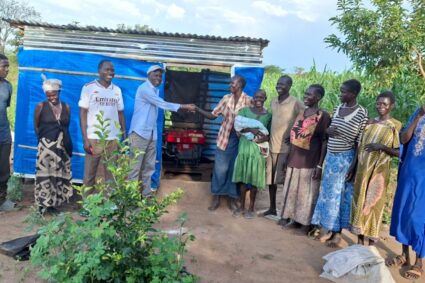
In October 2021, the European Union injected $41 million for the construction of feeder roads to support agricultural activities in rural areas of the northern and western Bahr el Ghazal states. The project will spread to other parts of Upper Nile State.
The World Food Programme [WFP] and the United Nations Office for Project Services [UNOPS] will implement the resilience support to remote rural communities project, with the WFP receiving a $26 million contribution for empowering over 100,000 communities to produce their own food.
The United Nations Office for Project Service [UNOPS] was awarded $15.4 million to build 115 kilometres of feeder roads as well as two bridges.
The United Nations’ World Food Program Country Representative, Mathew Hollingsworth, said the contribution will tackle food insecurity and boost economic development in the areas.