


Yakani: Delay in 2025/26 budget could deprive S. Sudan access to EAC programs

The activist said if S. Sudan had been an active member of the community in fulfilling its financial obligations, it would have achieved numerous benefits, including employing its citizens in community institutions
By Chol Chanyong
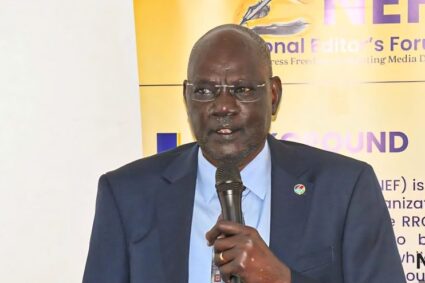
Edmund Yakani, the current chair of the East Africa Civil Society Forum (EACF) and Executive Director of the Community Empowerment for Progress (CEPO), warned that delay by South Sudan government in approving the 2025/26 budget and the country’s failure to meet her financial obligations to the East African Community (EAC) will deprive her access to key community programs.
“The government’s delay in approving the budget and its failure to meet its financial obligations to the EAC will deprive South Sudan of significant opportunities, such as employing its citizens in community institutions, and will weaken its political influence in the organization’s decision-making mechanisms, including the inability to put its priorities and concerns on the agenda,” he added.
“This will also lead to a decline in the performance of government institutions and weaken the country’s negotiating position on vital issues such as freedom of movement and trade integration, negatively impacting citizens. Furthermore, the lack of financial commitment prevents South Sudan from participating in regional projects, such as cross-border infrastructure development.”
“If South Sudan had been an active member of the community in fulfilling its financial obligations, it would have achieved numerous benefits, such as employing its citizens in community institutions, accessing joint financing, attracting economic and development projects, and receiving support in the areas of peace and security,” he said.
Yakani emphasized that South Sudan’s financial discipline could motivate the community to further support its interests, calling on the government and society to enhance dialogue on peace and security issues and take effective steps to ensure a genuine political transition.
Finance Ministers from the East African Community partner states have unveiled their national budgets for the 2025-2026 fiscal year, while South Sudan is yet to submit its budget, despite previous government promises.
Meanwhile, the National Parliament has remained closed for six months, hindering budget approval. Last week, the government proposed a budget of 5.2 trillion South Sudanese pounds (SSP) for the 2025-2026 fiscal year, an increase of 1 trillion SSP from last year’s budget of 4.2 trillion SSP.
According to the Office of the Vice President for Economic Cluster, Dr. Benjamin Bol Bel, the budget, presented by Minister of Finance and Planning Dr. Marial Dongrin Ater, aims to stimulate economic recovery, ensure macroeconomic stability, and support democratic transition. The delay in approving the budget is expected to exacerbate South Sudan’s economic isolation and reduce its opportunities to access regional and international funding, especially in light of ongoing political and security challenges.