




Dire state at Kuajok hospital as facility run out of essential medicine

By Aguok Chok
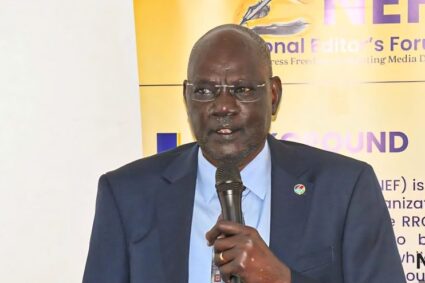
The Medical Director of Kuajok Hospital Dr. Kulang Joseph has revealed to The City Review the critical shortage of essential medicine and basic medical supplies at the state-run hospital. The situation, according to Dr. Kulang, is undermining service delivery and putting patient lives at risk.
“So, Kuajok Hospital is a government-owned hospital and being supported by HSTP. Under these, the hospital receives supply quarterly,” he explained. “It is that sometimes the supply don’t come regularly. And also sometimes when it comes, it comes in a small quantity, which cannot last long.”
The inconsistent and insufficient supply of medicine has led to a dire shortage of essential drugs, including anti-malaria medication, anesthetic drugs, and antibiotics. The hospital is also lacking critical medical items such as gloves, gauze, cannulas, and basic bedding.
“We are short of some essential medicine , thing to do with the metadimazole, the small bedding, including gloves, eye-belline, cadaver,” Dr. Kulang revealed.
Most alarming, however, is the lack of anesthetic drugs, which has severely impacted the hospital’s ability to perform surgeries. “We lack an aesthetic drug here in the hospital for us to have operation run effectively,” he said. “It is a major concern.”
Despite these challenges, hospital staff have made strenuous efforts to continue offering services. “Most of the operations we are doing here, we try to run here and there. While we lack this aesthetic drug, it is a hospital-owned waste that finds a source where they can be able to procure the drug at the end of the day when they perform surgery,” Dr. Kulang said.
He also warned of the hospital’s dwindling stock of antimalarial drugs. “The most critical that are lacking are anti-malaria. Thanks to MSSF, they gave us some 2,000 doses of ATC to the medical, the anti-malaria. Otherwise, we will have run out of this anti-malaria drug.”
Additionally, medicines for diarrhea and respiratory infections are in short supply. “In the next few weeks, we are likely to run out. There is no supply that is coming,” he stated.
The shortage has deeply affected the hospital’s emergency services. “The absence of medicine affects almost the entire hospital functionality,” Dr. Kulang lamented. “If there are no anesthetic drugs and the emergencies are in section that are taking place, you won’t be able to do it. It’s likely that it will end up in the referral.”
Patients are often asked to buy basic medical items themselves.
The crisis comes as the hospital also responds to a cholera outbreak. “Beginning from 27 of these months, we first received one case… By 30, we have eight cases. Today we received nine cases,” he confirmed, citing the affected villages along the northeastern riverbank of Kuajok.
Despite the rising number of cases, the hospital is struggling to contain the outbreak. “We only rely on the hospital’s internal mechanism. There are no partners to help us in this,” Dr. Kulang noted. He appealed for urgent intervention from humanitarian organizations and international partners.
He also reported suspected cases of a new illness that causes neck swelling in children, with two cases under observation. However, a confirmed diagnosis is yet to be made.
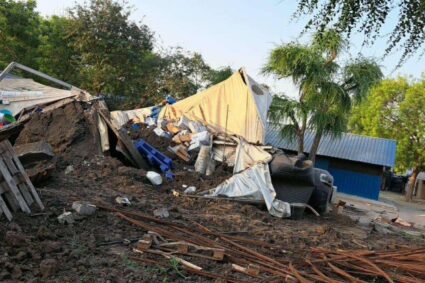
Dr. Kulang painted a grim picture of the hospital’s readiness to handle such multiple outbreaks, highlighting poor infrastructure and lack of emergency and isolation facilities. “We don’t have emergency department. We don’t have isolation unit. Even the one we have now is a tent,” he said.
In his final remarks, Dr. Kulang called on the public to support the hospital during these difficult times. “We need support from the community… if there is a call, for example, for blood donation… the community should respond so that the blood bank is still with blood.”
“Though there are challenges, we believe that we should actually make sure that we maximize our way of taking things by lowering expectations while not forgetting that we are doing our best.”