




To maintain military power, a national army requires a combination of factors including strong leadership, a well-trained and equipped force, he said
By James Chatim
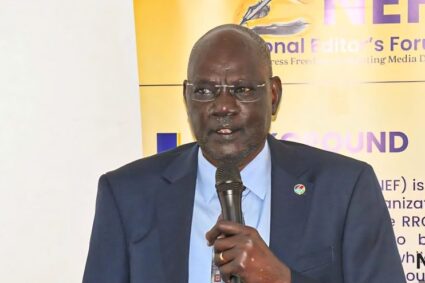
The Executive Director for Center for Peace and Advocacy (CPA), Ter Manyang Gatwech has raised concerns over the military capacity of the national army (the South Sudan People’s Defence Forces), saying there is needs for it to be capacitated in order to deter foreign aggressions and defend the nation.
The civil society activist’s statement comes following the recent fire exchange between the South Sudan military faction and Uganda’s UPDF in Kajo Keji.
To maintain military power, a national army requires a combination of factors including strong leadership, a well-trained and equipped force, he said. Manyang reminded the country’s leaders to prioritise timely payment of salaries of military personnel, enroll their children under free quality education and upgrade their living conditions.
“With deep concern and unease regarding the recent vulnerable response from the South Sudan People’s Defense Forces (SSPDF) following the incursion by the Uganda People’s Defense Forces (UPDF) into our territory. This is not the first time the UPDF has made such a provocative move into South Sudan. It is troubling that our national response lacks the firmness and readiness that befits a sovereign nation. A country is only as strong as its national army,” Manyang stated.
“A professional and well-equipped military force is essential to maintaining sovereignty, protecting national borders, and ensuring the safety of citizens. Unfortunately, the current state of the SSPDF reflects a lack of long-term investment, organization, and morale. The leadership must urgently work to build a stronger, more professional army capable of defending South Sudan’s sovereignty,” he added.
However, the activist enlisted various recommendations to enable upgrade the country’s military. These include: Timely Payment of Salaries to maintain their loyalty, discipline, and readiness to act; Offer modern living conditions, such as building modern apartments for them to ensure their families live in dignity and, finally; Offer quality education to the soldiers’ children to not only boost their morale but also secure the future of those who risk their lives for the country.