




How climate change is pushing Rejaf smallholder farmer to the limits

By Ajah Jennifer
In the village of Lungi Boma in Rejaf Payam, Central Equatoria, lives have long been tied to the rains. The farmers have had the seasons at their fingertips, and prepare their farms early enough in readiness for the seasons.
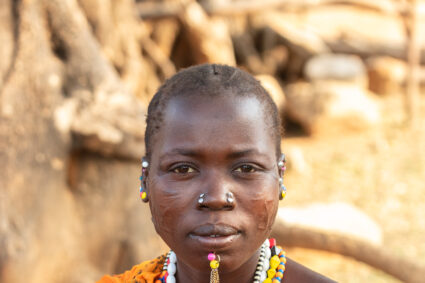
However, for farmers like Lomani Keji, the unpredictability of climate seems to be pushing her to the edge.
Despite preparing her land early, the rain delayed this year, and the consequences are devastating.
The smallholder farmer in Lungi Boma in Rejaf Payam tells the City Review that the delayed rain has not only affected her yields but also her livelihood.
Keji, a widow, is the sole caretaker of her grandchildren, whose parents passed away years back.
She mainly strives from the produce from her backyard garden, where she grows groundnuts, okra, maize and sweet potatoes for home consumption and sale.
However, this year, Keji finds herself scrounging for scraps just to feed her family.
She said the delay in the rainy season has severely affected her planting systems and reduced harvest.
“There has been no rain. Initially, I had prepared the soil for planting sweet potatoes, but the insufficient rain has put my efforts to waste,” Keji said.
This, in turn, made it impossible for her to compete in the small market and gain a living from her produce.
The prolonged dry spell has upended planting cycles and decimated yields.
According to her, there is much comparison with her harvest of the previous year.
If the conditions worsen, Keji fears that she may need to turn to activities like collecting firewood for sale to fend for her family.
According to the farmer, they are always provided with some seeds, such as okra, local greens, and beans by the organizations. Unfortunately, the delay in rains forced her to cook some of the seeds, such as okra, for her family when they run out of food.
Another bitter pill for the widow is the destruction of crops by encroaching cattle herders into their farmlands, in addition to land grabbers. She recalled an incident last year where individuals whom she declined to identify grabbed her garden.
“I was harassed not only by the perpetrators but also by members of my community.”
Keji sustained an injury as her rib and leg were broken while defending her land.
She noted land grabbing as a big challenge to the community, an emotive vice that has also affected her neighbours.
Keji called on the State and national government to address the issue of land grabbing in the country.
To safeguard herself, Keji has erected a small fence to keep out illegal occupation and animals from entering into the garden.
Before fencing the plot, Keji said the animals would enter her garden and graze on the farm.
“In attempts to chase the animals out, I would get physically assaulted by the owners of the cattle, and when you try to seek legal intervention, no justice is delivered,” she said.
While the country is experiencing serious climate change, Keji, like many in her village, is unaware that these changing weather patterns are linked to global climate change.
Moving forward, Keji is considering alternatives with the hope that the initiatives could provide financial assistance to help her transition from subsistence farming to something more sustainable.
As climate change continues to reshape rural livelihoods, stories like Keji’s are becoming all too common. Without urgent intervention, many more small-scale farmers may be forced to abandon their fields in search for alternative sources.