

Makuei reaffirms December election pledge, seeks support from partners to overcome remaining hurdles

By Emmanuel Mandella
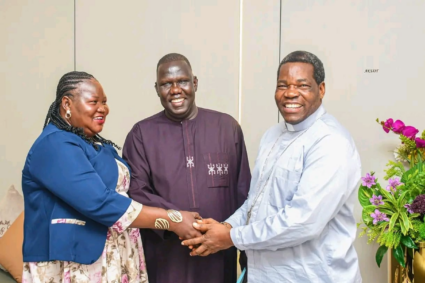
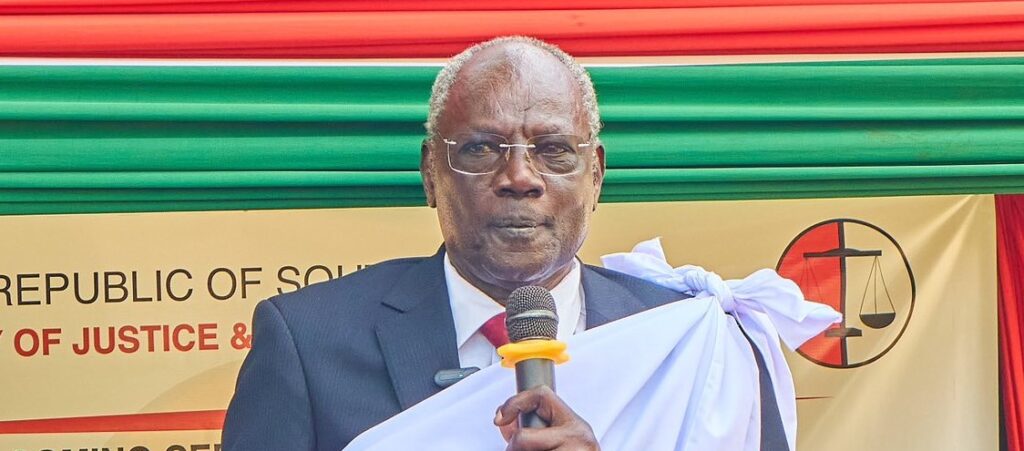
Hon. Michael Makuei Lueth, caretaker Minister of East African Community Affairs.[Photo: Courtesy]
Caretaker Minister of East African Community Affairs, Michael Makuei Lueth, has reaffirmed the government’s commitment to holding the country’s first post-independence general elections on schedule, calling on the United Nations and other international and regional partners to help overcome outstanding challenges ahead of the December polls.
Makuei made the commitment during a meeting with Anita Kiki Gbeho, Deputy Special Representative of the UN Secretary-General in South Sudan, who paid him a courtesy visit following his appointment to the caretaker government.
The discussions focused on preparations for the upcoming elections, the ongoing inter-party political dialogue, unresolved electoral issues and the role of international partners in supporting the process.
Makuei acknowledged that obstacles remained but insisted that the government was working to address them and maintain the electoral timetable.
“We know there are some obstacles that are underway, but nevertheless, we have worked hard to ensure that we overcome all these hurdles that may be obstacles for the general elections,” Makuei said.
He also appealed to UNMISS and other international and regional organizations to support the government during the preparations, particularly throughout the election period, with the stated objective of delivering free, fair and credible elections.
The meeting comes as South Sudan moves towards the December 22, 2026 elections, which are expected to mark the country’s first national general elections since gaining independence in 2011. The electoral process is unfolding amid continuing political, security and institutional challenges.
Speaking after the meeting, the minister said the government seeks international and regional partners’ help to create conditions conducive to a peaceful electoral process.
His remarks reflected the government’s recognition that preparations involve more than announcing an election date, requiring coordination among national institutions, political parties, security agencies and external partners.
The United Nations Mission in South Sudan (UNMISS) has previously expressed its willingness to continue working with the government on peace, stability and preparations for the elections. In May, the UN mission discussed electoral preparations and cooperation with the government, underscoring the importance of continued engagement between the two sides.
Gbeho said her visit was primarily a courtesy call to congratulate Makuei on his new assignment, but the meeting also provided an opportunity to discuss broader issues facing South Sudan.
She said the discussions covered the country’s current challenges, the ongoing inter-party dialogue and possible ways forward in advancing peace.
The UN official said Makuei briefed her on recent developments, including the political dialogue, while she raised questions about how outstanding issues would be addressed as the country moves towards the elections.
“It was an opportunity for me to also raise issues such as how South Sudan would deal with outstanding issues, how would they be tackled moving forward, and it was also an opportunity to talk about the importance of inclusivity as South Sudan moves forward,” Gbeho said.
Her emphasis on inclusivity highlights an important consideration for the electoral process: the need for political stakeholders to participate meaningfully in discussions about the country’s future and for outstanding concerns to be addressed through dialogue.
The UN has repeatedly stressed that peaceful and credible elections require political consensus, adequate preparations and an environment in which citizens and political actors can participate.
The UN Security Council has also highlighted unresolved political and security questions as challenges to the credibility and peaceful conduct of the December polls.
The meeting also focused on the inter-party political dialogue, which brings political stakeholders together to discuss issues surrounding the planned elections.
President Salva Kiir Mayardit officially opened the dialogue in Juba on September 24, urging participants to concentrate on election-related matters and build consensus around a peaceful and credible electoral process.
The forum is intended to provide political parties with an opportunity to exchange views and address concerns before the country proceeds to the polls.
However, the existence of the dialogue does not itself mean that all outstanding issues have been resolved. The government and participating stakeholders still face the task of translating discussions into practical measures that can support a credible electoral process.
Gbeho’s questions about unresolved matters and the importance of inclusivity underline the continuing need for engagement between the government, political parties and international partners.
For South Sudan, the challenge will be to ensure that dialogue produces sufficient common ground to sustain preparations while allowing concerns about the process to be addressed constructively.