



More than three months since arrival from Jonglei State as a result of devastating floods, the Internally Displaced Persons (IDPs) in Mangalla are still huffing under the mercy of a miserable humanitarian circumstance.
Proximally sited at the outskirt of the South Sudan capital Juba, Mangalla, declared as an IDP camp by the humanitarian affairs ministry earlier this year, is hosting more than 12000 people in desperate need of adequate humanitarian relief, which they never got since their resettlement.
The Islamic Council through the South Sudan government delivered an assortment of food and non-food items to the community a fortnight ago after Lebanese businessman Ali Myree donated similar items almost a week prior. Do not hold your breath, just yet.
As that number swells, with nearly 300 families coming in every single day according to a senior official at the ministry of humanitarian affairs, the donations are proving inadequate.
More than half of the total population are sheltering either under the trees or in temporarily-erected tents and every moment it rains they are psychologically driven back to their past experience, getting soaked in rain waters.
The IDPs have closed 90 days without sufficient supplies of basic necessities.
“It’s been three months since the day of our arrival in the community and we have been staying here without water, food, and even medication,” says James Alei Akech Alei, a Chief from Panyagor in Twic East County.
Strange diseases
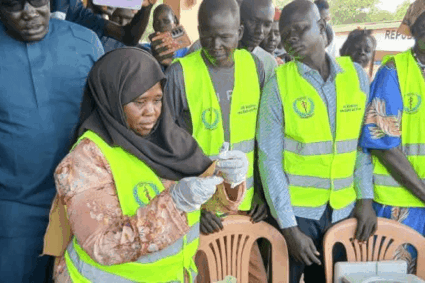
IDPs in Mangala, especially women, say children are developing ‘bizarre diseases’ which defy diagnosis done by two clinical volunteers in charge of an ill-equipped medical center established by the Rural Community and Empowerment Network with medical support from the office of the Vice President for Gender Cluster, Rebecca Nyandeng and the Ministry of Health.
“My Children are developing strange diseases, their lips and teeth and around the face are swelling without any reason, and this is not happening to my children only, even the neighbor’s children, this is so disturbing,” whines 36-year-old Rebecca Anyieth Abarah, a mother of six children whose father remained in flood-affected Jonglei.
Living under the tree, Anyieth laments how difficulties hold grip on them despite vacating an environment troubled by natural disasters and inter-communal violence, Jonglei.
She says “Our life is very unforgiving here. We don’t have food, water and hospitals, our children also get malaria so what we do is just to give them paracetamol to reduce the pain. As you can see we stay under the tress, when it rains we have nowhere to go so it rains on us and the rain stops and life moves on.”
Food scarcity is also threatening the livelihoods of the IDPs, especially children and adults with pre-existing medical conditions. A woman on identified as Adua, a mother of seven children says her children, under many circumstances, go to bed on empty stomachs.
“What disturbs me most is that my seven (7) children stay hungry, no drinking water. We sleep under this trees, the tents are tone and therefore I am urging the government to come and help us,” she said.
It is just one of the major challenges bedeviling the IDPs, however. Health concerns are reigning supreme as the only medical center run by two medical volunteers is overwhelmed by the ballooning population.
“What I am doing here is helping the community. As you can see, we are here operating under the tree, many sick people come here for treatment and we treat more then150 people per day,” says Mayan Jacob, a clinical volunteer.
Malaria cases are spiraling due to lack of mosquito nets, which exposes both children and adults to anopheles mosquito bites but there is no medication.
“We treat a lot of malaria cases and we don’t have the anti-malaria drugs for adults, they are not available and even medication for children. Besides, the drugs are not enough, what you see here are samples of the drugs and even the tents are not enough,” Jacob stressed.
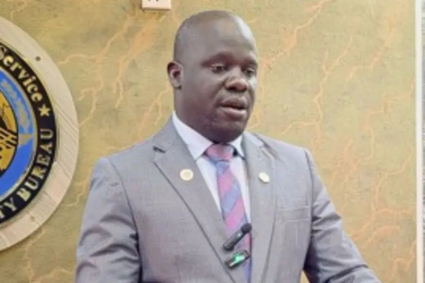
Peter Mayen, the Minister of Humanitarian Affairs and Disaster Management explained that in the Internally Displaced Persons Camp, they receive nearly 250 families every day, hinting a possibility of huge increase of people coming in.
Mayen admitted that the situation in the camp is dire and the people lack water, shelter, food, and medical equipment.
He says the ministry of humanitarian affairs together with the ministry of health were intending to provide a mobile clinic to solve the issue of the medical care.
“We have already started and continuing to distributing tens and the huge number for the people here are women and children that have been severely affected by the floods,” he said.
But unless that initiative is implemented, the government’s contribution to salvage the situation in Mangalla has been the mobilization of resources and donations from the business community.
Dispute
The Governor of Central Equatoria State has objected the decision by the humanitarian affairs ministry to declare Mangalla an IDP Camp before suspending land allocation and allotment within the area days later.
An investigation by The City Review confirms that there is no corporation between the IDPs and the host community dissatisfied over the allocation of the land for humanitarian purposes.
Host community members have since vacated Mangalla in a show of disgruntlement.