

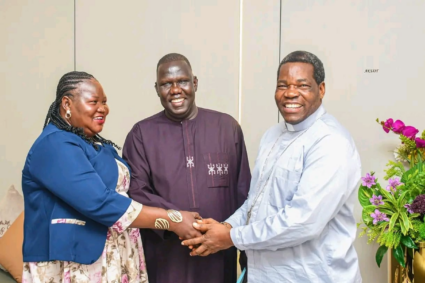
Billions required for South Sudan’s humanitarian crisis response

The UN Office for the Coordination of Humanitarian Affairs (OCHA) has appealed for an urgent $7 billion to respond to the growing needs of more than half of the country’s population, already at risk.
Sara Beysolow Nyanti, the UN Coordinator of Humanitarian Affairs, said the money will enable the humanitarian community to deliver urgent life-saving assistance to the 6.8 million vulnerable South Sudanese in need.
“Today, in 2022, we estimate the 8.9 million people in South Sudan have significant humanitarian needs. The cumulative and compounding effects of years of climate-related events such as flooding and drought, conflict and subnational violence have destroyed people’s homes and livelihoods, robbing them of the future they deserve, “the OCHA Coordinator for South Sudan said.
She added: “Throughout these shocks, the effected communities have continued to demonstrate a great sense of resilience, solidarity, and creativity.” I call on the government, development partners, donors, and humanitarian organisations to match their solidarity with unwavering support.”
The UNOCHA launched a humanitarian response plan yesterday in Juba, where it detailed that more than two-thirds of the people in South Sudan – 8.9 million people – are estimated to be in need of humanitarian assistance. Humanitarian organisations plan to target 6.8 million of these in need with humanitarian assistance and protection services.
There are over two million people, mostly refugees, who are expected to experience food insecurity by the peak of the lean season from May to July. It is expected that large scale flooding for the fourth year in a row is expected, with the destruction and displacement that comes with it.
Despite challenges such as access to people in need, the humanitarian operation in South Sudan continues to reach millions of people with aid. In 2021, over 5.3 million people were assisted with food, health, water and sanitation, education, livelihoods, nutrition, and critical protection services.
“The 2022/2023 Plan reflects the humanitarian commitment to protect vulnerable people, particularly women and girls, the elderly, and those with ability challenges,” Ms. Nyanti said, adding that “sexual and other forms of violence continue to be a major problem in South Sudan, so protection is at the heart of everything we do.
“A collective responsibility to prevent and respond to violence, especially against women and girls, is essential. Those who commit such crimes must be brought to justice. Humanitarians must continue to work with development and other partners to ensure the root causes of increasing humanitarian needs are addressed.’’