

Deteriorating security situation in S. Sudan threatens implementation of peace agreement- RJMEC


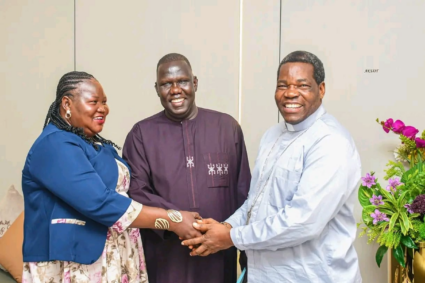
The Commission also raised concerns over the repeated removal and replacement of opposition leaders from their positions
By James Chatim
The Reconstituted Joint Monitoring and Evaluation Commission (RJMEC) has noted with concern the costly impact of South Sudan deteriorating security situation on the implementation of the 2018 peace agreement.
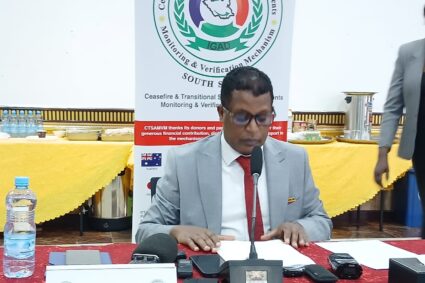
Delivering a virtual brief to the United Nations Security Council (UNSC) on Tuesday, RJMEC interim chair, Amb. Maj. Gen. (rtd) George Aggrey Owinow said permanent ceasefire agreement has severely been violated since March 2025, prompted by repeated clashes between the national army, South Sudan People’s Defence Forces (SSPDF) and the opposition force Sudan People’s Liberation Army in Opposition (SPLA-IO), including ‘ongoing confrontations areas such as Upper Nile and Jonglei States, as well as parts of the greater Equatoria regions.
Citing reports from the Ceasefire and Transitional Security Monitoring and Verification Mechanism (CTSAMVM), Amb. Owinow said the confrontations have occurred in six out of the ten states, and the three Administrative Areas, triggering a new wave of humanitarian displacements.
“In December alone, CTSAMVM documented 76 alleged ceasefire violations, 21 hostilities and 25 incidents of violence against civillians and humanitarian actors. Those numbers further increased in January 2026 to 87 alleged ceasefire violations, of which 30 of the incidents were reported hostilities between the signatory parties and 26 incidents of violence against civilians and humanitarian actors,” he said.
“Despite the continuous appeal for de-escalation, ceasefire, political dialogue and adherence to the provisions of the R-ARCSS, repeated actions to the contrary have seriously undermined confidence in the peace process and risk returning the country back to war,” the RJMEC Chair added.
On political upheavals, RJMEC reported continuous removals and replacements of opposition representatives from their positions in the Revitalised Transitional Government of National Unity (RTGoNU), executive and legislature at national and state levels, a move, Amb. Owinow said, affected the responsibility-sharing arrangements under the 2018 Peace Agreement.
“Politically, the responsibility-sharing arrangements of the Peace Agreement continue to deteriorate through removals and replacements of opposition representatives from different portfolios of the Revitalised Transitional Government of National Unity (RTGoNU) executive and legislature at national and state levels,” he explained, further highlighting the ongoing detention of First Vice President, Dr. Riek Machar, alongside other co-accussed members of his party (SPLM-IO) over the Nasir incident.
However, he said, some decisions are taken within the Transitional Government without the consensus of all peace parties as provided in the Resolution of the Conflict in the Republic of South Sudan (R-ARCSS).
“In addition, H.E. Dr Riek Machar Teny, First Vice President and Chairperson of the SPLM/AIO, remains in detention and on trial together with other SPLM/A-IO officials. Meanwhile, some decisions are being made within the RTGoNU without the consensus of all Agreement signatories as required by the R-ARCSS.”
As the Commission’s Interim Chair delivered the address, separately, United Nations peacekeeping chief Jean-Pierre Lacroix warned of a deteriorating situation, excerbated by a political deadlock among peace signatories as well as armed confrontations which has displaced thousands.
Concerned by recent developments, including renewed clashes in Jonglei State and other parts of the country, at a time the UN Mission is cutting cost and reducing its patrols and staff, Lacroix urged the country’s leaders to drive the country away from conflict, have inclusive dialogue and uphold the peace agreement.
Similar sentiments were recommended by RJMEC, which advised the peace parties to cease all hostilities, embrace all-inclusive genuine dialogue, and re-activate the Agreement implementation mechanisms; restore and respect the Permanent Ceasefire, and embark on the full reunification and professionalise the security forces under a single non-partisan command.
Additionally, the body urged the country’s leadership to preserve peace, promote reconciliation, embrace dialogue and address disputes through the provisions of the Revitalized Agreement for Resolution of Conflict in South Sudan (R-ARCSS).
Utilities
“Politically, the responsibility-sharing arrangements of the Peace Agreement continue to deteriorate through removals and replacements of opposition representatives from different portfolios of the Revitalised Transitional Government of National Unity (RTGoNU) executive and legislature at national and state levels,” RJMEC chair, Amb. Maj. Gen. (rtd) George Aggrey Owinow, said.