
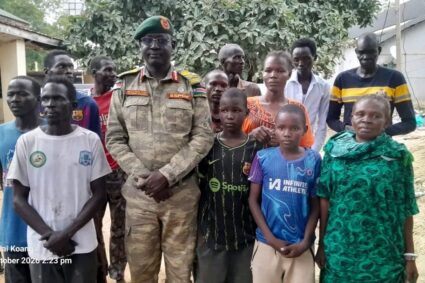
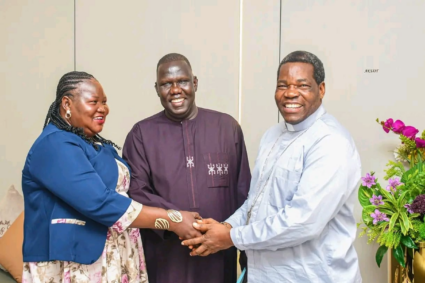

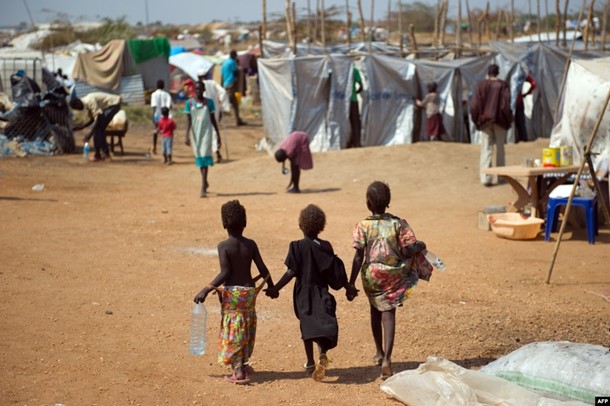
The 30-month programme will focus on helping internally displaced persons (IDPs), returnees, and host communities rebuild their lives through improved land governance, urban planning, climate-resilient infrastructure, and livelihood support.
By Emmanuel Mandella
Over 4 million displaced people are set to benefit from a new €12 million recovery initiative launched by the European Union and the International Organization for Migration (IOM), in what officials describe as a major shift from emergency aid to long-term solutions.
The 30-month programme, dubbed Catalyzing Durable Solutions, will focus on helping internally displaced persons (IDPs), returnees, and host communities rebuild their lives through improved land governance, urban planning, climate-resilient infrastructure, and livelihood support.
Speaking at the launch in Juba, EU Ambassador Pelle Enarsson said the initiative represents a significant investment in restoring dignity and stability to communities uprooted by years of conflict and climate shocks.
“The €12 million programme is a concrete step toward addressing the needs of over four million displaced people. It is not only about shelter, but about restoring livelihoods, strengthening land rights, and creating conditions for sustainable development,” Enarsson said.
South Sudan continues to face one of the largest displacement crises in Africa, driven by recurrent violence, flooding, and economic fragility. Many families have been displaced multiple times, often losing homes, land, and sources of income.
The new programme will prioritise key urban centres, including Yei, Bentiu, and Rubkona, where large populations of displaced people are attempting to reintegrate. Investments will support urban planning systems, land documentation, and climate-informed infrastructure to prevent future displacement.
Enarsson warned that development gains will remain fragile without lasting peace.
“Without peace, there can be no durable solutions. Development can only take root where stability exists. We therefore call on all parties to end violence and support recovery efforts,” he added.
IOM Country Representative Vijaya Souri said the initiative reflects a transition from short-term humanitarian assistance to long-term recovery strategies that empower communities.
“South Sudanese communities have shown remarkable resilience, but resilience alone is not enough. This programme will help families rebuild safely, secure land rights, and access economic opportunities so they do not fall back into cycles of displacement,” Souri said.
She noted that the project will strengthen national housing, land, and property systems, while also supporting inclusive economic activities such as small-scale farming and cooperatives aimed at vulnerable groups, including women-headed households.
Local authorities in displacement-affected areas have welcomed the initiative, expressing hope that it will bring tangible change on the ground.
On his part, Yei River County Commissioner, Emmanuel Taban Seme said residents are eager to see development projects that address both humanitarian and economic needs.
“If there are people who will be happy, it is the people of Yei. We want to see real improvements in urban planning, agriculture, and reintegration so our communities can stand on their own,” Seme said.
He added that support for farming and cooperatives will play a critical role in reducing dependency on aid and promoting peaceful coexistence among returnees and host communities.
“I believe we can achieve peace through development. When people have livelihoods and land security, conflict reduces and stability grows,” he said.
The programme also aims to address one of the most sensitive drivers of conflict in South Sudan land disputes by strengthening governance systems and promoting transparent allocation and documentation of land.
The shift toward durable solutions marks a critical evolution in the country’s displacement response, which has long relied on emergency assistance.
By linking recovery to urban planning, climate resilience, and economic empowerment, the initiative seeks to break the cycle of repeated displacement.
However, the continued insecurity in parts of the country, limited infrastructure, and economic hardship could slow implementation if not addressed alongside development efforts.
Despite these obstacles, partners say the programme offers a pathway toward self-reliance for thousands of families who have spent years in camps and informal settlements.
For many displaced South Sudanese, the promise of land security, livelihoods, and stable housing represents more than development; it is a chance to rebuild lives interrupted by conflict and uncertainty.
Utilities
“I believe we can achieve peace through development. When people have livelihoods and land security, conflict reduces and stability grows,” said Yei River County Commissioner, Emmanuel Taban Seme.