



Former WES Governor Al-Taib counts success after removal

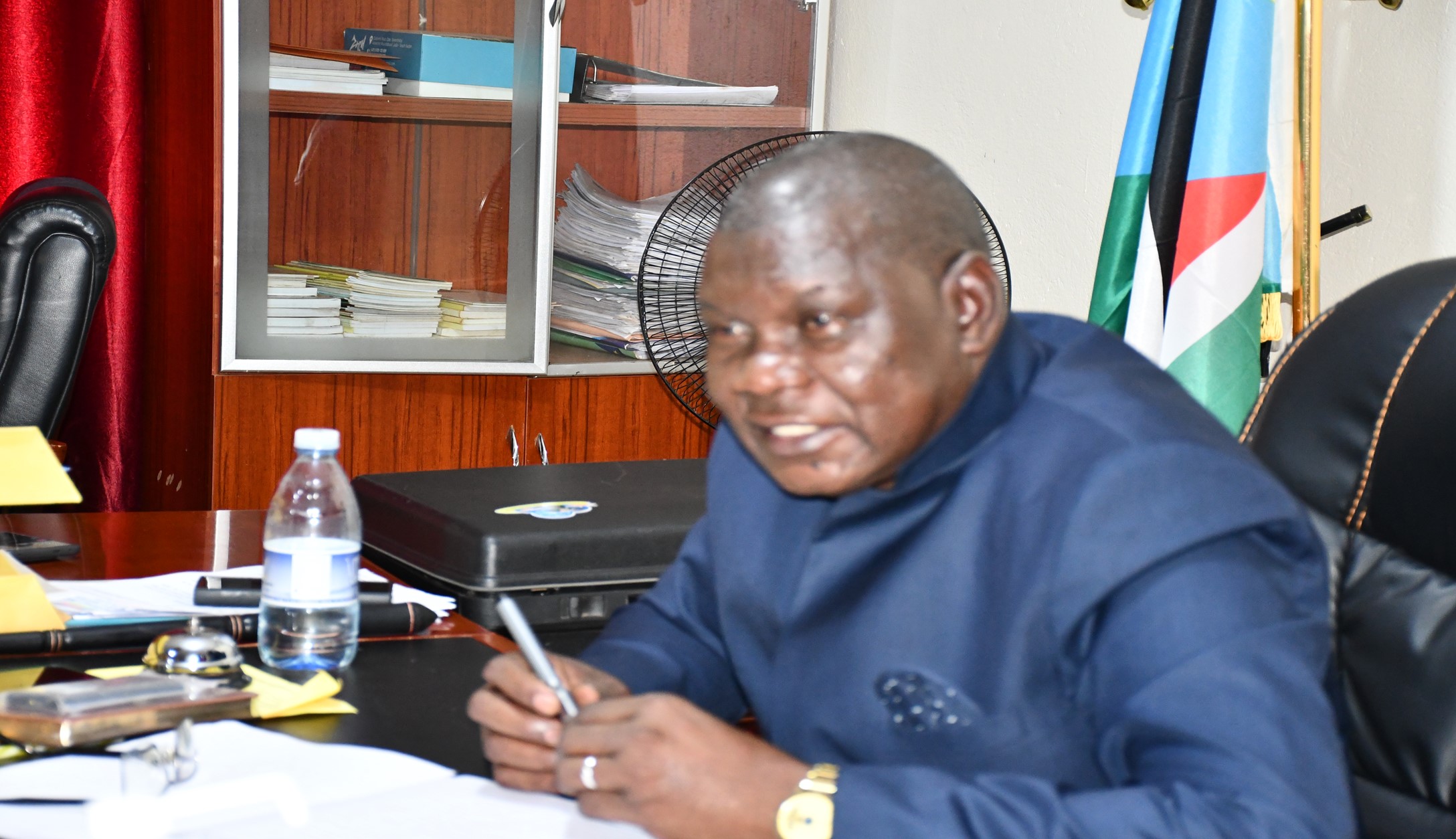
Governor defends tenure, saying he inherited a collapsed system and helped restore rule of law as well as re-established the three arms of government despite severe financial constraints.
By Emmanuel Mandella
The Former Western Equatoria State Governor, James Al-Taib Jazz Berapai has defended his tenure in office, saying his administration inherited a collapsed system.
He said during his tenure, he was able to swiftly restore the rule of law and re-establish the three arms of government despite severe financial constraints.
In a reflective statement on his time in office, Berapai said he assumed leadership at a moment when state institutions had largely broken down, describing the period as one in which “the rule of law disappeared and the rule of men prevailed.”
According to the former governor, one of his administration’s priorities was to rebuild the executive, legislature, and judiciary, the pillars he said were essential for restoring public confidence and service delivery.
“When I took over last year in August 2025, the structures of government had fallen apart. Within six months, we worked to put back the executive, the legislature, and the judiciary so that the state could function again,” Berapai said.
Berapai’s remarks highlight a period of political transition in Western Equatoria, where governance challenges, insecurity, and economic hardship have long affected state capacity.
Analysts say the reactivation of the three arms of government is often a key benchmark in post-conflict administration, as functioning institutions provide the legal and administrative framework for public services, law enforcement, and policy implementation.
During his tenure, Berapai said his administration focused on re-establishing coordination between the branches of government to ensure decisions could be made collectively and implemented effectively.
“The three pillars existed and worked tirelessly with all efforts to serve the people of Western Equatoria,” he said, adding that institutional cooperation was central to stabilizing governance.
Local observers note that Western Equatoria has historically faced governance disruptions due to insecurity, displacement, and limited resources, which have weakened administrative systems at both state and county levels.
However, despite what he described as progress in rebuilding institutions, Berapai acknowledged that a nationwide cash liquidity crisis posed a major obstacle to implementing government policies.
South Sudan’s prolonged economic downturn, characterized by inflation, currency depreciation, and limited public revenue, has affected the ability of state governments to fund programs and pay civil servants.
“The major challenge was the absence of cash liquidity in the state and the country at large. We were not able to implement decisions immediately because there was no money,” he said.
He added that while policies were formulated, the lack of funds delayed execution, forcing the administration to prioritize essential services and seek alternative means to carry out its plans.
Economic experts say liquidity shortages have been a persistent challenge across South Sudan, often leading to salary arrears, stalled development projects, and reduced service delivery in sectors such as health, education, and infrastructure.
Former Governor, Berapai described his time in office as “fruitful despite the challenges,” emphasizing that governance during a financial crisis required balancing public expectations with limited resources.
He said his administration “struggled here and there” to implement key decisions, noting that some progress was made even under difficult conditions.
His comments come at a time when discussions about governance performance, institutional capacity, and economic recovery remain central to political discourse in Western Equatoria and the country at large.
Civil society actors in the state have repeatedly called for stronger institutions, transparent public financial management, and improved coordination between state and national governments to address persistent service delivery gaps.
Western Equatoria, known for its agricultural potential, has faced recurring challenges including insecurity in some counties, displacement of farmers, and limited infrastructure all of which require functional governance structures to address.
Political observers say the effectiveness of state leadership is often measured by its ability to maintain institutional stability, manage scarce resources, and deliver basic services.
Berapai’s defense of his record reflects a broader debate about the constraints facing sub-national governments in South Sudan, where states depend heavily on national transfers that are frequently delayed or insufficient.
While reflecting on his tenure, the former governor stressed the importance of maintaining functional institutions regardless of leadership changes, warning that governance gains can be easily reversed if structures are weakened.
“What matters is that the institutions remain strong so they can continue to serve the people,” he said.
He urged current and future leaders in Western Equatoria to prioritize the rule of law, strengthen cooperation among government branches, and address economic challenges that continue to affect policy implementation.
As Western Equatoria navigates ongoing political and economic pressures, the debate over institutional reform and resource constraints remains central to the state’s governance agenda, with citizens increasingly demanding effective leadership and tangible improvements in service delivery.
Utilities
“When I took over last year in August 2025, the structures of government had fallen apart. Within six months, we worked to put back the executive, the legislature, and the judiciary so that the state could function again,” ex-WES Governor, James Al-Taib Berapai said.