

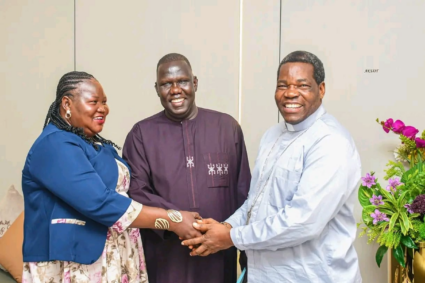
Health Minister paints hope, new era in official visit to Juba Teaching Hospital

Hon. Cleto challenges staff to take responsibility for ensuring cleanliness in their departments and urged the government to increase budget allocations to the health sector.
By Aguok Chok
The Minister of Health, Hon. Sarah Cleto Rial, paid a working visit to Juba Teaching Hospital to assess its operations, infrastructure, cleanliness, and medical equipment. The visit is part of a broader effort by the Ministry of Health to improve public health facilities and ensure quality service delivery to the people of South Sudan.
Accompanied by senior officials from the national Ministry of Health and hospital staff, the Minister walked through the hospital wards, maternity unit, and laboratories. She observed the conditions of the equipment, interacted with patients, and listened to the concerns of healthcare workers on the ground.
Speaking after the inspection, the Minister emphasized the crucial role of health in national development. “Health is a fundamental pillar of peace and prosperity,” she said. “We need to make sure that our citizens, especially mothers and children, have access to quality and affordable healthcare services.”
She also highlighted the urgent need to strengthen the healthcare workforce, particularly in maternal and child health and midwifery training. “We must invest in training more midwives and healthcare professionals to meet the growing demands of our population,” she added.
The Minister expressed concern over the poor condition of some hospital sections, stressing the importance of maintaining hygiene in all healthcare environments. “A clean hospital environment is essential for the safety of both patients and staff,” she said. She called on all staff to take responsibility for ensuring cleanliness in their departments and urged the government to increase budget allocations to the health sector.
Juba Teaching Hospital is South Sudan’s only national referral hospital and operates under the direct supervision of the Ministry of Health. It is funded by the central government and supported by several international and local organizations, including the Real Medicine Foundation, Medical Mission International, UN agencies, and various non-governmental organizations.
Despite limited resources, the hospital continues to provide critical services to patients from across the country. Minister Rial acknowledged the efforts of the medical team at the hospital and encouraged them to remain committed to saving lives, even under difficult circumstances.
She concluded her remarks by reiterating the government’s commitment to improving healthcare delivery across South Sudan. “The Ministry of Health is working closely with our partners to ensure we build a resilient health system that serves all South Sudanese,” she said.
The Minister’s visit comes at a time when the country is pushing for greater reforms in the health sector to respond to persistent challenges such as inadequate infrastructure, low funding, and a shortage of trained health personnel.
Patients decry services
Minister Cleto’s visit comes barely a month after several patients complained about unnecessary deaths at the Juba Teaching Hospital and attributed them to doctors’ negligence.
The outpatients who spoke to The City Review expressed disappointment and criticized the hospital’s management for failing to deliver adequate medical and healthcare services to low-income citizens who cannot afford similar services in private facilities.
A civil society activist and Executive Director of the Community Empowerment for Progress Organization, Edmund Yakani, also expressed his disappointment with the state of Juba Teaching Hospital and called on the Minister of Health and relevant authorities to allocate timely and sufficient financial resources to the hospital so it can fulfill its duties in providing adequate medical and health services to low-income South Sudanese.