



Interior Ministry unveils reform drive to transform security services


By Emmanuel Mandella
The Ministry of Interior has embarked on an ambitious reform agenda aimed at strengthening institutional challenges and aligning security governance with the implementation of the 2018 Revitalized Peace Agreement.
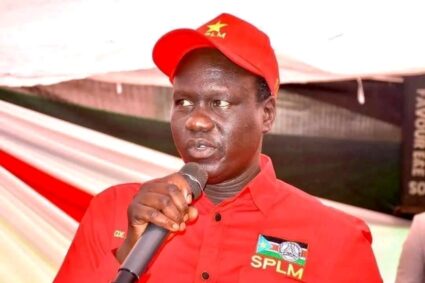
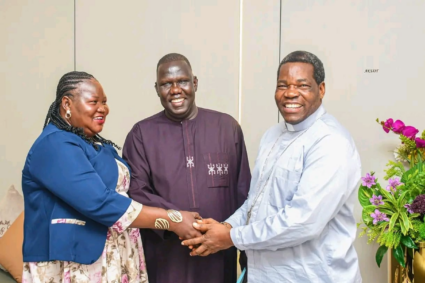
This followed a high-level meeting between the Minister of Interior, Aleu Ayieny Aleu, and Vice President for the Services Cluster, Josephine Joseph Lagu.
Speaking after the engagement, Aleu said the briefing was intended to present an honest assessment of the ministry’s operational status, existing gaps, and urgent reforms required to restore efficiency and public confidence.
“I reported to the Vice President after my first 21 days in office to brief her on the real situation within the Ministry of Interior. We discussed the operational challenges and the self-transformations required in line with the directives of the President. Our commitment is to reform and build a ministry capable of serving the people effectively,” he said.
The Ministry of Interior plays a central role in maintaining law and order through the police, civil defense, immigration, prisons, and other public safety institutions. However, years of conflict, limited resources, and structural weaknesses have left the ministry facing significant challenges, including capacity gaps, logistical constraints, and the need for professionalization of services.
The reform drive seeks to modernize administrative systems, improve coordination among security organs, and enhance accountability mechanisms key components necessary for stabilizing communities and supporting national recovery.
Minister Aleu acknowledged that transforming the institution will require both political backing and institutional cooperation across government sectors.
“Transformation cannot be achieved by one office alone. We need continuous support from the leadership and coordination across government institutions to implement meaningful reforms,” he said.
However, many view the reform initiative as closely tied to the implementation of the Revitalized Agreement on the Resolution of the Conflict in South Sudan (R-ARCSS) signed in 2018, which calls for security sector reforms, institutional restructuring, and professional governance as pillars for sustainable peace.
Effective internal security institutions are widely seen as essential to creating a stable environment ahead of the country’s anticipated general elections later this year. Strengthening policing systems, protecting civilian rights, and improving public trust in state institutions remain critical benchmarks under the peace roadmap.
Government insiders say the Interior Ministry’s transformation is expected to contribute directly to peace implementation by enhancing community safety, reducing insecurity, and supporting reconciliation efforts across states and counties.
According to officials present at the meeting, Vice President Josephine Joseph Lagu welcomed the reform agenda and pledged cooperation from the Services Cluster to ensure the ministry receives the institutional support required to implement the planned changes.
The Services Cluster oversees key ministries responsible for delivering essential public services, making its backing crucial for reforms that require cross-sector coordination, policy alignment, and resource mobilization.
Observers note that early engagement and reporting by the new minister may signal a shift toward performance-based leadership and accountability within public institutions, an approach many citizens have long called for as South Sudan navigates its transition from conflict toward stability.
Security experts argue that reforming the Interior Ministry is central not only to maintaining law and order but also to rebuilding public confidence in state authority, particularly in areas affected by communal tensions and crime.
As the country moves closer to a critical electoral period, expectations are mounting for tangible reforms that improve everyday security and government responsiveness.
The Interior Ministry’s early reform agenda, combined with requests for political and institutional backing, is being viewed as a test of the government’s broader commitment to implementing the peace agreement and strengthening governance structures.
For Minister Aleu, the message appears clear: transformation must begin internally if the ministry is to meet public expectations and support South Sudan’s fragile but ongoing peace process.
“Our goal is to build a professional institution that protects citizens, supports peace, and delivers services efficiently. This is the direction we must take as a nation,” he said.