



The country’s largest government corporation, Nile Petroleum Corporation (Nilepet), has been tasked by the government to accelerate the implementation of its strategic plan from 2017-2027.
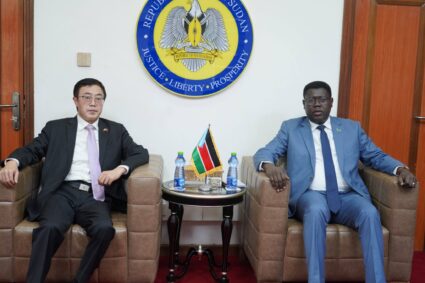
In his meeting with the managing director of Nile Petroleum Corporation (Nilepet), Dr Chol Deng Thon, President Salva Kiir Mayardit on Tuesday directed the company to expedite the construction of a refinery.
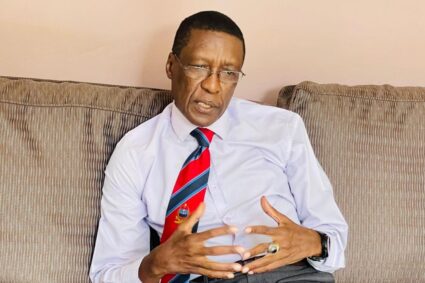
“His Excellency President Salva Kiir Mayardit was briefed in his office by the Managing Director of Nile Petroleum Corporation, Dr Chol Deng Thon Abel, on the activities of Nilepet. Dr Chol also briefed H.E. the President on the progress of the ongoing implementation of Nilepet projects based on its strategic plan for 2017- 2027,” read the statement.
“In his remarks to the media after the meeting, Dr Chol said, H.E. the President directed him to expedite the construction of the refinery.”
According to media reports, the plan includes the construction of the refineries, the construction of pipelines, the rehabilitation of roads from the oilfields to the refinery, and the establishment of robust fuel storage plants in all the 10 states and administrative areas.
South Sudan’s economy is 90 per cent dependent on oil revenue to fund its operations. Despite having the third-largest oil reserves in Africa, the country has ironically relied on neighbouring countries for oil supply, resulting in several instances of fuel shortages when insecurity concerns arise on the major road connecting the capital to the border town of Nimule.
On such occasions, there have been skyrocketing prices of fuel and commodities, making the richly resourced country vulnerable to the extent of a dire economic downturn.
Reappointment
Dr Chol Deng was appointed by President Kiir in October to replace Bol Ring Muorwel after speculation had filled the air on who could be fit for the job.
The government is eyeing high expectations in tackling corruption and ensuring that there is transparency and accountability to restore the image of the country’s prestigious oil firm during Chol’s tenure.
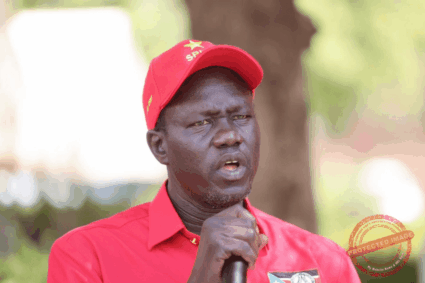
“One of the main areas of improvement is to show the nation and the leadership of the country that his return to the institution is to promote transparency and accountability,” said the Executive Director of Community Empowerment for Progress Organization (CEPO).
“Because he has been there before, he has been accused of malpractices, so it is high time for him to prove to the nation and the leadership that he is not corrupt and that he is there to ensure that the institution generates revenue for the country because that is the revenue-generating institution.”
Yakani added that the government and the public wait to witness Dr Chol’s deliverables through the implementation of the human resource manual, environmental factors, in addition to correcting nepotism, corruption, and misappropriation of revenue.
“He should demonstrate this time that he affects the reforms needed because he has been there before. This is the second time for him, and it is up to him to show the nation that he will affect the reform,” he added.
The company has been associated with foul reports of corruption, nepotism, and misappropriation of oil revenue since it was founded in 2009.
After being accused by the American corruption watchdog called the Sentry, of misappropriating oil revenue, they added that they failed to respond positively to auditing to be relieved of the weighty accusation through transparency and accountability.
The South Sudan National Audit Chamber’s Auditor General, Stephen Wondu, said in May last year that Nilepet had severally failed to submit their report despite numerous calls.
“They have not submitted their reports and my job is to request them to give me the reports. If they don’t give me the reports, I go to the higher authority which is the parliament,” said Wondu.
Effects of floods
The refinery in Bentiu, which has a capacity of 10,000 barrels per day, was built at a cost of $100 million by the Russian company Safinat as one of five refineries planned to be built to help the country overcome its chronic fuel shortage by refining 127,000 barrels per day.
In October last year, the company decried the grave impacts of floods that had distracted the construction of a road to the refinery in Bentiu. However, it is not clear whether the refinery has resumed work or another is to be constructed to bridge the gap.
The restoration of the road from the oil field to the refinery in Bentiu for the swift transportation of crude oil started in April 2021, with its first phase from Wunrock to Bentiu oilfields.
In a statement released by the former Managing Director, Bol Ring Muorwel, after inspecting the refinery in October last year, he preferred the urgent construction of a pipeline between the oil field and the refinery.
“Rain and floods across South Sudan have seriously affected our plan for the construction of a road to the refinery, but as we are coming to the end of the rainy season, the road construction will resume, ensuring that refined products reach the market within and across our borders, ” Ring said.
Bol said that a local refinery had great benefits by limiting the costs incurred by depending solely on the neighbouring countries. He said it could save the country from fuel shortages.
He further revealed that the company had planned the construction of fuel storage in all 10 states and three administrative areas.
He said that the country’s economic renaissance would be facilitated through rapid industrialization, agricultural revolution, and emancipation in different aspects of economic stability,” he said.
“Fuel scarcity will be something of the past if the local refinery officially starts operating as the main fuel supply centre in South Sudan. The refineries are not only to bring money, provide currency, or stabilise our economy but also to help create more job opportunities for thousands of youths in the country,” he stressed.