


By Samuel Yuang
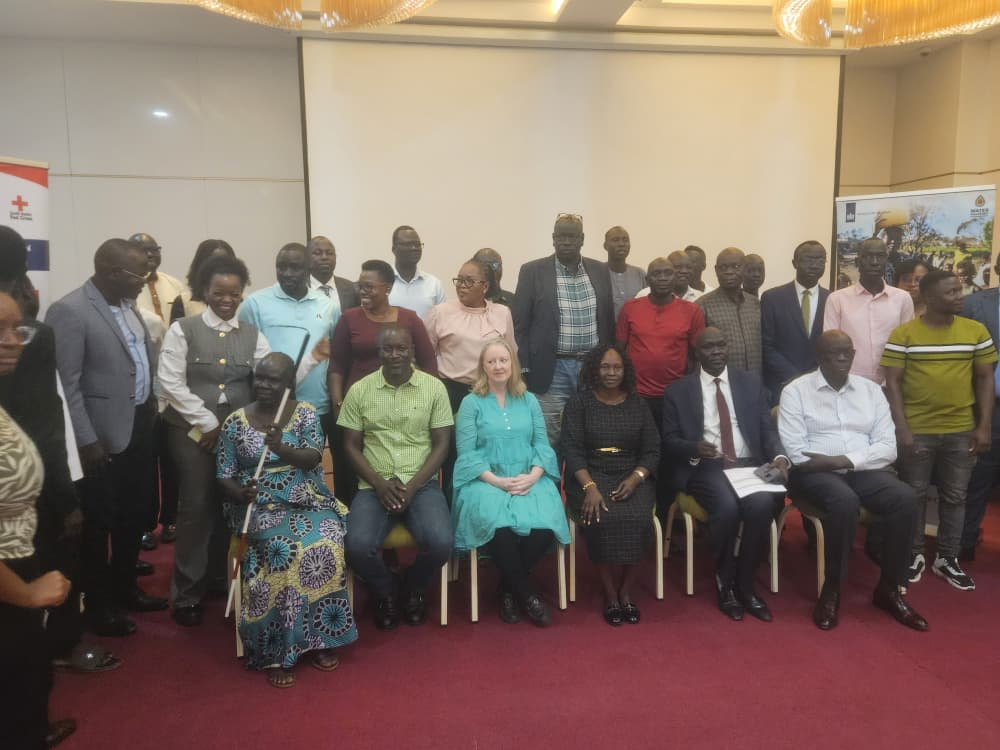
Media practitioners from across South Sudan have gathered for a two-day national training aimed at strengthening early warning systems, disaster preparedness, and climate resilience, with organizers describing the media as an indispensable pillar in saving lives and protecting communities.
Held under the theme “Media as a Key Pillar in Delivering Early Warning for All”, the workshop is a joint initiative by the Ministry of Humanitarian Affairs and Disaster Management and the South Sudan Red Cross, under the umbrella of the Water at the Heart of Climate programme. It also aligns with the global Early Warning for All initiative championed by UN Secretary-General António Guterres.
The training brings together reporters, editors, broadcasters, and humanitarian stakeholders to equip media professionals with the skills to communicate risks clearly, combat misinformation, and ensure life-saving alerts reach even the most remote locations — so no community is left behind when hazards strike.
Speaking at the opening, Baba Emmanuel, Disaster Risk Management Manager at the South Sudan Red Cross, emphasized the legal and operational role of the national society as an auxiliary to government humanitarian efforts. With 21 branches and a vast network of volunteers nationwide, he noted the training marks a critical milestone under the initiative’s third, fourth, and fifth pillars.
“This is the first formal engagement of this kind with the media fraternity, though we have worked together before,” he said. “Now, media practitioners need to understand exactly how they support the early warning pillar. Our communities face complex emergencies and recurring disasters like floods — and many cannot access information easily. Local volunteers and media working together bridge that gap.
He urged all participants to register as volunteers or members of the Red Cross, saying: “Timely information before a disaster strikes is the foundation of anticipatory action. This training comes at the right time, as floods and other hazards are already affecting parts of the country.
Hon. William Chan Achuil, Undersecretary at the Ministry of Humanitarian Affairs and Disaster Management, stressed that early warnings alone are useless unless followed by action.
“Our goal is to reduce damage and loss of life,” he stated. “We have faced floods and other hazards for years; the only way to prepare is through early warning systems. But an alert is only valuable if people understand it and act on it. We are training you so you can go out to places like Sersiobo, Ngangala, Baidi, and Manchien — and empower communities to prepare before disasters overwhelm them.”
He thanked the South Sudan Red Cross, the International Federation of Red Cross and Red Crescent Societies (IFRC), and all partners for their support, adding: “We want this engagement to continue and expand to all states and branches, because preparedness is a continuous effort.
Paula Fitzgerald, Head of Delegation for IFRC in Juba, reminded participants that data and forecasts do not save lives — trusted, timely information that reaches people in time to act does.
“South Sudan faces floods, droughts, disease outbreaks, and climate shocks every year. The question is no longer if disasters will happen, but whether we are ready to act before they become catastrophes,” she said. “Media professionals are not just reporters — you are interpreters, trusted messengers, and a vital link between science and community action. You shape understanding, influence decisions, and help people prepare, respond, and recover.”
Over the next two days, participants will explore risk communication, ethical reporting, conflict-sensitive coverage, and how to build stronger coordination between government, humanitarian agencies, meteorological services, and the media.
The success of early warning systems depends on technology, but even more on communication, coordination, and trust, Fitzgerald added. Together, we turn information into action, action into preparedness, and preparedness into resilience for every person in South Sudan.