



When the coronavirus pandemic broke out in South Sudan and was officially announced in May 2020, the perception was that the virus could spin out of control.
The notion that the country’s faltering health system would be overwhelmed if the virus would spread like in western countries.
But just like other countries which have heroes and heroines in frontline workers, so does South Sudan in the name of Rapid Response Team responds to distress calls.
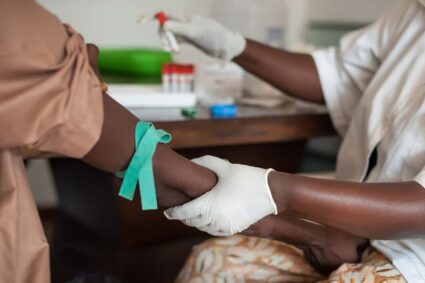
In Juba, Grace Mahale Acute (pictured) is part of that team. But in a country lacking a proper healthcare system, being a frontline worker in the face of deadly coronavirus commands more than courage. It also requires a sense of sacrifice.
Married with three children, Mahale works with a 21-member team. She is one of the only four women in the male-dominated department.
It a risky venture but one that she had been equipped to handle when she acquired training on emergency response when Ebola fear rocked South Sudan in early 2019.
“By the time the coronavirus originated, we were scared because COVID-19 was a new outbreak and we were not trained about the disease. But we were already having the ability on how to respond on the COVID-19 outbreak, so we continued and then later we were trained on how to respond on the disease although we already had the knowledge from Ebola,” she said.
She added that, “We had strengths despite the fear, of not knowing on how to protect ourselves from the new disease”.

Mahale relies on her Personal Protective Equipment to keep herself safe and also to protect her family.
“But sometimes we just have fear because when you remove the clothes [PPE], one may contaminate herself and also when I go home I also have the fear that maybe I will affect my family members,” she explained.
‘Developed thick skin’
When Mahale first started working, it was difficult keeping balance with the family. They shared the same of getting infected but such has eventually changed for the better.
“In the beginning my children were not comfortable but after they saw me protecting myself, when I reach home the first thing I do is to remove the protective gear, I go to wash room before I reach my children, they got to realise that I protect myself so that I don’t infect them and now they are used to my work.
“Besides, I had to be strong for them and if I wasn’t then my children wouldn’t be strong,” she said.
She said the perception of the community towards her changed due to the nature of her job. But it is just a matter of time for things to return to normalcy.
But responding to distress calls often comes with other challenges, especially having to deal with hostility from the members of the public they are mandated to save.
“When they call us and when we go to the community [location where the phone call came from] for response, some of the people give wrong location, others abuse us and some even question us about the virus and they reach to an extent of saying that we are just cooking things up about the disease so that we make money.
“But we Educate them about the disease and we actually tell them to protect themselves because it is not a lie,” she said.
Mahale said the challenges would not dim her motivation. She vowed to continue responding to the coronavirus alert calls.
According to the Ministry of Health and the World Health Organization, South Sudan would be receiving its vaccine by the end of this month March.
Mahale is optimistic that she will be part of the frontline healthworkers that will receive the jab first as part of government policy.
“We are the frontline workers and when the vaccine comes we will be the first people to get just like the Ebola vaccine, we were the first people to get the shot,” Mahale said.