



As preparation for the 2023 general election begins, the formation of the Revitalised Transitional Government of National Unity (RTGoNU) has gathered pace with the recent reconstitution of the Transitional National Legislative Assembly (TNLA).
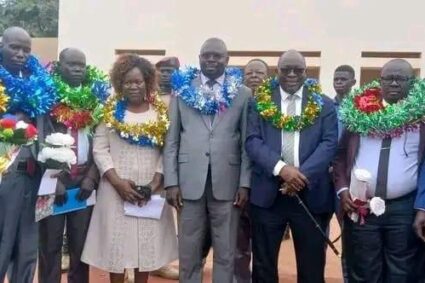
Last week, the President appointed 550 lawmakers to constitute the national legislative assembly. Already, the appointed has ignited a public debate.
The appointment means South Sudan has moved from 400 sitting Members of Parliament against 171 constituencies countrywide. That means more than 300 legislators will have no constituencies to represent.
In 2018, 229 MPs that had no constituencies were among those that were given US$40,0000 in the name of loan for car purchase. As if that was not enough, the government disbursed $25,000 to each legislator in February 2020, the 229 “ghost MPs” were also the beneficiaries of this scheme.
As those sagas happened, ordinary South Sudanese, most of whom do not know their parliamentary representatives, were toiling under a down-spiralling economy showing no sign of recovery. They may continue to suffer even after the reconstitution.
New parliamentarians
Since the formation of the new government, there has been a growing call to dissolve the current parliament and usher in a reconstituted transitional national legislative assembly. It finally happened.
If there was anything undesirable with such a parliamentary reform, it is that the assembly encompasses 550 legislators, still from 171 constituencies, in a population of less than 12 million people. It makes the already bad situation even worse.
The number of “ghost legislators” will now be 379 from 229. In times of the aforementioned loans, more money will be driven out of the public coffers.
Presidential Press Secretary, Ateny Wek Ateny said earlier that the number of legislators must correspond to the number of constituencies and the country’s population.
Surely, to be a lawmaker, one must be a law-abiding citizen. How unjust and unlawful does it feel for a legislator to occupy a seat that is non-existent?
This is undoubtedly one of the reasons the 2023 election must go on. Legislators who earn much for doing nothing must be removed from parliament. In every normal country, it is the parliament that holds the government to account.
In South Sudan, it is not even the opposite; it just a whole different scenario. The parliament in the country is filled with political egotists and opportunists, who reside in the capital Juba. Sounds fair to say majority do not know the state of affairs in their respective constituencies.
Like Ateny said, the general election should be a stepping stone to turn around such sanity. The number of MPs should correspond to the number constituencies. Legislators must also be known by the people they claim to represent.
Having 550 MPs means one constituency is represented by three legislators, which is empirically impossible. Even with that number, constituencies are overwhelmingly underrepresented.
Parliamentary dysfunction does not only affect constituencies, it cascades to the national level because top offices, like that of the president, can be blamed for mess that Members of Parliament can fix. The “our time to eat” mentality must be brushed off.
Even in China, a population of over 1 billion people, the number of legislators is relative to the number of available constituencies.
As the over-due election looms in 2023, aspiring Members of Parliament should at least prepare better lies to tell their constituencies than to sit and claim to represent people who do not know them at all.