
Caretaker education minister moots plans for National Curriculum Development Centre in Maridi

The proposed centre is expected to form part of the government’s broader efforts to strengthen education development in Maridi, Western Equatoria State
By Emmanuel Mandella
South Sudan’s Caretaker Minister of General Education and Instruction, Dr. Kuyok Abol Kuyok, has announced plans to establish a National Curriculum Development Centre in Maridi County, in a move aimed at strengthening the country’s education system and restoring the area’s historical reputation as an education hub.
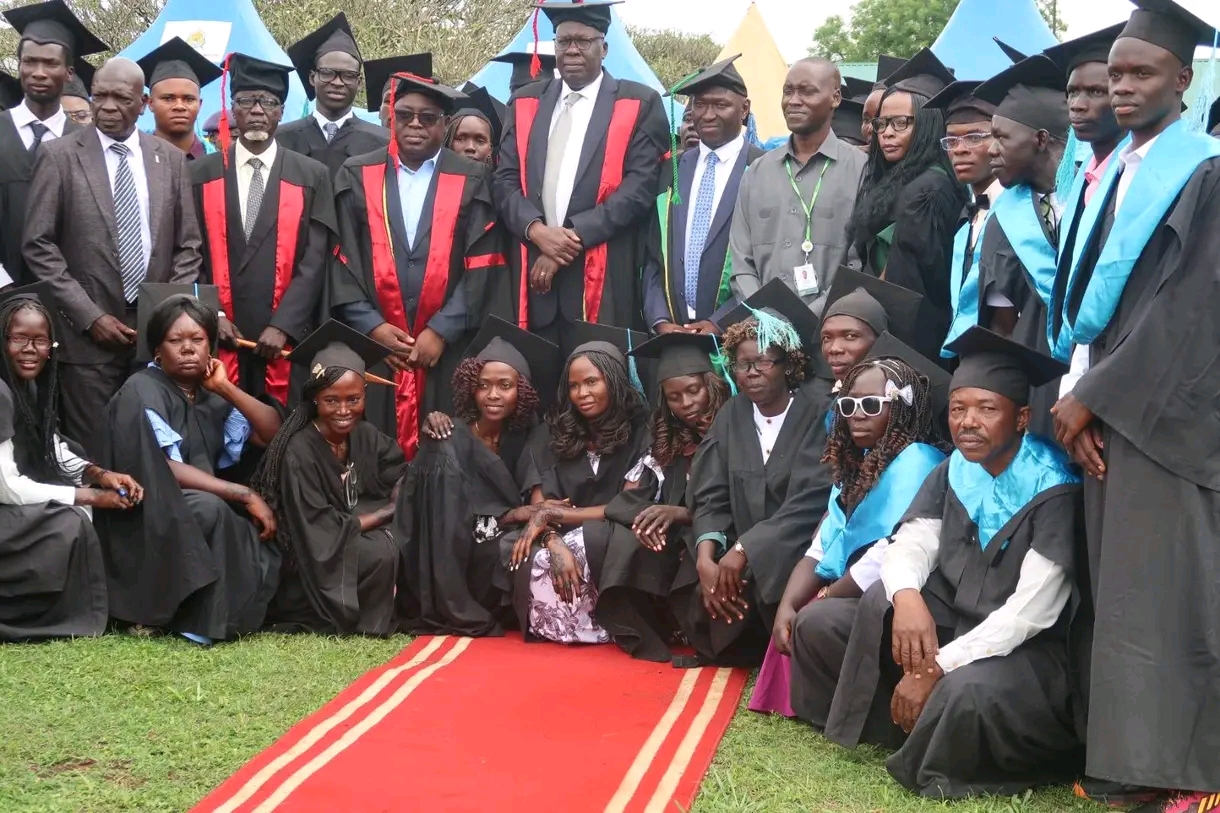
Dr. Kuyok announced the plan on Tuesday, October 27, during the third graduation ceremony of the Maridi Teachers Training Institute (MTTI), where 132 teachers graduated after completing diploma and certificate programmes.
The proposed centre is expected to form part of the government’s broader efforts to strengthen education development in Maridi and support the improvement of teaching and learning standards nationally.
The minister said the initiative aligned with President Salva Kiir Mayardit’s vision for education and efforts to restore Maridi’s position as an important centre for educational development in South Sudan.
He also commended Presidential Affairs Minister Africano Mande Gedima for supporting education through the Africano Mande Foundation (AMF), saying his ministry was working with the minister to advance the government’s education agenda in Maridi.
The announcement comes as the government and its development partners continue efforts to address shortages of qualified teachers, inadequate school infrastructure and other challenges affecting education delivery across the country.
However, the minister did not provide a construction timetable, budget or implementation details for the proposed National Curriculum Development Centre.
Dr. Kuyok said establishing the proposed centre would contribute to restoring Maridi’s legacy as a leading education centre in South Sudan.
A national curriculum development institution could play an important role in reviewing learning materials, developing teaching guides and supporting the standardization of curricula across schools, depending on its approved mandate and resources.
Such work is particularly important for a country rebuilding its education system after years of conflict and institutional disruption.
A functional curriculum development centre could also provide opportunities for education specialists, teachers and curriculum experts to contribute to the development of learning materials suited to South Sudan’s educational needs.
The minister’s announcement coincided with the graduation of 132 teacher trainees from Maridi Teachers Training Institute, marking the institute’s third graduation ceremony.
The graduates completed diploma and certificate programmes intended to prepare them for teaching responsibilities in the country’s education sector.
Dr. Kuyok commended the institute’s principal, Ustaz Jackson Wilson Sebit, for his commitment and efforts to improve the institution.
He described Maridi Teachers Training Institute as one of the country’s leading teacher-training institutions, crediting its leadership with contributing to the institute’s development.
The graduation represents an addition to the pool of trained teachers at a time when South Sudan continues to face challenges in providing sufficient qualified teaching personnel for its schools.
Addressing the graduates, Dr. Kuyok assured them that their certificates were recognized because they were awarded through the University of Juba.
The minister’s remarks also highlighted the relationship between teacher-training institutions and recognized higher education bodies in maintaining academic standards.
The ceremony also marked the launch of the Building Skills for Human Capital Project, which is supported by the World Bank.
Dr. Kuyok called for cooperation among government institutions, education stakeholders and development partners as the ministry prepares to construct new buildings under the project.
The initiative is intended to support human-capital development through investment in skills and education infrastructure.
Improved facilities could help strengthen teacher training and expand the capacity of educational institutions, although the specific construction plans, funding allocations and implementation schedule were not detailed in the announcement.
The minister’s appeal for collaboration underscores the importance of coordinating infrastructure development with other requirements, including qualified instructors, learning materials, equipment and sustainable operating budgets.
The ministry and its partners will therefore need to ensure that construction plans are accompanied by clear implementation arrangements and measurable targets.
Beyond teacher training and infrastructure development, the minister used the occasion to warn students against examination malpractice ahead of the national examinations scheduled for November.
According to the announced timetable, national examinations are scheduled to take place from November 16 to 20, 2026, while Senior Four examinations will run from November 23 to December 1.
Dr. Kuyok urged candidates to rely on preparation and hard work rather than cheating, warning that mobile phones would not be permitted during the examination period.
The warning forms part of efforts to protect the integrity of national examinations and ensure that students’ results reflect their knowledge and performance.
Examination malpractice can undermine confidence in qualifications, disadvantage candidates who follow the rules and weaken the credibility of the education system.
The minister’s message places responsibility on candidates to observe examination regulations while also underscoring the role of school administrators, invigilators and examination officials in enforcing the rules fairly and consistently.
As the ministry advances these plans, education stakeholders will be watching for details on the proposed centre’s funding, construction, staffing and operational timeline.