

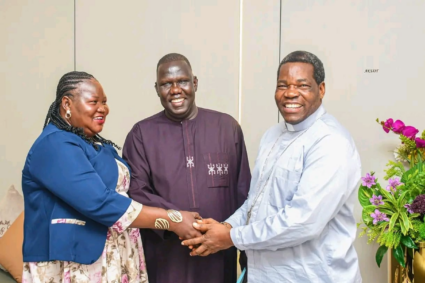
Over nine million at risk of humanitarian crisis in 2025- Minister

By Chuol Chanyong
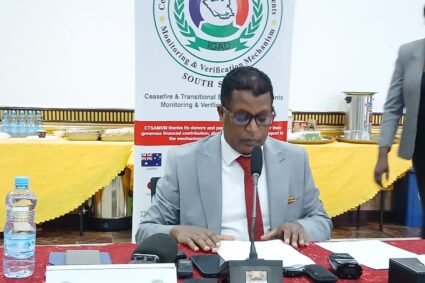
Hon. Albino Akol, the Minister of Humanitarian Affairs and Disaster Management, said that 9.3 million people will be in need of humanitarian assistance in 2025 and 5.4 million others face the most urgent needs across the country.
The Minister spoke during the launch of the South Sudan Humanitarian Needs and Response Plan in Juba yesterday. “If we want to respond to this big number, we need to increase and strengthen cooperation between the government and humanitarian organizations,” Hon Akol said.
He acknowledged the role of humanitarian organizations in rescuing the vulnerable, despite the difficult and dangerous situations they face, and providing them with protection.
The Minister emphasized on the government’s commitment to bearing its share of the burden by leading the humanitarian response with the support of international and national actors and partners and creating an enabling operating environment to ensure that vital life-saving aid safely reaches those who need it most and for information.
“We must ensure that there are no illegal checkpoints. We must avoid unnecessary and illegal taxes on humanitarian materials. There must also be coordination between state authorities and humanitarian organizations.”
He also promised to continue and cooperate not only to provide relief to people affected by the crisis, but also to support a durable solution and build their resilience through investment, in providing basic services and livelihood opportunities to enable them to graduate from humanitarian assistance.
Hon. Akol called on the humanitarian community, partners and donors to remain committed to supporting those in need throughout South Sudan through implementation of the 2025 Humanitarian Needs Response Plan. “And if there are things that we did not do well, we must share them so that we can avoid them in the coming year,” he said.
According to the Humanitarian Situation Report for December 2024, South Sudan is facing a severe humanitarian crisis that requires an urgent and comprehensive response. There is a sharp increase in incidents of societal and political violence, especially in the border areas, due to ethnic conflicts and lack of access to resources.
Then there is the crisis of the influx of refugees from Sudan, which has increased pressure on infrastructure and services in South Sudan. The food crisis has been exacerbated by conflict, floods, high food prices, the spread of diseases, weak health infrastructure and lack of funding as well as increased internal and external displacement, which exacerbated the humanitarian crisis.