



Reform South Sudan education system to address local challenges- Hiiboro

The Bishop pointed out that in many Western countries, education is structured to address local problems and train a workforce that meets national economic needs
By Emmanuel Mandella
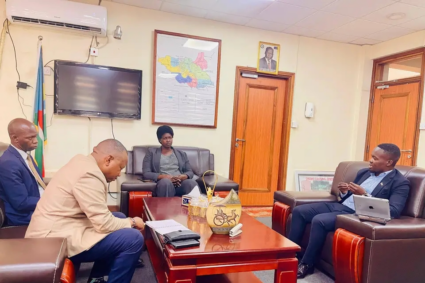
Bishop Eduardo Hiiboro of the Catholic Diocese of Tombura-Yambio (CDTY) has called for the transformation of the country’s education system, stating that only the right leadership, curricula, and management can fix the nation’s education challenges.
In a statement obtained by The City Review, Bishop Hiiboro underscored the urgent need for an education system that is tailored to the realities of South Sudan, rather than a copy-paste model that fails to equip students with relevant skills.
“South Sudan needs the right person to manage the Ministry of Education. The right systems, curricula, and management will go far in fixing the problems facing education in our country,” he said.
The country’s education sector has long faced challenges, from outdated curricula to poor infrastructure, underqualified teachers, and high dropout rates. According to UNICEF, over 2.8 million children are out of school, ranking the country among some of the least in access to education.
Bishop Hiiboro pointed out that in many Western countries, education is structured to address local problems and train a workforce that meets national economic needs. He stressed that South Sudan should do the same.
“They teach history, government, indigenous industries, agriculture, healthcare, and what is needed to prosper their country. Meanwhile, in Africa, we teach subjects for the sake of knowledge, with little emphasis on applying them to our realities,” he explained.
He lamented that South Sudanese students graduate with degrees that do not prepare them for the challenges at home, leading to high unemployment rates and a workforce ill-equipped to develop the nation.
“Our students are trained for jobs that don’t exist in South Sudan. They graduate, return home, and find their knowledge doesn’t match the country’s needs, this mismatch is one of the biggest challenges in poor countries with underdeveloped education systems,” he added.
The bishop advocated for an indigenized curriculum, similar to the educational models of Japan, South Korea, Singapore, and China, which have adapted foreign knowledge to fit their national needs.
“If we want to succeed, we need to radically reform our education system. We must invest in education from kindergarten to university, including adult education, to reduce illiteracy,” he urged.
The words were echoed by Dr. Justine Mario, an education expert at the University of Juba, who agreed that South Sudan’s system is failing its youth.
“Our syllabus is outdated, designed decades ago with little relevance to today’s job market. Bishop Hiiboro is right. Without a visionary education system, we will continue producing graduates who struggle to find meaningful employment,” Dr. Mario said.
For Nyaki Simon, a 19-year-old student in Yambio who dropped out due to financial difficulties, the current education system does little to help young people escape poverty.
“I wanted to study agriculture, but my school didn’t offer practical lessons. If we had been taught how to farm using modern methods, I could be feeding my family now. Instead, I have no job, and my education feels useless,” she said.
However, Richard Wani, a father of five in Mundri West County, also admitted that education in South Sudan does not prepare students for real-life challenges.
“My son graduated with a degree in economics, but there are no jobs for him. He wasn’t taught how to start a business or manage local markets. We need an education system that trains our children to survive in their own country, not abroad,” Wani said.
Bishop Hiiboro’s statement serves as a wake-up call for South Sudan’s policymakers. As the country grapples with economic instability and high unemployment, experts argue that only a reformed education system can drive sustainable development.
“Education is the most important resource any country has. If we invest in our people, they will build South Sudan, whether we have natural resources or not,” the bishop emphasized.